
Carolina Beach – August 2025
Lewis, of Island Tackle and Hardware, reports that surf anglers are picking away at summertime bottom species such as pinfish, croaker, and whiting. Plenty of sharks are also in the surf.
Inshore anglers are doing well in the Cape Fear River targeting scattered red drum, speckled trout, and black drum.
A bunch of flounder are being caught on live bait offerings.
Sheepshead are around the bigger hard structures, such as docks and pilings.
Off the beach, spanish mackerel are present, but the bite has been slow at best.
Getting out over deeper bottom structure is producing amberjacks, barracuda, grouper, and king mackerel.

Christian, of Seahawk Inshore Fishing Charters, reports that anglers have had success catching a handful of red drum. The natural bait options are best, with live menhaden or live mullet being the top choices (followed by fresh cut bait). Most of the catches are in the 17-19” range, with some mid-slot to upper-slot fish mixed in. Target grass points and shell banks when the tides have the water moving a little.
Flounder are being hooked while targeting the reds. The same live bait offerings or soft plastics slowly worked along the bottom have been enticing strikes from these 14-20” flatfish.
For something different, anglers can find success targeting docks and other hard structures for black drum or sheepshead. Both species prefer to feed on live fiddler crabs or live shrimp.
Tommy, of Mungo Fishing Charters, reports that anglers continue to have plenty of success picking away at red drum. Water temperatures inside are hot, and the natural baits (cut or live) are having the most success when soaked around grass lines and creek mouths. If on the water early, topwater plugs can also produce strikes.
Speckled trout are mixed in the action, with the early morning or late hours being best. The trout prefer artificials, whether that’s topwater plugs, shrimp imitations, or lightly weighted soft plastics.
Black drum and sheepshead are around for anglers fishing shrimp or live fiddlers around hard structures and oyster bars.
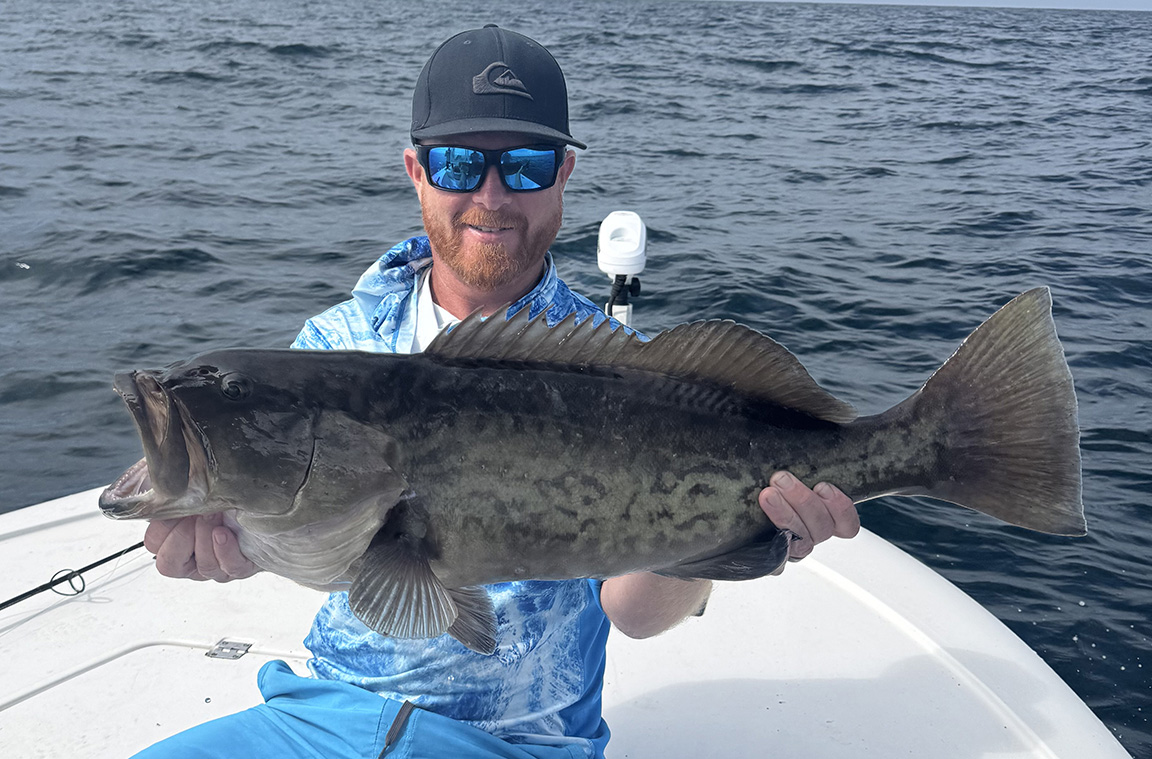
Mike Clarke, of Carolina Beach, caught this gag grouper using cigar minnows on bottom rigs offshore of Carolina Beach in 80′ of water.
Mason, of Grand Slam Fishing Charters, reports that red drum are scattered, so bouncing around a bit is usually required to find pockets of fish. Natural bait (live or cut mullet) is critical this time of year. With the heat, more often the reds are staged up around points (3-4’ depths) on the higher tides. On lower tides, target deep cuts and channels in the creeks.
A few speckled trout have been mixed in deep (8-10’ range) as they seek cooler water. Current is key for the trout.
Black drum and sheepshead fishing has tapered off a little.
Drew, of Strike Inshore Charters, reports that the red drum and speckled trout action remains steady. Anglers looking to utilize artificials have stuck to topwater plugs or paddle tail soft plastics. The reality is, with water temperatures high and bait so plentiful, most of the action is coming on live bait such as menhaden. Target both species in 2-10’ depths around areas with a little structure, such as shell points or oyster banks. A little current from a moving tide is also key as it slightly cools the water.
Tony, of Reel Teal Charters, reports that a few king mackerel can be found from the beach out to over nearshore structure.
Bottom fishing on the shallower structures has been producing white grunts and ringtails.
A few cobia are around the wrecks as well.
Spanish mackerel are not cooperating in any good numbers.
Inshore anglers are catching a ton of flounder while targeting red drum.
For the red drum, most of the fish are in the 18-24” range, and they’re coming from shoreline grass points in the Cape Fear River. Anglers are also finding action around creek mouths.
Speckled trout are scattered and hitting the same Carolina-rigged menhaden used to target the reds.
Sheepshead fishing has been decent around hard structures in the river. They can be found shallow, but deeper areas are better. Live fiddler crabs are the top choice, with shrimp also producing bites.
Barry, of Family Ties Charters, reports that most of the fishing action has been happening in the 10-25 mile range. Anglers are trolling around structure and finding any mix of king mackerel, barracuda, amberjacks, and mahi. Fast trolling with skirted cigar minnows or ballyhoo works great to find the fish, and then slow troll or fish live baits to stay on the bite.
For colors, patterns such as pink/white, pink, or chartreuse all tend to have success in the summer.
Bottom fishing structure in this range is also plenty productive, with catches including grunts, black sea bass, pinkies, vermilions, grouper, and American reds.
Anglers running out to the Gulf Stream are catching scattered blackfin tuna, wahoo, and larger mahi (but the mahi are thinned out).
Spanish mackerel have been the most reliable target off the beach, and trolling has been the best tactic.
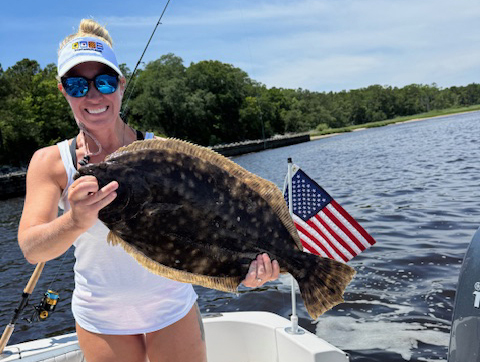
Teresa Young, of Wilmington, caught (and released) this flounder in the Cape Fear River on menhaden.
Rod, of OnMyWay Guide Service, reports that bottom fishing is the most consistent action. Getting out to the 35-45+ mile range is about the shortest run to find quality keepers to fill the box, such as keeper grouper (reds, scamps, strawberry, and graysby), large vermilions, jolthead porgies, and chocolate chip porgies.
Big black sea bass are out there as well, and they can be found in as close as 25 miles.
The nearshore bottom is loaded with amberjack and barracuda.
The mahi have been really spread out, with anglers doing best targeting the 130’+ areas.
King mackerel are also scattered, with the 20+ mile areas being the most reliable.
Jeremiah, of Kure Beach Pier, reports that mostly smaller bottom fish (whiting and croakers) are being caught.
Anglers focused on fishing the pilings have been catching a few sheepshead.
