
Carolina Beach – November 2025
Logan, of Island Tackle and Hardware, reports that surf angler catches include red drum, bluefish, pompano, and good numbers of whiting, with cut shrimp working best across the board.

Off the beach, bluefish have been plentiful, and king mackerel are being found a bit farther out in the 5-10+ mile range.
Back in the river, anglers are still landing sheepshead, along with scattered catches of red drum, flounder, and bluefish.
Speckled trout are starting to show up more consistently.
Tommy, of Mungo Fishing Charters, reports that the red drum bite is improving, with low to rising tides producing the best action. Cut bait, live mud minnows, and live shrimp have all worked well around grass edges, oyster bars, and creek mouths.
Cooler water temperatures are helping to fire up the black drum bite, with deep holes and drop-offs near oyster bars, docks, and rock piles being productive. Carolina-rigged dead shrimp, live shrimp, fiddler crabs, or cut blue crab are all solid options.
In November, anglers will shift focus to speckled trout, with live shrimp, soft plastics, and hard twitch baits working well around creek mouths and rock structures on a falling tide.
Christian, of Seahawk Inshore Fishing Charters, reports that for the red drum, scented soft plastics and dead shrimp has been producing most bites. The majority are a 15-17” class of fish, with the occasional 20”+ mixed in. These reds are staged up against the grass edges on higher tides, and then pushing down over shell bottom drop-offs on lower tides.
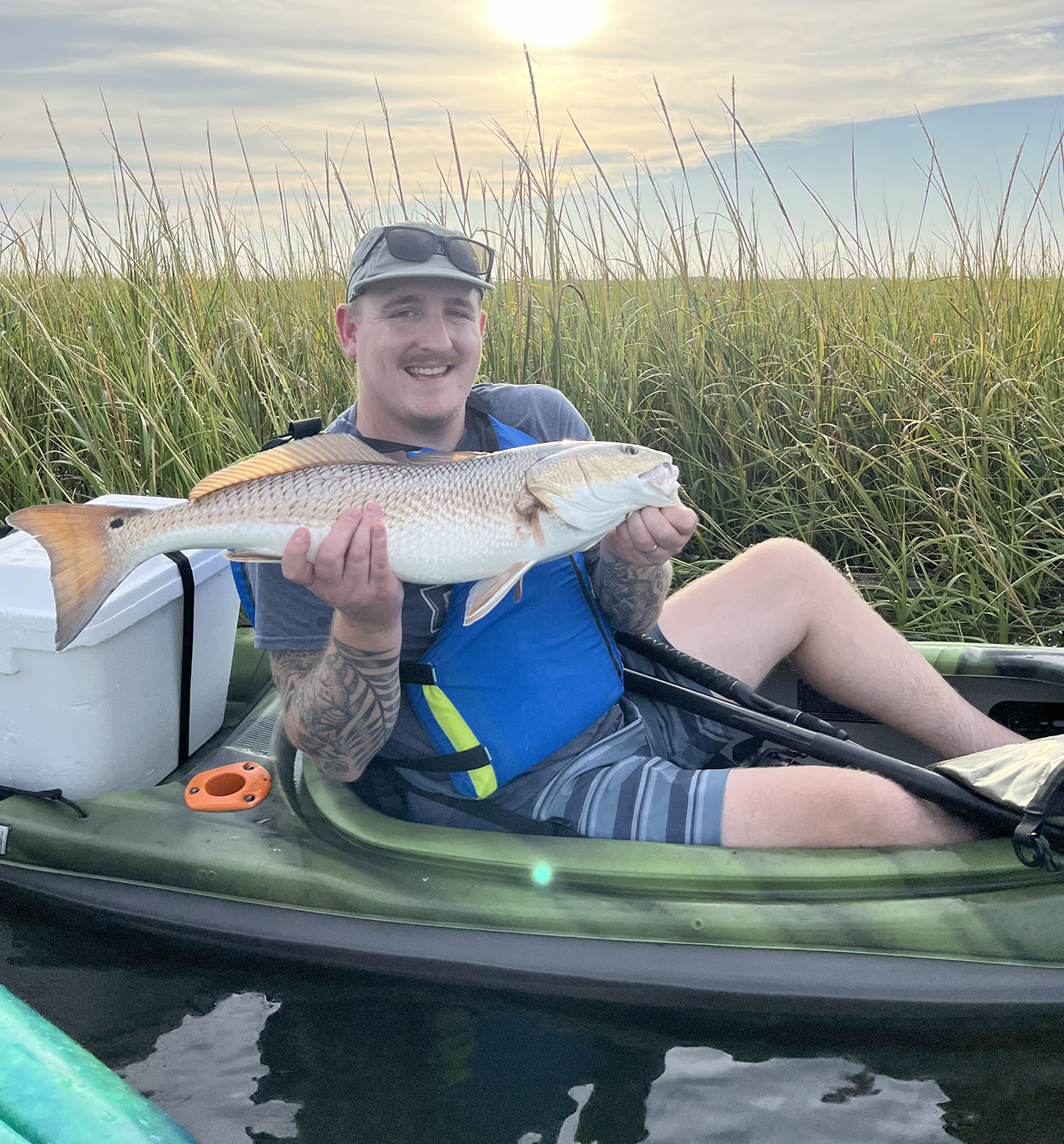
Trevor Price, of Wilmington, landed this 29″ red drum on a 6″ Gulp jerk shad in the Fort Fisher area.
Speckled trout (15-19” range) are hitting soft plastics such as Gulp shrimp and scented Z-Man baits. For targeting trout, look for areas with good current flow around creek mouths and grass points.
Black drum fishing has been picking up with water temperatures cooling off. Dead or live shrimp fished on the bottom is the top bait choice for these fish. Anglers are catching the black drum in all the same types of areas for targeting red drum and trout.
Mason, of Grand Slam Fishing Charters, reports the red drum bite is strong in the lower Cape Fear River, with mid to upper-slot fish being caught around oyster banks. Black drum are beginning to show up for anglers fishing shrimp in these same areas, though cooler water is needed for a more consistent bite.
Late fall means shifting attention to speckled trout, where current is key. Artificials are great for covering water quickly, with topwater plugs, MirrOlures, and popping corks with D.O.A. paddle tails being top choices.
Drew, of Strike Inshore Charters, reports that anglers are still finding plenty of slot-sized red drum. These fish are being caught around oyster banks and points on live shrimp, mud minnows, or menhaden. Bull reds are out in the main river (12-24’ range), and they’re hitting cut menhaden or mullet. Bait in the area has been the key to getting bites.
The sheepshead bite has been hot, with live fiddler crabs or shrimp producing strikes around structure near oyster banks. Black drum are also mixed in.
The speckled trout bite hasn’t fully kicked off yet, but cooler water should bring in this action where popping corks and live bait will be effective.
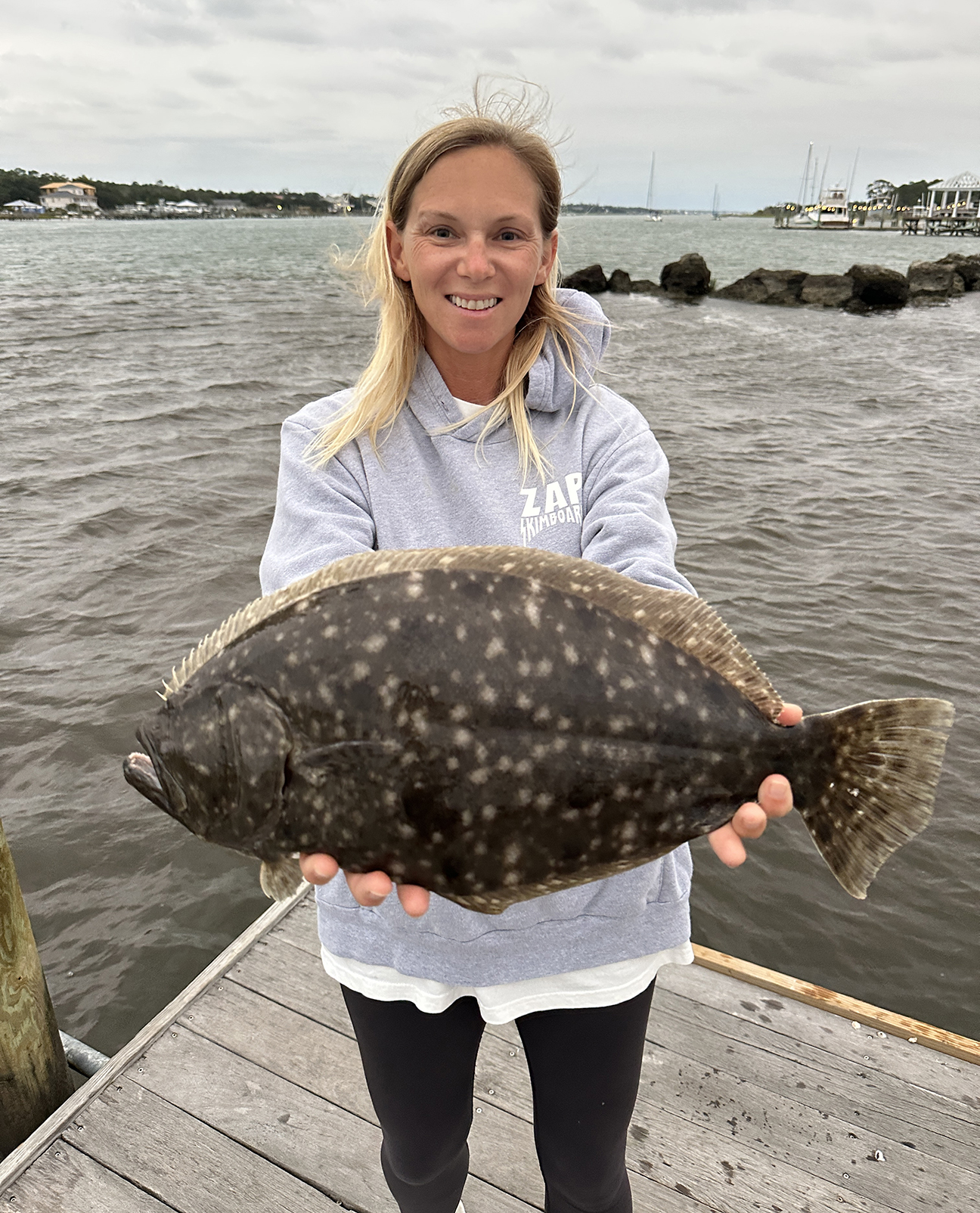
Helen Carlton, of Carolina Beach, caught (and released) this flounder in Snow’s Cut using a live mullet.
Tony, of Reel Teal Charters, reports that bull drum were the headline in the Cape Fear River, but they have pushed out.
Sheepshead fishing has been solid, with black drum occasionally mixed in.
Water temperatures are now ideal for speckled trout, with creek mouths in the Cape Fear and ICW on a falling tide being productive. Most trout are smaller, but a few 20”+ fish are in the mix. Floating shrimp is the top tactic.
Slot red drum fishing has slowed as fish transition into colder water patterns.
Nearshore, gray trout are starting to stack up on the reefs.
Barry, of Family Ties Charters, reports that nearshore anglers are finding plenty of bluefish and spanish mackerel feeding under bait along the beaches.
Beachfront king mackerel are thinning out, with better action now in the 10-25 mile range. Live bait remains the top tactic and should continue to produce until water temperatures drop below 66°, at which point kings will move farther offshore.
Gulf Stream trips are seeing a strong wahoo bite, with both better numbers and bigger fish. Blackfin tuna are also in the mix.
Bottom fishing is seeing black sea bass action picking up in the 15-25 mile range.
Rod, of OnMyWay Guide Service, reports that king mackerel fishing efforts start 10 miles out, but 15-25 miles has been the most productive. Live bottoms or ledges and slow-trolling live bait (like menhaden) is key. Dead bait setups, including cigar minnows on Blue Water Candy rigs or pink sea witches with false albacore strips behind planers, are also working well.
In the 50-mile range, bottom fishing is producing keeper grouper (reds, graysbys, and scamps). Black sea bass action is improving with cooler water. Focus on the 18-25 mile range.
Out on the break, wahoo are being caught from 150-300’ over rocks and ledges, with Blue Water Candy Jags and Mini Jags in darker colors being top choices. Double-hook rigs help improve hookup rates.
Blackfin tuna are also in this range, with cedar plugs, Monkalurs, and ballyhoo under blue/white skirts producing well. Sailfish have also been showing up in the spread.
Jeremiah, of Kure Beach Pier, reports that anglers have been catching plenty of bluefish, both by sight-casting plugs and fishing cut bait.
Bottom fishing has been productive, with good numbers of whiting and some pompano still in the mix.
