
Swansboro/Emerald Isle – November 2025
Mickey, of The Reel Outdoors, reports that surf anglers have had solid success catching pompano and sea mullet. Spots are starting to show up, though not in big numbers yet. Cooler nights could spark a run at any time.

Inshore, the speckled trout bite is just beginning to kick off. A few fish are being caught now, but the peak is still ahead.
Nearshore anglers are catching bluefish and the occasional spanish mackerel. False albacore had shown up, but they’ve gone quiet since.
Once weather conditions settle, offshore anglers should expect good bottom fishing and a strong wahoo bite.
Christian, of Rock N Rods, reports that surf anglers are still picking away at what’s likely the tail end of the spanish mackerel season, and bottom rigs are producing a few late-season pompano and sea mullet.
Inshore anglers are finding good numbers of sheepshead and mixed black drum, with docks and bridges fished with shrimp or crabs being the most productive.
Red drum and bluefish are hanging around the inlets, and the speckled trout bite is beginning to pick up as we move deeper into fall.
Nearshore fishing has been solid, with a nice push of red drum off the beaches. Trolling and sight-casting have produced spanish mackerel and plenty of bluefish, and false albacore are likely still around.
A few king mackerel are being caught over the nearshore reefs.
Offshore anglers should expect November to produce wahoo and scattered blackfin tuna.
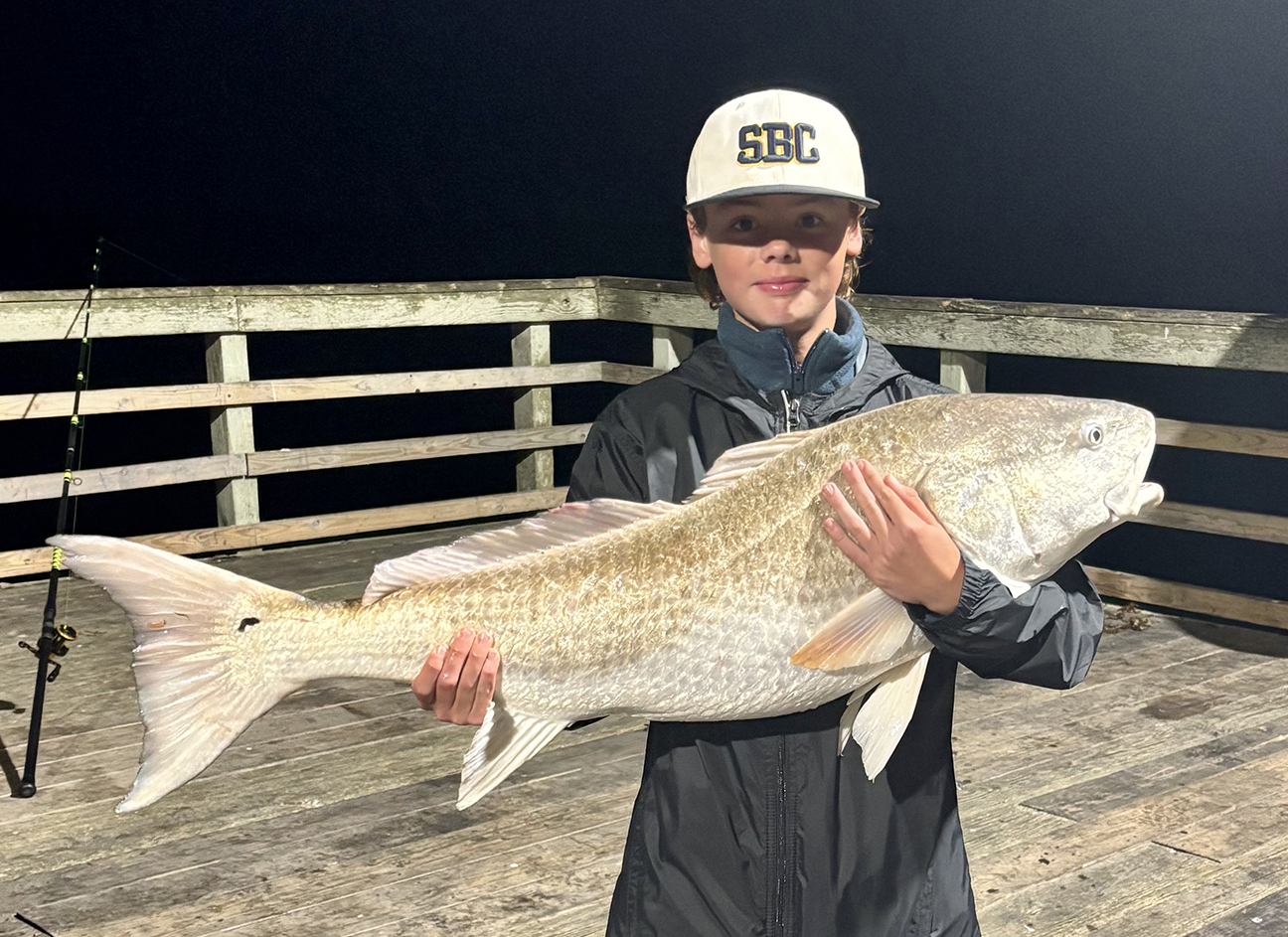
Karson Bolton, of Fayetteville, caught this 40″ red drum off the Jolly Roger Pier on a spot head.
Rob, of Sandbar Safari Charters, reports that recent trips off the beach have been productive, with good numbers of false albacore and the occasional king mackerel showing up over the nearshore reefs. Slow trolling live bait has been the go-to tactic for kings, while sight-casting jigs into surface-feeding frenzies has been effective for albacore.
Inshore, anglers are finding plenty of bluefish and smaller speckled trout around the inlets and larger connecting channels. Live shrimp and soft plastics rigged on jig heads are working well for both. For those targeting the bigger fall trout, pushing into the rivers and creeks with floating live shrimp or hard suspending lures has been the most successful approach.
Red drum are beginning to stage at the mouths of creeks and rivers ahead of their winter migration, while a separate group of reds is feeding in the surf on cut bait. Fresh shrimp or crabs fished around inshore structure are also producing sheepshead and some impressive-sized black drum.
Matt, of Friendly City Fishing Charters, reports that with bait wrapping up its migration out of the inlets, most of the action is now concentrated in the inlet areas. Target deeper channels, grass banks, and drop-offs near shell banks with a bit of moving water or current. Several inshore species are feeding together in these zones, so back-to-back casts can hook into red drum, speckled trout, flounder, or bluefish.
As water temperatures continue to drop, anglers will begin shifting focus to mainland creek mouths, where fish are starting to move into their wintering holes.
Red drum are beginning to school up, with some fish staging in the surf and others pushing into shallow marsh flats.
Jacob, of Southern Tides Fishing Charters, reports that speckled trout have made a strong showing. Anglers are finding success just about everywhere using live shrimp under corks. Productive areas include deeper channels with moving water near the inlets and oyster-lined creek channels, with outgoing tides being the most favorable—so long as the current isn’t ripping. Bigger trout are settling into their typical fall haunts farther back in the creeks.
The same shrimp-under-cork setups are also producing scattered slot red drum, though the bite has slowed slightly as the fish adjust to cooler water patterns. Carolina rigs fished around docks are another effective way to target reds.
Shrimp fished on the bottom around docks—especially farther back in the creeks—are yielding the occasional black drum. Bluefish are widespread, from the inlets all the way up into the ICW. Gray trout are beginning to show as well, and they’re mostly staging in deeper holes near docks or around the inlet.
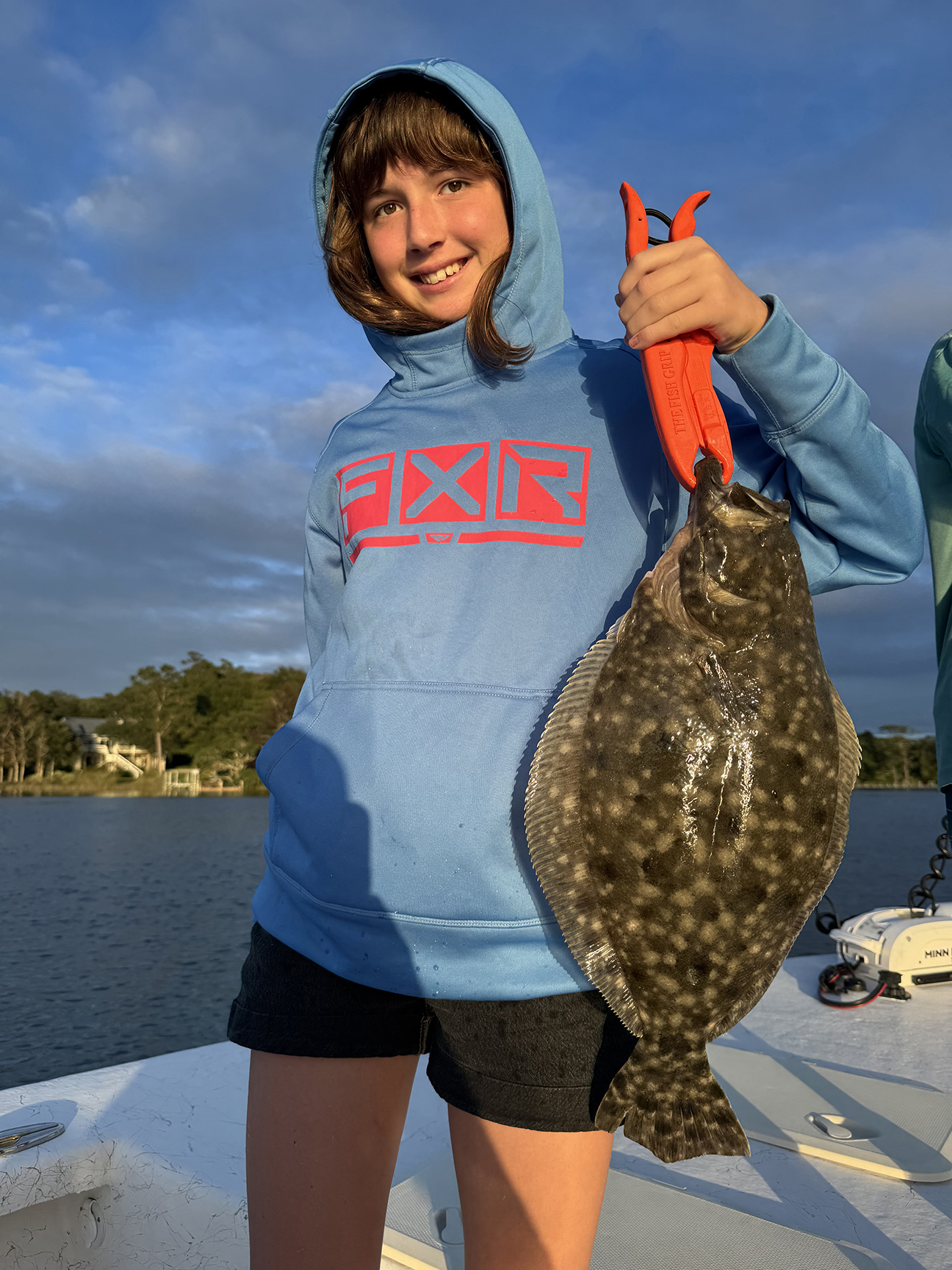
Olivia Henderson, of Swansboro, found this flounder in Queens Creek using a 4″ Z-Man paddle tail.
Scott, of King Mackerel College, reports that runs out to the break have been producing wahoo and the occasional sailfish. Pulling live bait remains a solid option, while the ballyhoo and sea witch combo continues to be a tried-and-true setup. For wahoo, darker skirt colors like black/purple or black/red have been especially effective.
King mackerel action has been hit or miss, with most strikes coming in the 60-80’ range. Live bait is key, and running baits both on the surface and deeper on a downrigger—especially at depths where bait is marked—has been the most productive strategy.
John, of Early Riser Fishing Charters, reports that king catches were coming from as shallow as 20’. However, northeast winds pushed in dirty water, forcing anglers to search elsewhere. Running all the way over to the east side of the shoals (and north) was necessary to find clean water, and it turned out to be the right move, with king mackerel, wahoo, and blackfin tuna all in the mix.
Mike, of Bogue Inlet Pier, reports that puppy drum have been the highlight, with catches up to 5.5+ lbs.
Anglers sight-casting plugs have landed some false albacore (to 5+ lbs.), along with bluefish and the occasional spanish mackerel.
Bottom fishing has been productive, with a nice mix of pompano, sea mullet, bluefish, spot, and croakers filling the coolers.
