
Swansboro/Emerald Isle – December 2025
Rich, of The Reel Outdoors, reports that surf anglers have been finding steady action, with catches including sea mullet, bluefish, and some speckled trout.
Inshore anglers are primarily focused on speckled trout, with artificials such as soft plastics and suspending lures producing well. The trout are being caught around the inlet and back up in the creeks, with red drum also showing in these same areas.
Off the beach, anglers are finding productive bottom fishing for black sea bass, along with catch‑and‑release grouper.
Looking ahead into winter, surf anglers can expect some reliable bites, with cut shrimp being the top choice for pufferfish, sea mullet, and spot.

Christian, of RocknRods Outdoors, reports that speckled trout fishing has been steadily improving as water temperatures cool. Soft plastics have been the top choice, and white and smoke color patterns are producing the best results. With temperatures continuing to drop, the trout will remain a prime target, especially when fishing with a very slow retrieve and targeting the schools in the backs of the mainland creeks.
Red drum are being found mixed in alongside the trout. The reds are beginning to school up as they typically do in winter, and they can be expected to push farther back into creeks and/or move to shallow flats.
Rob, of Sandbar Safari Charters, reports that anglers are targeting a mix of speckled trout, red drum, and black drum throughout the inland creeks and rivers. Natural baits such as live mud minnows rigged under corks or on split‑shot rigs have been producing well. For those fishing strictly artificials, the smaller, scented soft plastics on light jig heads, suspending shrimp, and hard twitch baits are all drawing strikes—especially from trout.
Red drum are beginning to school up into their larger winter groups as they push back onto shallow mud flats throughout the marsh. Cut bait or shrimp remains the most effective option for this type of fishing.
With water temperatures cooled down, anglers can expect to find red drum and black drum in the surf or around the inlets. These winter fish offer opportunities for those looking to simply walk the sand and cast a line.
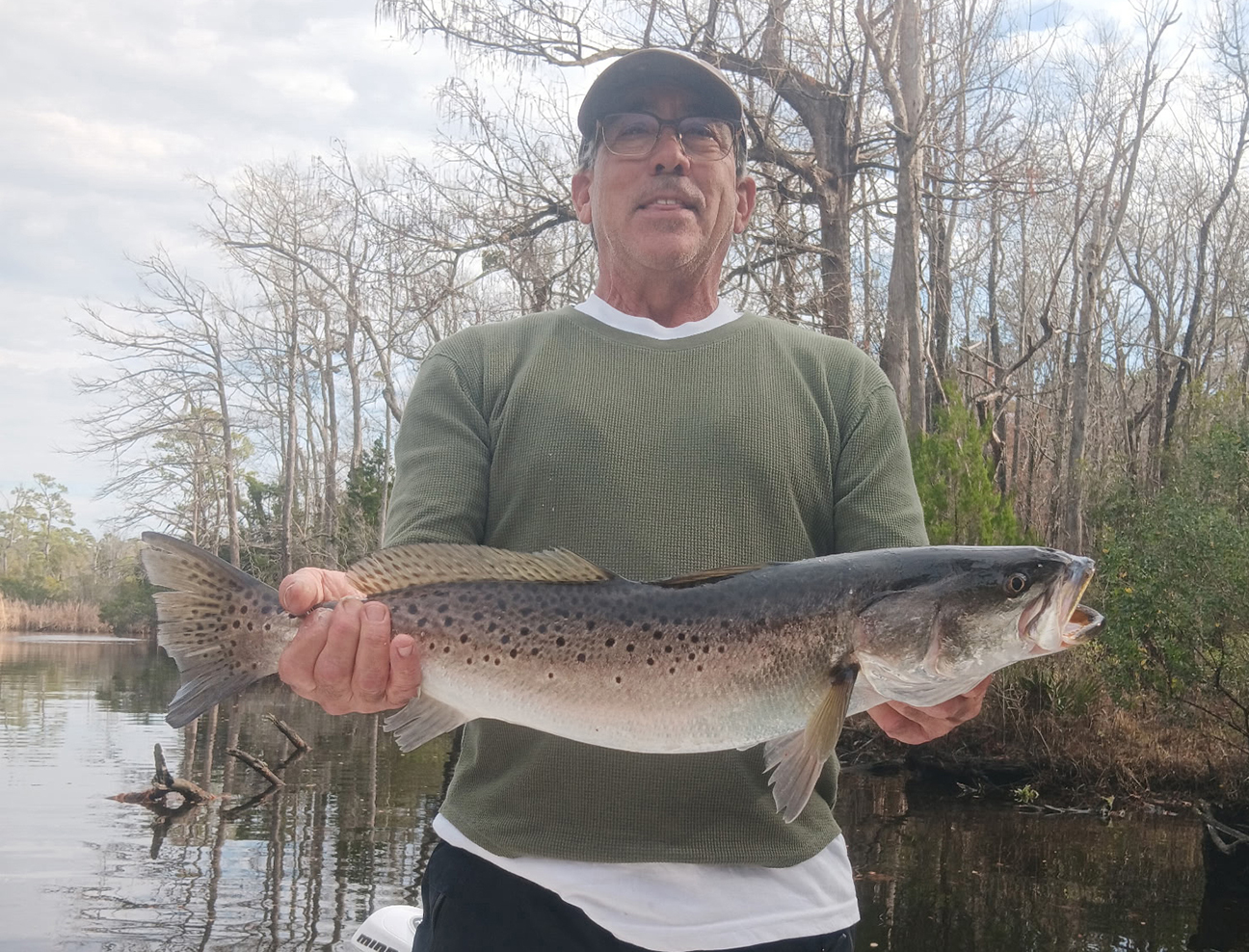
Chuck Belley, of Jacksonville, with a 26.5″ speckled trout caught on a MirrOlure in a creek off New River. He was fishing with Capt. John Parks of Early Riser Charters.
Matt, of Friendly City Fishing Charters, reports that speckled trout, both slot and oversized, have been the main focus. Live bait such as mud minnows, mullet, or peanut pogies have been most productive, but artificials are also generating bites. Soft plastics like Pure Flats Slick or Zoom flukes have been excellent options for matching the local baitfish.
Most of the trout are holding in the rivers and mainland creeks, and the cleaner, moving water during tide changes have provided the best action.
Schools of red drum are still around, and these reds are gathering and pushing back into the marsh to feed. Clear water conditions make it important to keep distance to avoid spooking them. Cut mullet works well, along with Z‑Man or Gulp soft plastics.
Black drum are present in the rivers, though encounters have slowed with most of the shrimp in the area disappearing. Anglers targeting them will need to purchase fresh shrimp and fish around structure to find success.
Jacob, of Southern Tides Fishing Charters, reports that speckled trout remain the top focus in the inshore waters. Most speckled trout success has come from live shrimp under floats, though artificials have also been producing well. Lightly weighted jig heads with darker baits are preferred in the creeks, while heavier jig heads with lighter color patterns work best near the ocean in cleaner water and faster currents.
The trout bite should remain strong in the backs of creeks well into winter and only stopping when water temperatures drop too low for consistent feeding.
Anglers can target black drum and sheepshead around docks and bridges, and the best baits are frozen shrimp or mud crabs dug from oyster bars.
On calm, sunny days, sight fishing for red drum in marsh bays and sloughs can be productive. This is the time of year when reds stage up in schools and push over shallow areas to spend the winter. A trolling motor helps cover ground quietly, and very small artificials are best for these bigger schools, which can be picky or easily spooked. Once located, the schools often hold in the same area until pressured or moved by weather changes.
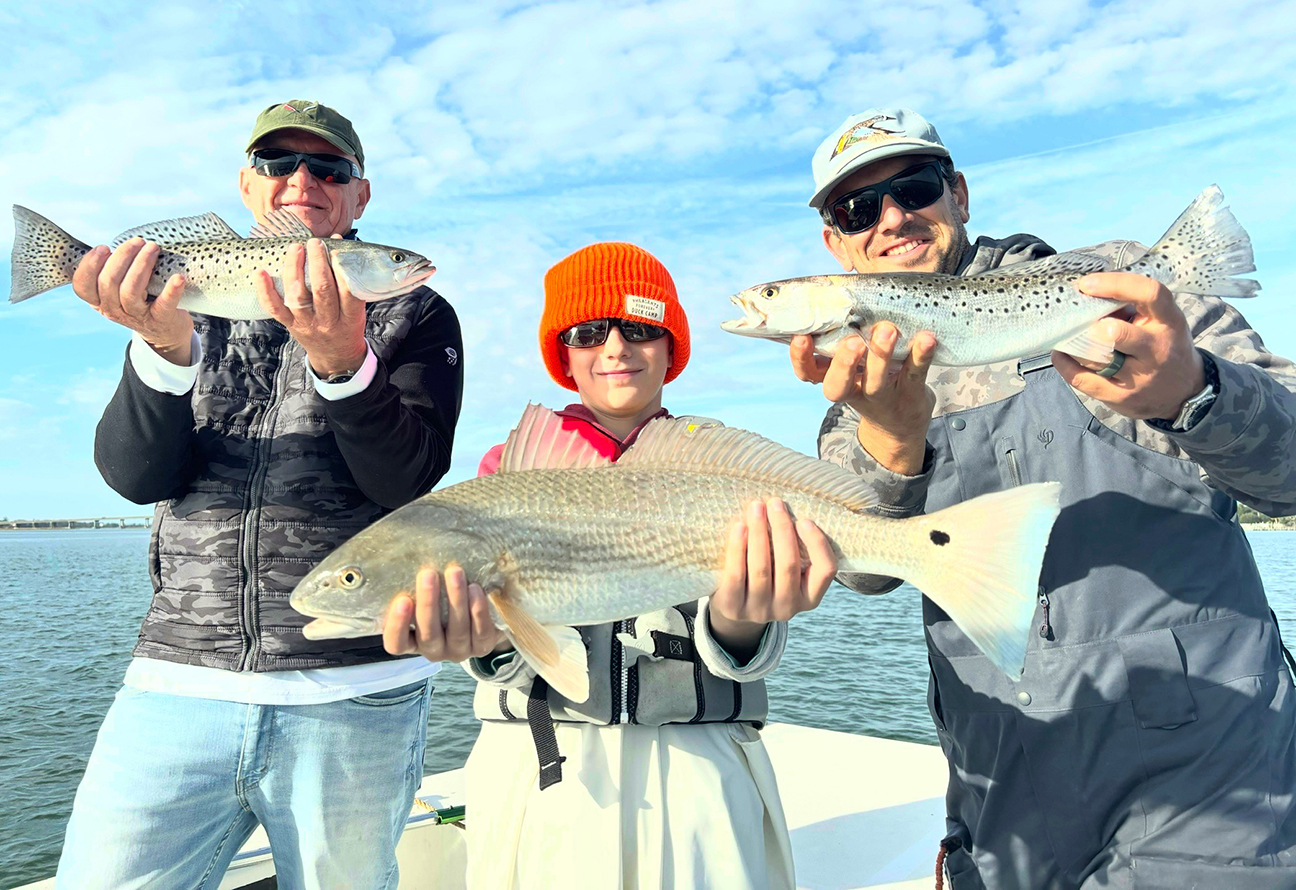
John Stone, Guy Harbert, and Bodie Harbert, from Newport, with a triple hookup of red drum and trout on Zoom Flukes. They were fishing off the ICW in Emerald Isle with Capt. Rob Koraly of Sandbar Safari Guide Service.
John, of Early Riser Fishing Charters, reports that offshore and nearshore trips have been dictated by narrow weather windows, with dirtier water often requiring longer runs to find clean conditions. The king mackerel bite reflected this, with most fish holding 25+ miles out. Live bait is best when available, though dead cigar minnows and ballyhoo are also producing.
Cooler water has pushed some bonus blackfin tuna and wahoo closer than usual, adding variety to the catch.
Inshore, anglers have been able to target a strong speckled trout bite. Most of the trout are already staged in the creeks, where suspending hard baits have been especially effective for citation‑class fish. Topwater plugs and soft plastic shrimps or paddle tails are also producing, and as water temperatures drop further, adding scent becomes increasingly important.
Red drum fishing in the marshes offers anglers another strong option. Calm, sunny days provide sight‑casting opportunities in gin‑clear water, but the reds can be very spooky under these conditions. Keeping a buffer—whether an oyster bed, shoal, or deeper channel—between you and the fish helps. Lightly weighted and scented soft plastics or cut shrimp are the best bait choices.
Mike, of Bogue Inlet Pier, reports that black drum (up to 10 lbs.) have been caught on fresh shrimp, with slot‑sized puppy drum (to 26”) also in the mix.
Other bottom species are feeding well, with the best action coming after dark. Sea mullet, pufferfish, and speckled trout have all been part of the nighttime catches.
