
Carolina Beach – April 2026
Lewis, of Island Tackle and Hardware, reports that anglers getting out on the beachfront are picking at a few croakers, but that should soon shift into a mixed bag of whiting and bluefish.
Back in the Cape Fear River, most of the red drum are still holding in their winter schools, with a few trout mixed into the bite.
There hasn’t been much talk of sheepshead yet, but they should be pushing in shortly.
Atlantic bonito is the species everyone is waiting to hear about, with most of the chatter placing them around the 10‑mile range, maybe a little closer.
Farther off the beach, black sea bass fishing has been good in the 20‑mile range, and a couple of king mackerel have shown up for anglers fishing around the Tower area.

Christian, of Seahawk Inshore Fishing Charters, reports that the creeks and shallow bays that are holding red and black drum are warming quickly, and the fish are becoming more active. The inshore water temperatures are still cold for this point in the year, so it may be a little while before the schools break up and scatter along the banks and grass edges.
For redfish, Gulp shrimp and scented Z‑Man baits are working well when focusing on the oyster banks and shell beds where fish are currently holding.
Black drum are staying tight to shell structure, with cut shrimp being the best option for targeting them.
Tommy, of Mungo Fishing Charters, reports that not much has changed yet from early March, with most of the red drum still holding in their winter patterns.
If conditions continue to warm steadily and consistently, these reds should start feeding much better, and artificials will begin drawing more strikes.
Black drum fishing will be picking up as we move into April, with anglers finding the best success using dead shrimp around docks and other shell structure.
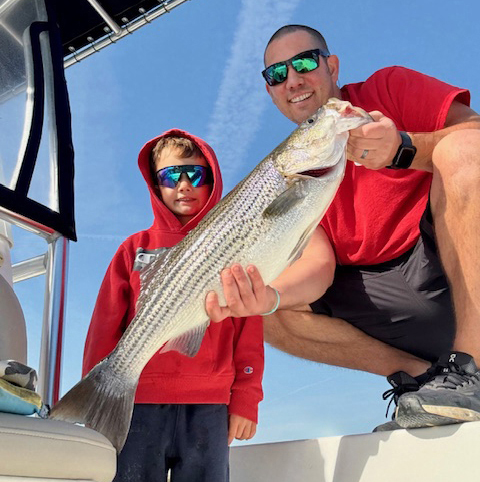
Carson and Jason Shannon, of Wilmington, reeled in this striper from the Cape Fear River on a 6″ jerk bait.
Mason, of Grand Slam Fishing Charters, reports that in the Cape Fear River, the best red drum fishing has come from using dead shrimp on Carolina rigs or under popping corks and targeting areas with moving water around creek mouths or current eddies near structure. The red drum remain tightly schooled, as they have been all winter, so it can take some bouncing around to locate them.
Speckled trout should start showing up soon, with April typically a productive month in the area.
No menhaden have been spotted yet, but with water temperatures rising quickly, they shouldn’t be far off.
Anglers running upriver can target striped bass with weedless‑rigged jerk shads or paddle tails. A reliable approach is to drop the trolling motor, cover water, and work the banks, especially those with a little current pushing across them.
Drew, of Strike Inshore Charters, reports that moving into April, sight‑casting for red drum will be the main focus. Stretches of sunny, warm weather have helped get these big schools of reds ready to eat. Water temperatures are still climbing slowly, though, so the fish will likely stay grouped up in larger schools a bit longer.
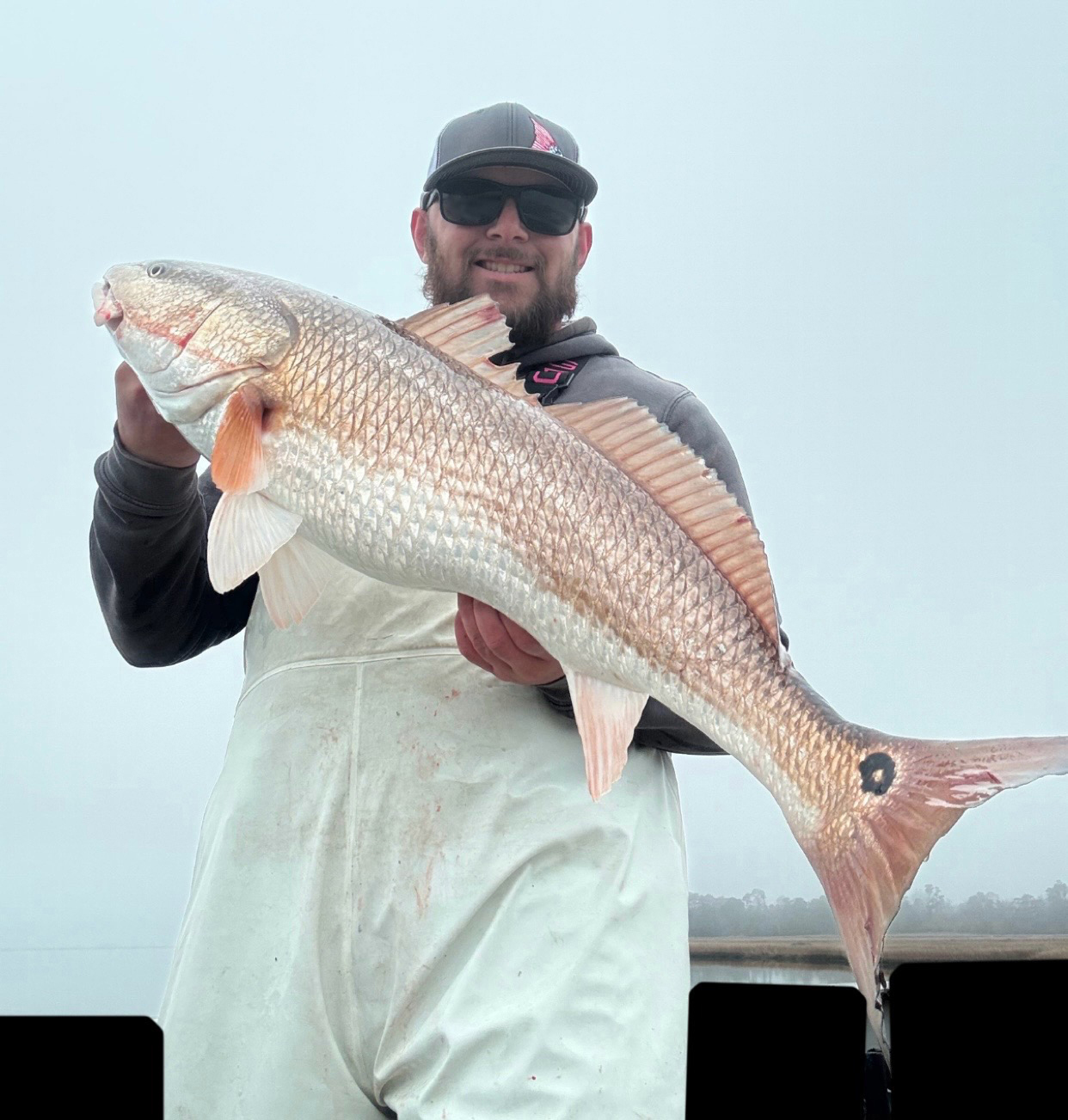
Jack Kadnar, of Wilmington, with a 36″ red drum that fell for a Z-Man EZ ShrimpZ in the Cape Fear River around Campbell Island.
Tony, of Reel Teal Charters, reports that anglers are looking forward to Atlantic bonito showing up in the area over the next few weeks. Once water temperatures start holding in the upper 50s, some fish should begin pushing in to just off the beach.
The nearshore wrecks and reefs in the 5-10 mile range continue to produce keeper black sea bass, along with white grunts, ringtail porgies, and a few small groupers.
Barry, of Family Ties Charters, reports that the black sea bass bite offshore has been the most reliable way to put fish in the cooler. Great numbers of jumbo‑sized bass are still holding in the 22-24 mile range, with both cut baits and jigs producing well.
When able to make it out to the Gulf Stream, the action has mostly been a scattered mix of wahoo and blackfin tuna.
Many anglers are waiting on the first push of Atlantic bonito to show up off the beach. There are already schools offshore, and any day the first ones could slide in nearshore.
Rod, of OnMyWay Guide Service, reports that the big news is that the Atlantic bonito are here. They aren’t everywhere yet, but some have been found on ledges off Kure Beach and Fort Fisher in the 45’ range. These early fish haven’t been on top, so locating them has meant marking bait and trolling #0 or #1 Clarkspoons behind size 1 or 2 planers. Once the fish are found, anglers can drop casting jigs to them.
The black sea bass action remains strong. There are still some fish shallow, but the true jumbos are holding in the 15-25 mile range. Focusing on structure where disturbed bait is marking heavily has been key.
King mackerel have been in the 35-45 mile range. These schoolie‑sized (7-15+ lb.) kings are holding along a clean 66-69 degree temperature break. When targeting kings, it’s important to study a current water‑temperature chart and line up those breaks with ledges and rocks.
Out at the break, anglers have been picking off a few wahoo and scattered blackfin tuna.
While out deep, dropping on ledges in the 140’ range has produced big vermilion snapper (4-5 lbs.) along with some triggerfish.
