
Southport/Oak Island – May 2026
Angie, of Dutchman Creek Bait and Tackle, reports that there’s been an excellent Atlantic bonito bite off the beach. Spanish mackerel are moving in, and they’re hitting the same trolled spoons and casting jigs as the bonito.
Anglers fishing both in the surf and from the local piers are catching a mix of spanish mackerel, bluefish, and whiting.
Inshore anglers continue to pick away at red drum as these fish break out from their winter areas and start moving around more. The red drum action will only improve as more bait arrives.
Sheepshead fishing is starting to pick up, with fish moving back inshore from their nearshore wintering areas.

Josh, of Oak Island Sporting Goods, reports that nearshore anglers have had a bunch of success with Atlantic bonito and spanish mackerel. For both species, trolling has been producing the better numbers, though casting metal jigs to surface-feeding fish will also produce strikes.
Surf anglers are doing well now that sand fleas are showing back up, including catches of larger whiting and some black drum.
The local piers have started seeing the first king mackerel of the year.
Inshore, red and black drum are still the main targets for anglers fishing along the waterway, and sheepshead are being found in better numbers as they move back in from the ocean.
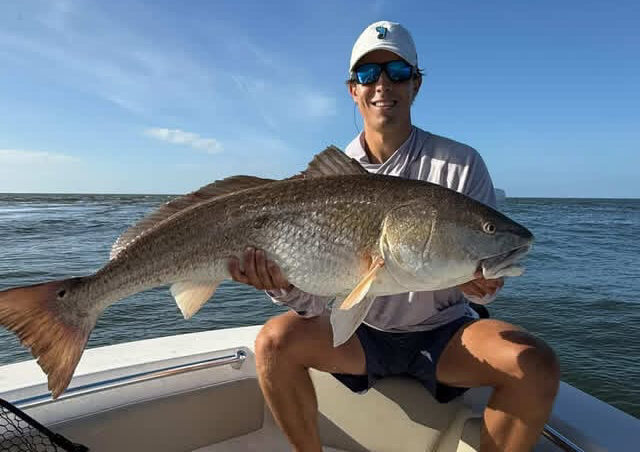
Will Koontz, of Salisbury, landed this 43″ red drum one mile off Oak Island on a Carolina rig.
Ian, of Fin Fisher Charters, reports that both Atlantic bonito and spanish mackerel have been all over the 2-5 mile range. The trolling bite has been the most consistent way to put fish in the boat, with deep diver plugs being the top choice.Gray trout are on the nearshore reefs and are willing to hit vertically jigged metal.
Inshore, the best action for red drum and black drum is around docks, points, and other hard structure in the waterway. The red drum are preferring cut mullet on a Carolina rig, with the black drum feeding better on crustaceans such as blue crab chunks or fiddlers. Red drum can also be caught on artificials (with some patience), though natural baits are currently outperforming everything else.
Sheepshead are showing up inside, and they are best targeted with crab‑based baits.
Zane, of Falling Tide Fishing Adventures, reports that the Atlantic bonito bite is best when fishing over nearshore structure and throwing casting jigs. The technique is a little different with bonito, since they are less likely to be found feeding on top. Cast your jig as far as you can and let it drop to the bottom before ripping it back to the boat.
Some schools of big red drum are off the beach, which can be caught by either sight‑casting or fishing cut bait (such as cut bluefish) around nearshore structures and ledges.
Anglers looking for that spring red drum bite are likely to find that these fish are still in a transition period. Red drum are mostly going to be back in the creeks; however, they are just starting to get more active in moving around.
Steve, of Reel Em Up Charters, reports that bait has been showing up, and that’s getting the red drum to move around. The best approach is to target creeks and fish oyster rocks and feeder creek mouths on moving water, both rising and falling tides. Fresh shrimp or cut menhaden on the bottom has been working best.
Some black drum are mixed in with the reds, especially when fishing areas with more oysters. Shrimp is the best bet for the black drum.
Popping out of the inlet and throwing spoons in the 15-30’ range will produce some spanish mackerel.
Wally, of Oak Island Fishing Charters, reports that targeting Atlantic bonito has been the hottest bite, with both trolling spoons and casting jigs being the top producing tactics.
Spanish mackerel are moving in now, too, and will only get better.
King mackerel fishing remains best in the 25‑mile range, with frozen cigar minnows being the top bait option. A bunch of menhaden are showing up on the beaches, so it won’t be long before the kings move inside.
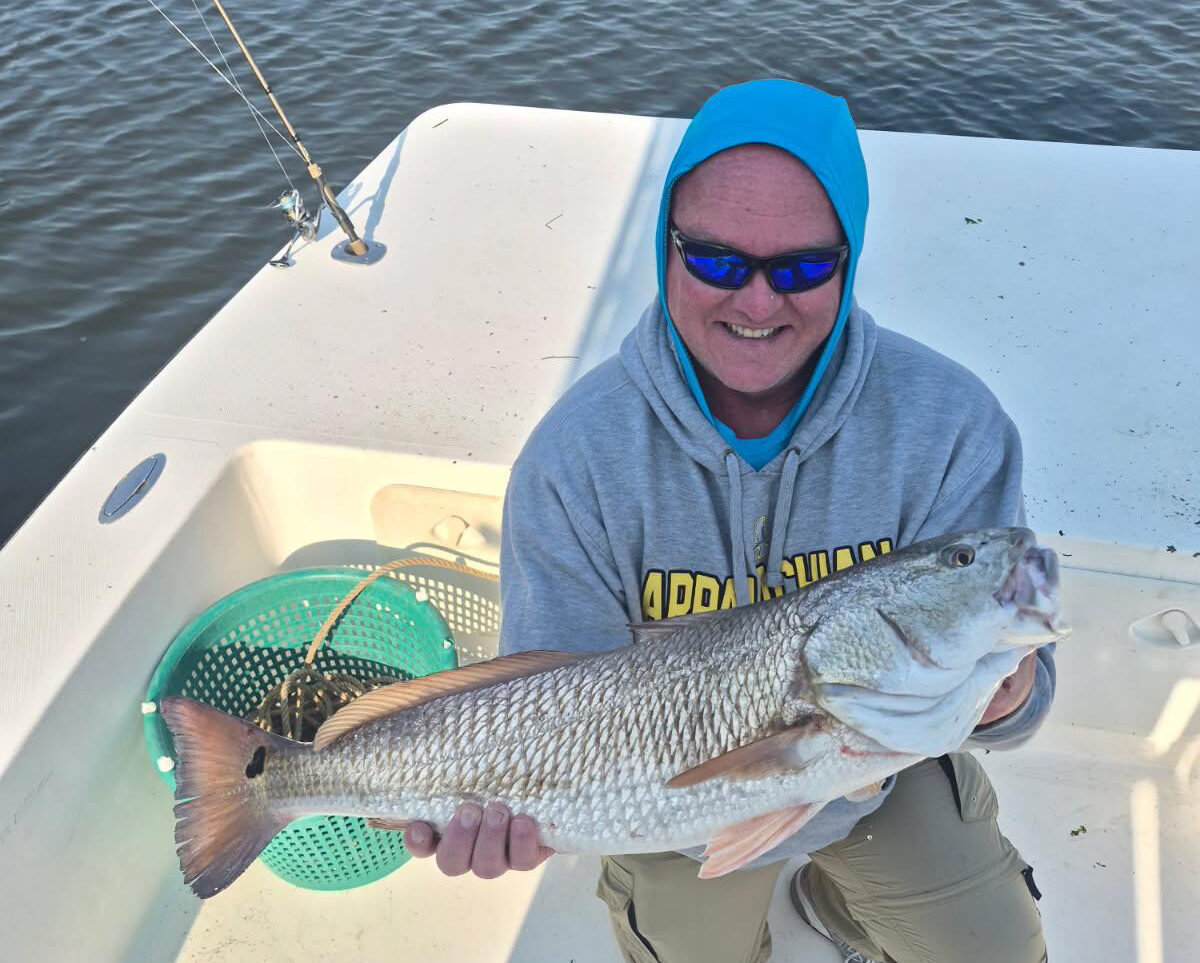
Jerry, of Greensboro, landed this red drum in the ICW near Southport on a live pogie. He was fishing with Capt. Steve Von Voight of Oak Island Fishing Charters.
Ryan, of Fugitive Charters, reports that this big push of Atlantic bonito is starting to slow down and the spanish mackerel are moving in. This first wave of spanish can be a little smaller, but the bigger, springtime spanish shouldn’t be far behind.
Bottom fishing has remained steady, with the best black sea bass bite pushed out into the 65-85’ range.
Anglers are looking forward to grouper season opening on May 1. For this fishery, focus on deeper ledges in the 120’ range.
While off the beach, anglers are seeing the first springtime king mackerel. These are mostly the “schoolie” fish in the 7-15 lb. range.
Steele, of Catherine Anne Sportfishing, reports that nearshore anglers have been on some great Atlantic bonito fishing. Most of the fish have been found in the 1-5 mile range, such as around the Lockwood ledges and over on the east side of the shoals.
Spanish mackerel have started to show up in good numbers. Both the bonito and spanish are being caught on Clarkspoons behind planers or by casting jigs at surface‑feeding frenzies.
King mackerel fishing has been really good in the 20-30 mile range as they start to push in with the warmer water. Bottom fishing out in this range will produce some big black sea bass.
The Gulf Stream bite has come alive for both blackfin tuna and wahoo, and mahi should start to arrive any day.
A handful of blue marlin have already been caught out deep (over 100 fathoms), and it only gets better moving into May.
Troy, of Ocean Crest Pier, reports that a switch in wind direction pushed a bunch of croakers to the pier. Bottom fishing has also generated a number of whiting.
Sight‑casting efforts have been producing spanish mackerel as they start pushing into the area, and plenty of bluefish are around and hitting the same plugs and jigs.
Steve, of Oak Island Pier, reports that there have been a ton of whiting being caught, with cleaner water windows being the key to the action. Anglers doing some sight casting are finding plenty of bluefish and some spanish mackerel.
With water temperatures quickly on the rise, the first king mackerel of the year shouldn’t be too far behind.
