
Ocean Isle/Holden Beach – September 2026
Austin, of Ocean Isle Fishing Center, reports that spanish mackerel fishing has been good anywhere from the beach out to 40’.
Keep an eye on any bait balls off the beach, as some tarpon are around and feeding on them.
The king mackerel action has been quiet, but the smaller kings (8-17 lbs.) are moving into the 65’ area. A good cold front should be the last switch to flip to bring more of those bigger kings in.
Structure in this range (65-80’) has been holding cobia and a few amberjacks around the wrecks.
For bottom fishing, the shallow bottom areas (70-100’) have a bunch of American red snapper and gag grouper on them, where pushing deeper (100-120’) gets into some keeper scamp grouper and triggerfish.
Offshore trolling action has still been spotty with the hot water. Boats are finding a few wahoo, and recently a better quality of blackfin tuna have moved in. Focus on finding water that is slightly cooler, as that’s where the strikes are coming from.

Tim, of Tideline Charters, reports that the red drum continue to produce steady action. The lower end of the tide has been the best, with fish either up in the grass or on the outer edge of exposed oyster beds. Once the tide changes, don’t move too far, as these fish really won’t move much with water temperatures at times in the low 90s. Finger mullet (live or cut) has been the best bait option.
Anglers are just starting to have some success with trout and will do best by focusing on these specks once the tide is pushing in or closer to high. It’s still early, but September is a good time to pattern where these fish will be later in the fall.
Anglers fishing around the jetty can have success floating live shrimp around the rocks. This tactic will produce any mix of black drum, speckled trout, red drum, and sheepshead.
If you pop off the beach, plenty of spanish mackerel are around to sight cast to. The easiest way to determine if that is an option is to look at the water clarity—if you have clean water, the spanish will be active, and if it’s dirty, head back inside.
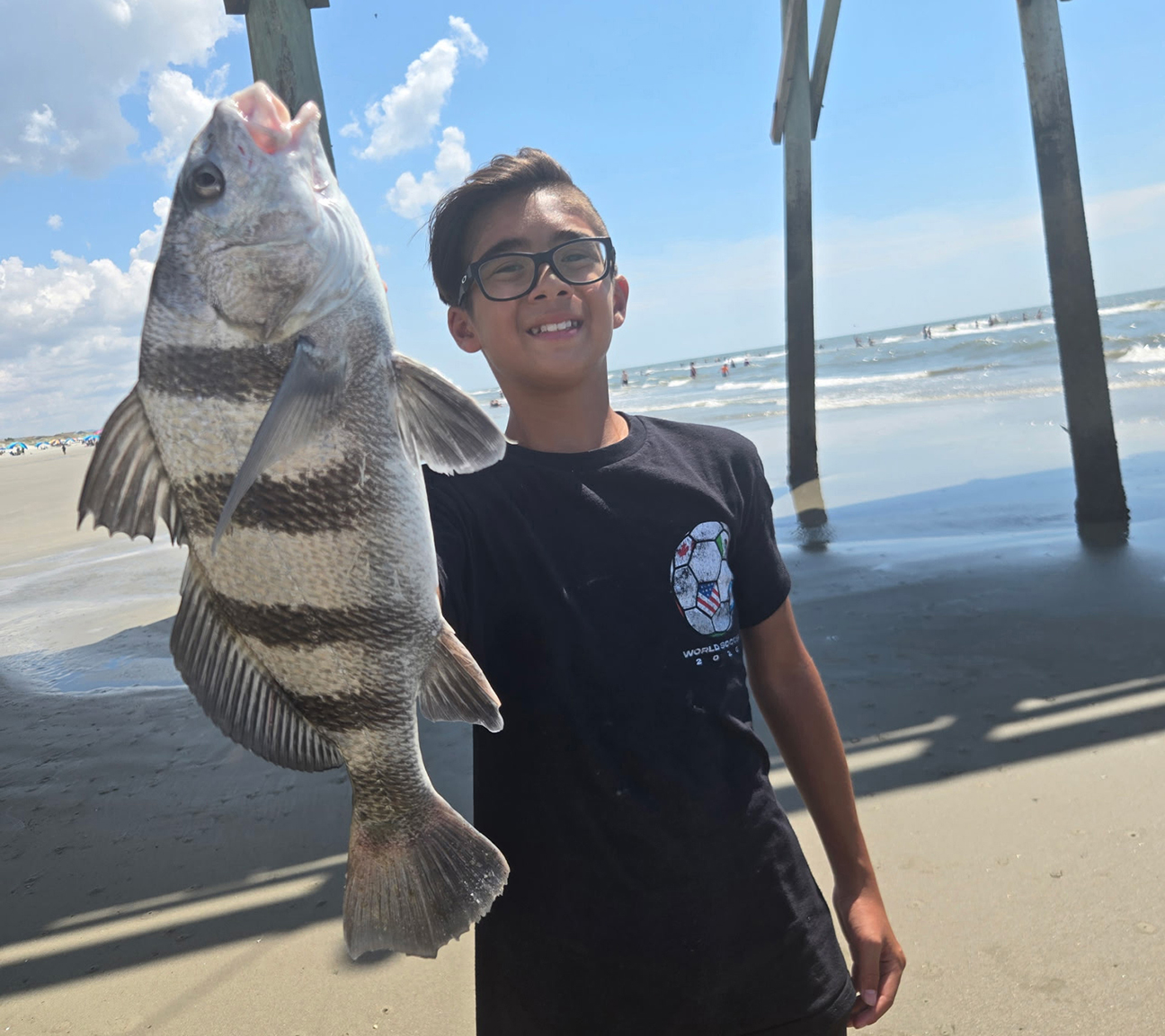
Zack Baker, of MA, reeled in this black drum from the Sunset Beach Fishing Pier using shrimp.
Tripp, of Capt’n Hook Outdoors, reports that the red drum are scattered. The better action has come from targeting grass lines and oyster rocks along the ICW and near docks. Overall, it’s the deeper bodies of water, bigger creeks, and the waterway that are holding the most fish as it’s too hot in the shallower creeks.
A few speckled trout can be found when clean water pushes in from the ocean, especially when that lines up with a rising tide. A live shrimp rigged under a cork is the top strategy for the trout.
Live shrimp will also attract attention from sheepshead and black drum when fished around deeper structures or out on the jetty.
Some over-slot red drum are being caught around the jetties, and the mullet that are pushing in and moving around the inlet will only help the red drum action.
Spanish mackerel have been consistent off the beach, with water clarity determining how strong the bite is.
Stewart, of Rigged and Ready Charters, reports that offshore anglers continue to be on some really good bottom fishing action. Plenty of black sea bass, triggerfish, vermilion snapper, and some of the keeper grouper species (graysbys and scamps) make up the majority of the catch.
Nearshore anglers are finding good spanish mackerel action, with both the quality and numbers slowly getting better.
This is the time of year that big red drum will be moving along the beachfront.
In the surf zone, a nice showing of speckled trout has come for anglers fishing Carolina-rigged live baits. This bite is almost strictly in the early morning or late afternoon and into the evening.
Inshore anglers continue to find plenty of flounder. Live bait fished tight to the bottom is all that’s needed to generate some action.
Red drum are scattered along edges and docks in the ICW, with anything from live or cut baits to topwater plugs and soft plastics enticing them to strike.
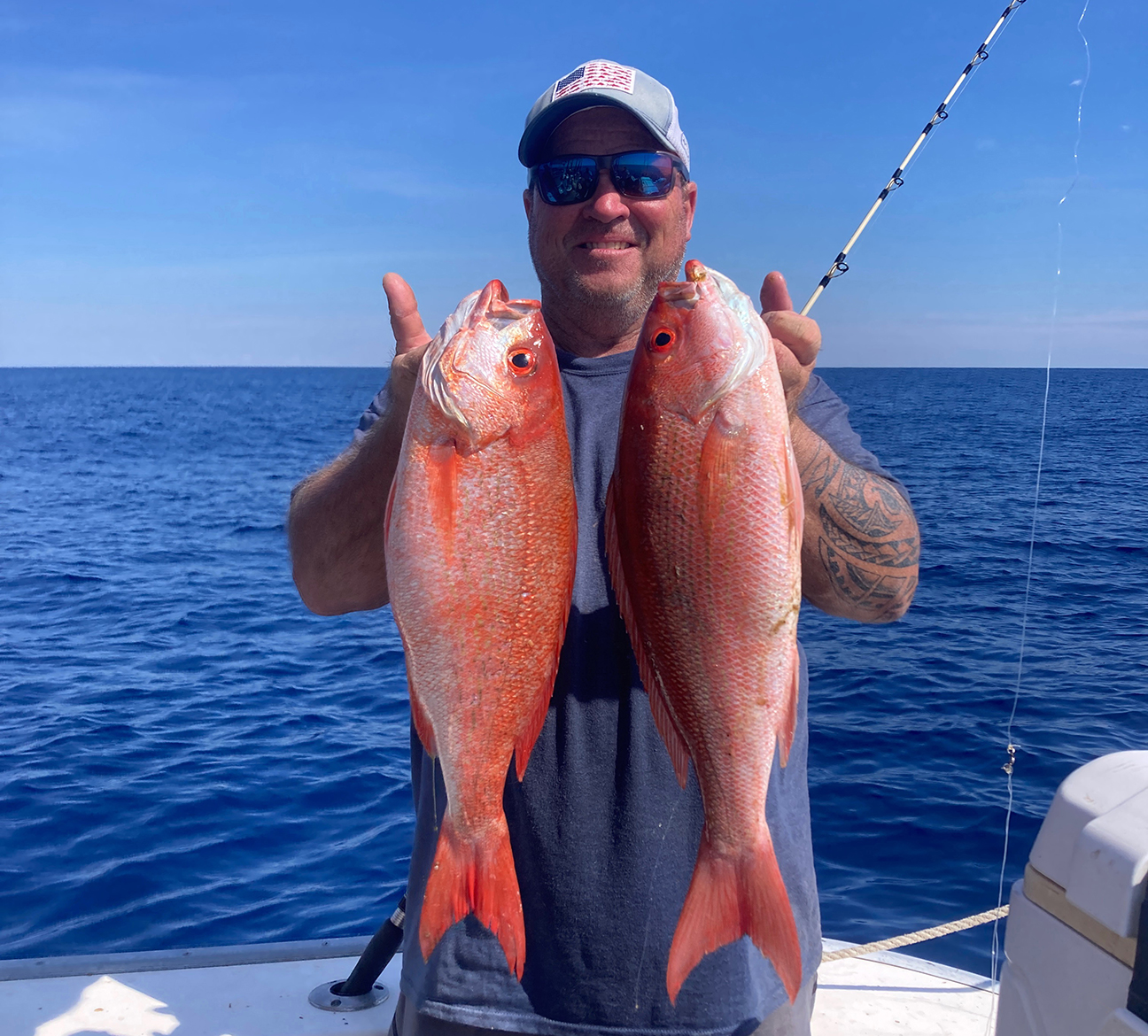
Tom Janke, of Supply, doubled up on these 5 lb. beeliners in 140’ of water offshore of Shallotte Inlet. Both fish hit cut squid.
Anthony, of Salt Fever Guide Service, reports that some wahoo and blackfin tuna are around.
Bottom fishing is probably the most reliable offshore option, though. Pushing out and fishing the deeper (150’+) spots will produce scamp grouper and mutton snapper.
Plenty of big black sea bass, vermilion snapper, triggerfish, and smaller gag grouper (released) are in the 85-100’+ area.
Philip, of Rod and Reel Shop, reports that inshore anglers have been finding the flounder bite to be simply “on fire.” Live bait works, but most are doing just as well, if not better, dragging or slowly bouncing white-colored soft plastics off the bottom.
Some slot red drum are around and hitting Marker 54 soft plastics or Vudu shrimp.
A few speckled trout are starting to show up.
Plenty of sheepshead are hanging on the inshore hard structures.
Nearshore, the spanish mackerel bite is picking up, as anglers are now seeing better-sized fish (to 20”).
Further offshore, bottom fishing is still the main game. Anglers are finding a great black sea bass bite that is much better than expected for this time of year.
Anglers sticking to the surf zone are finding a mix of bluefish, whiting, croakers, sharks, and some scattered red drum.
Mike, of Ocean Isle Beach Fishing Pier, reports that anglers out on the pier in the early morning have been finding some speckled trout when fishing with live shrimp.
Throughout the day, bottom fishing efforts are producing whiting, croakers, sharks, and a few pompano.
The casting action for spanish mackerel and bluefish has been pretty slow.
