
Carolina Beach – December 2025
Grayson, of Island Tackle and Hardware, reports that surf anglers have been catching plenty of whiting, with black drum and the occasional speckled trout mixed into the action.
In the Cape Fear River, anglers are finding speckled trout and red drum. Both live shrimp and artificials—soft plastics, artificial shrimp baits, topwaters, and MirrOlures—are producing strikes.
Off the beach, keeper‑sized black sea bass are starting to show up in the 10‑mile range.
Looking ahead to winter, surf anglers will do best focusing on whiting with cut shrimp. Inshore, speckled trout and red drum will remain the most attainable targets, with holes in the backs of creeks offering good opportunities for both.

Christian, of Seahawk Inshore Fishing Charters, reports that the main action is searching the shallows for larger schools of small to slot‑sized red drum. Dead shrimp or mud minnows are effective natural baits, while lightly weighted and scented soft plastics are the top artificial option.
Black drum are mixed into these same creeks and flats, with dead shrimp easily the most productive bait for these fish that are mostly in the 14-16”+ range. Target areas along marsh banks and near oyster points for the best results.
Speckled trout continue to push into the creeks of the lower Cape Fear River. Live shrimp fished in creek mouths on a falling tide has been the most productive tactic.
Tommy, of Mungo Fishing Charters, reports that good numbers of red drum are being found around docks and rock structures while soaking dead shrimp, mud minnows, or cut blue crab on the bottom. For this bite, a low to incoming tide has been best.
Some reds are starting to push back onto shallow flats as they settle into their winter pattern. This action has been a sight‑casting bite, with a wide variety of soft plastics on lightweight jig heads proving most effective.
Black drum are being caught around inshore structure, with anglers finding success around rocks, oyster bars, and deep creek holes. Fresh cut shrimp or cut blue crab are the best baits for black drum.
For speckled trout fishing, the best success has come around inlets and rock structures, with soft plastics and hard twitch baits producing the most strikes.
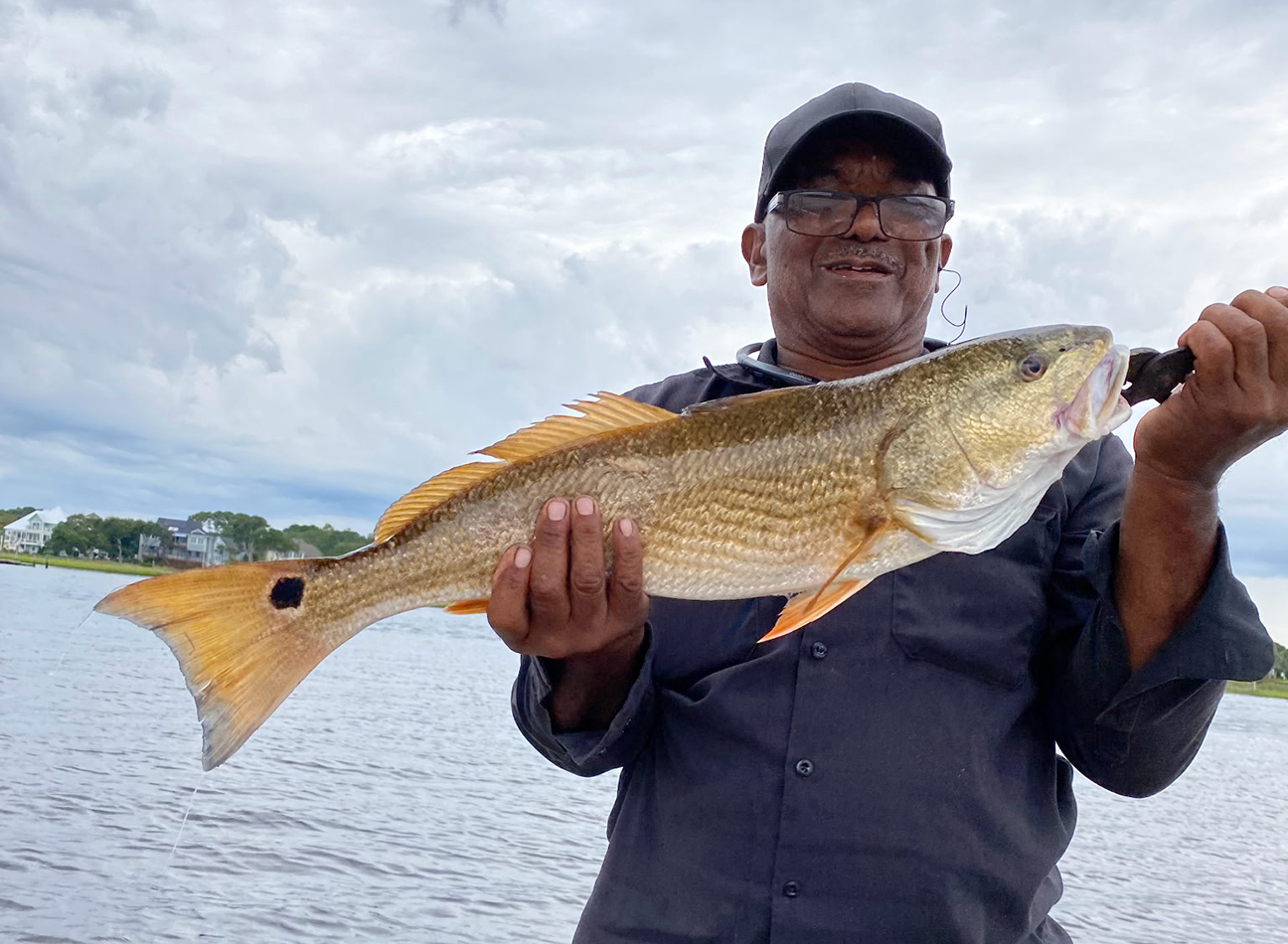
Jimmy Davis, of Lake Waccamaw, landed this 27″ red drum in the Carolina Beach area on an artifical sand flea.
Mason, of Grand Slam Fishing Charters, reports that for speckled trout, live shrimp under a float has been the best option. Most of the trout are being found on ledges in the 6-10’ depths with some current, and the majority of these fish are in the 16-20” range, with a few larger fish scattered in.
Red drum are beginning to group up and push into creeks off the Cape Fear River. The ideal spots feature muddy bottoms that have shells nearby, with the best holes in the 6-8’ range.
Black drum are mixed into these same areas, with shrimp fished closer to the bottom producing best.
Drew, of Strike Inshore Charters, reports that red drum are being found in the backs of creeks or staged around oyster points in deeper main channels with minimal moving water. While these drum are beginning to school up (as they do in winter), fluctuating temperatures have delayed that pattern.
Speckled trout are setting up around deeper pockets with nearby flats, and having a little water flow is key. Z‑Man paddle tails and Z‑Man Prawn StarZ have been productive soft plastics, especially in natural color patterns with bright tops or tails, and slowing presentations is critical—giving baits time to fall naturally and entice strikes. Live shrimp also remains highly effective (when available).
Tony, of Reel Teal Charters, reports that anglers running to nearshore bottoms are finding good numbers of gray trout, with 3/4-1 oz. vertical jigs being the preferred lure. These shallower bottom structures are also holding ringtails, tautogs, and some sheepshead.
A little farther out in the 5-10 mile range, black sea bass are beginning to push in, and these keeper fish can usually be found in shallow waters until mid‑January.
Inshore trips continue to focus on speckled trout as the trout move toward their wintering areas. Fishing shrimp on the bottom is producing black drum and some sheepshead.
Barry, of Family Ties Charters, reports that this is the prime time to find large “knot‑head” sea bass in close. They’re over ledges in the 17-25 mile range holding bait.
King mackerel fishing has been hot. Anglers just need to locate favorable 68+ degree water temperatures, which are currently in the 20‑mile range and will soon push out to 35-40 miles.
In the Gulf Stream, the blackfin tuna and wahoo action remains strong as long as water temperatures hold above 72 degrees.
Anglers are watching for bluefin tuna, which can begin showing up off the beaches anytime between December and January. These giants feed heavily on bluefish, which are usually still plentiful around nearshore wrecks. False albacore are also abundant in these same areas, providing excellent light‑tackle battles.
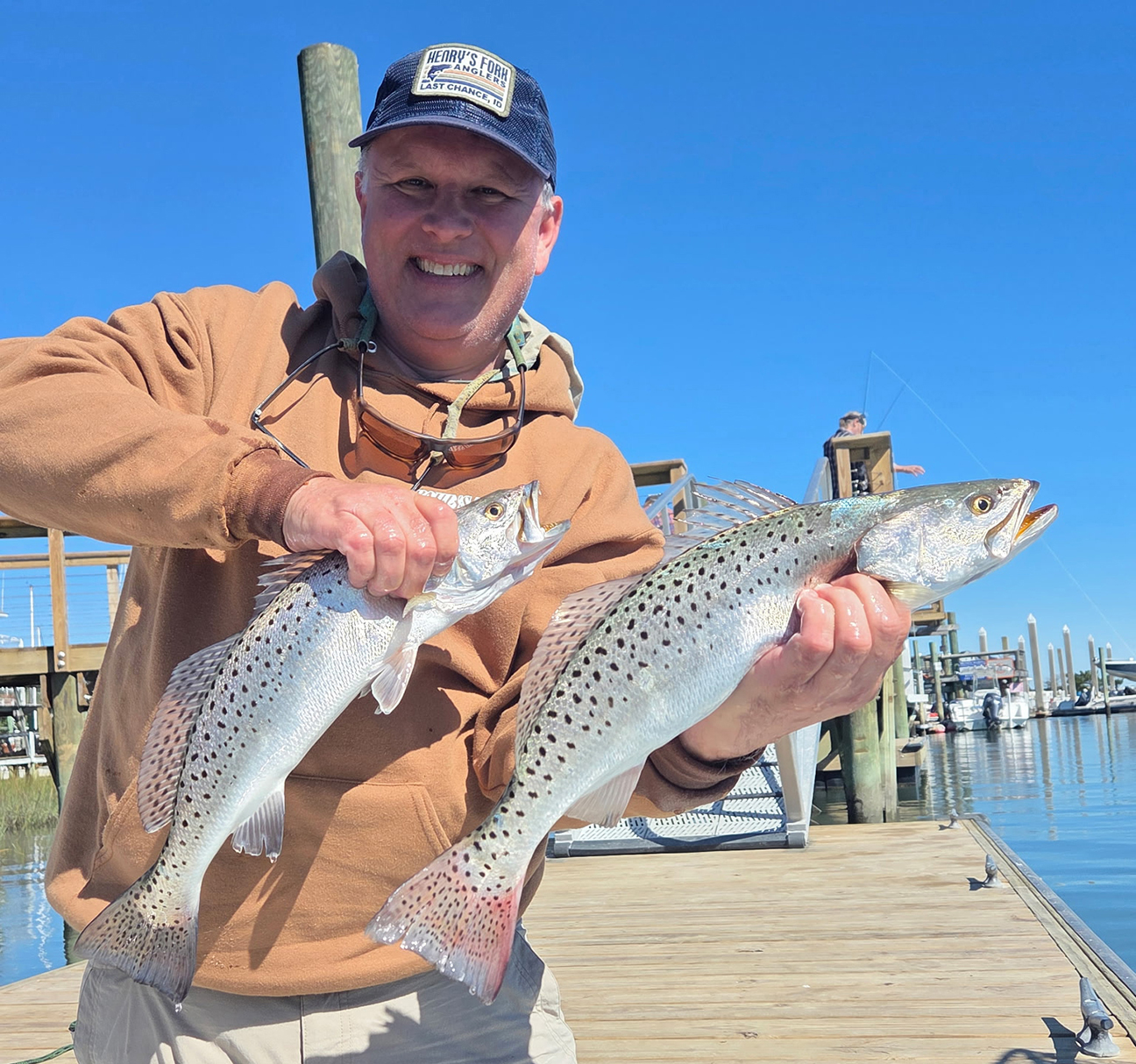
Ben Graham, of Hickory, doubled up on speckled trout in the Carolina Beach area using a green grub with a red jig head. He was fishing with Capt. Jamie Rushing of Seagate Charters.
Rod, of OnMyWay Guide Service, reports that winter is a prime opportunity to bottom fish for vermilion snapper, triggerfish, and black sea bass (the sea bass push into the 10-25 mile range each winter).
Trolling anglers are still finding a solid king mackerel bite. Focus on areas with at least 68‑degree water, with 70 degrees being ideal. These fish school up in winter, so once located, the bite is typically fast. Blue Water Candy dead bait rigs, Drone spoons (#3.5), and false albacore belly strips all have their times of success.
Out at the break, wahoo fishing has been excellent, and blackfin tuna are mixed in and will hold there through the winter.
Another fishery to watch is the giant bluefin tuna. Their patterns vary year to year, with some seasons seeing them right off Carolina Beach and others closer to Frying Pan Shoals. Slow‑trolling live bluefish around birds remains a favorite tactic for connecting with these giants.
Jeremiah, of Kure Beach Pier, reports that whiting have made up most of the action. Black drum are being caught on the same cut shrimp offerings, and a few speckled trout have been landed, though most have been on the smaller side.
