
Carolina Beach – July 2026
Lewis, of Island Tackle and Hardware, reports that surf anglers are seeing a mix of sharks, croakers, pompano, whiting, and all the pinfish one could want.
Inshore, live bait (such as mud minnows, shrimp, or menhaden) has been best for targeting red drum, speckled trout, and flounder.
Catches of sheepshead have come from those working bridges and docks with live fiddler crabs.
Off the beach, spanish mackerel and bluefish are around but scattered.
Black sea bass and ringtails are all over the nearshore structures.
King mackerel have been a little slow, with most action coming from the 15-20+ mile range. This same 15-20+ mile range could also start seeing some scattered mahi over the next month.
Offshore runs are producing wahoo and some blackfin tuna on ballyhoo.

Christian, of Seahawk Inshore Fishing Charters, reports that anglers have been picking away at the scattered summertime red drum bite. High or low tides haven’t made much difference, but fresh bait is key (live or cut), whether that is menhaden, finger mullet, or mud minnows.
The flounder are fired up, with good action on 18-22” fish coming from using both live finger mullet and menhaden rigged on jig heads or Carolina rigs. Drag these baits along the bottom near grass edges or shell bottoms during higher tides.
Tommy, of Mungo Fishing Charters, reports that red drum fishing has been steady despite these fish being scattered. Natural baits are the key, with cut mullet, cut or live menhaden, or live minnows all working great on Carolina rigs. Cast baits up against grass banks or in deeper drop-offs.
Speckled trout action has been hit or miss. Most bites are coming in the low light hours while topwater fishing, and anglers need to be sure to fish near structure such as oyster bars. If not getting action on topwaters, switch over to shrimp imitation soft plastics (such as D.O.A.).
Sheepshead are around for those using mud crabs or fiddler crabs up tight to bridge pilings in search of bites.
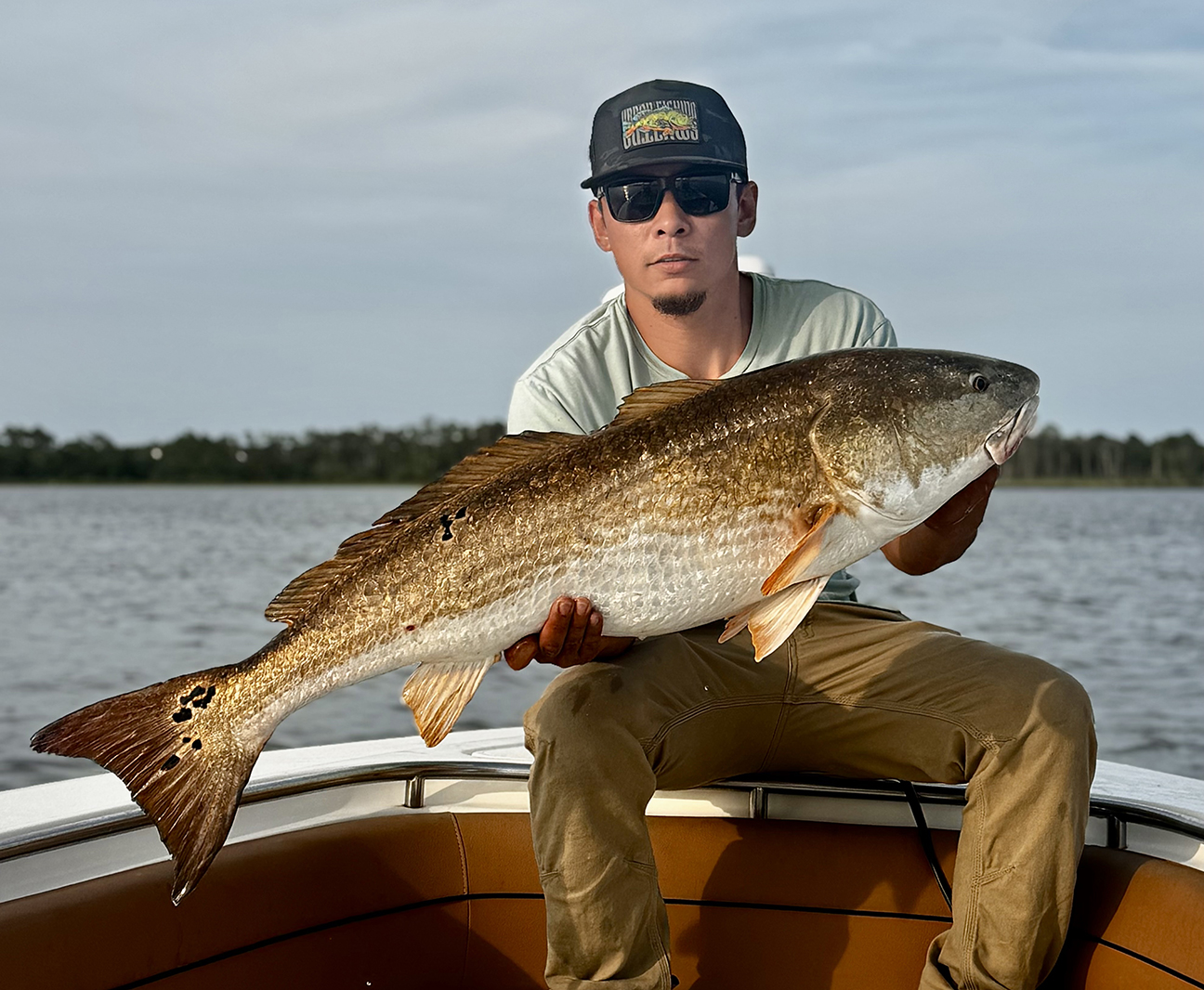
Mikey Racca, of Wilmington, with a 44” red drum that was caught on a live pogie in the lower Cape Fear River.
Mason, of Grand Slam Fishing Charters, reports that red drum fishing has been best around oyster beds in the backs of creeks on lower tides. Focusing on deeper edges with fresh bait (such as live or cut menhaden) has been the key. On higher tides, break out the popping corks and drift baits over muddy bays with nearby oysters and points.
Some sheepshead and black drum are around for anglers that want to target docks.
Plenty of flounder are staged up against the banks and are ready to strike any live bait put around them.
Drew, of Strike Inshore Charters, reports that natural baits are best for the scattered red drum. Any variety of live or dead shrimp, menhaden, or mud minnows have been working. Find areas with good water flow and structure, such as oyster points, shell banks, or docks.
These same tactics are also producing a lot of flounder and some scattered speckled trout.
Tony, of Reel Teal Charters, reports that red drum can be found by bouncing around docks in the ICW and Cape Fear River. Soaking cut bait is the most reliable way to get some action.
Sheepshead and the occasional black drum are staged up around hard structure such as rocks, pilings, and bridges in both the ICW and river. Fiddler crabs are the top bait choice.
Flounder have shown up in force and are all over the place. Live bait is the best way to generate some action, but artificials are also providing plenty of success.
A few speckled trout are occasionally mixed in while targeting the deeper grass banks and shell transitions for the flatfish.
Keeper sea bass can be found starting in the 10-mile range. Some amberjack and king mackerel are being caught in this same range with live baits.
Spanish mackerel has been a tough bite. Trolling Clarkspoons behind planers has been the best way to locate the spotty schools.
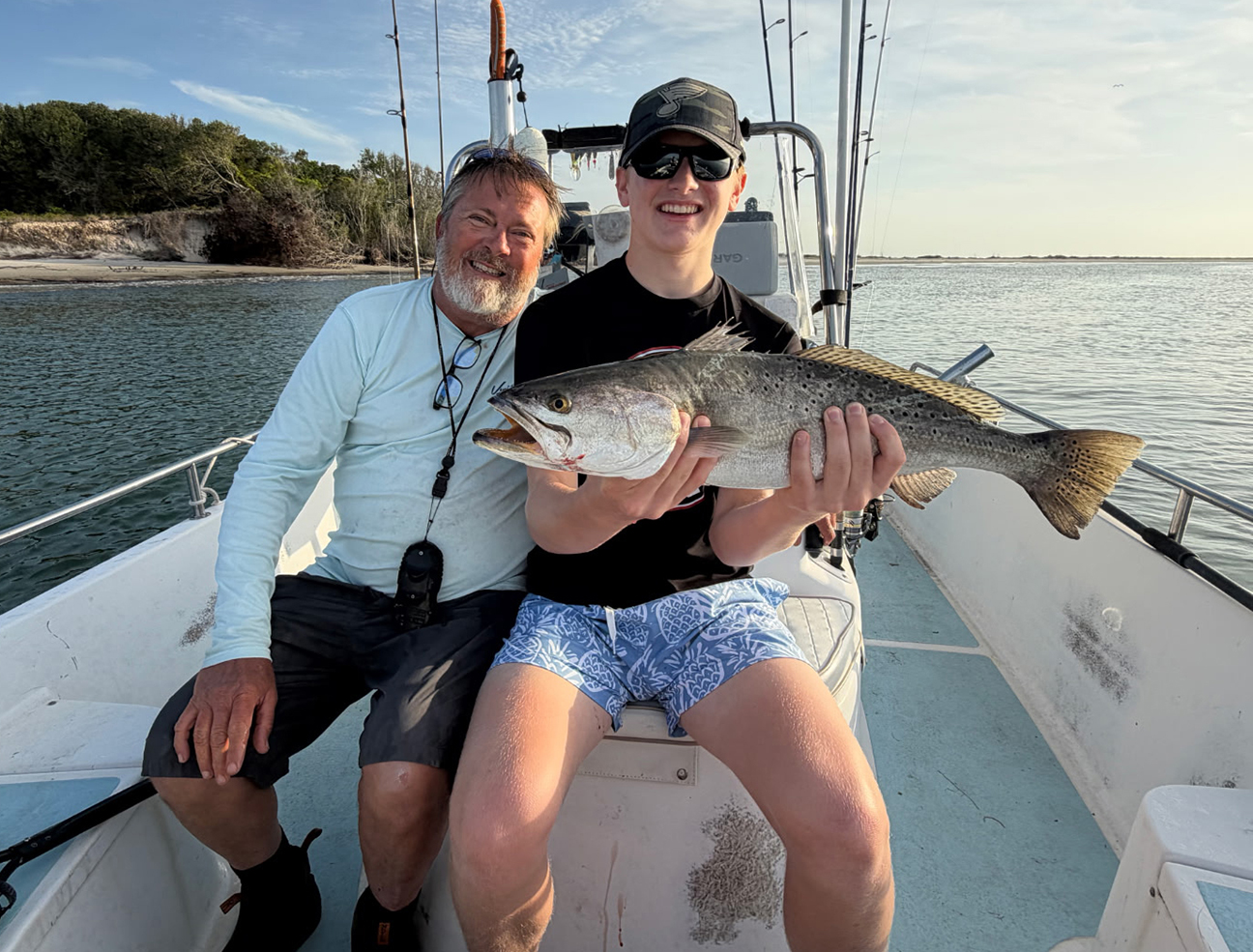
Cameron Fister, of MO, reeled in this 26.5″ speckled trout in the Carolina Beach area on a Heddon Super Spook. He was fishing with Capt. Jamie Rushing of Seagate Charters.
Barry, of Family Ties Charters, reports that the spanish mackerel (and bluefish) bite has been somewhat steady. Trolling smaller #0 or #00 Clarkspoons behind #1 planers has been the ticket.
Anglers getting out into the 20-mile range have been seeing the mahi action pick up, as catches are getting more consistent. This same range is also producing a mix of king mackerel, barracuda, and amberjack.
Bottom fishing have been producing grouper, black sea bass, and vermilion snapper.
Rod, of OnMyWay Guide Service, reports that nearshore anglers are finding some spanish mackerel, though the bite has been challenging. Trolling Clarkspoons behind planers will give anglers the best opportunity until more fish and more bait shows up.
A bunch of bluefish are around, and they will hit trolling spoons or metal casting lures.
King mackerel have been spotty, with most of the action scattered in the 12-25 mile range.
One fishery picking up is the nearshore mahi bite.
For bottom fishing, all the groupers are open (scamps, gags, and reds), and anglers are finding them mixed in with big pinkies (red porgies), grunts, and vermilion snapper.
Anglers continue to catch a bunch of big black sea bass in the 30-mile range.
Those making the run to the Gulf Stream (currently between 650-1200’) are finding some larger mahi and a bunch of billfish.
Jeremiah, of Kure Beach Pier, reports that bottom fishing has been good for the tons of whiting and croakers around.
Anglers are just starting to see some pompano mixed in.
Those sight casting plugs are catching bluefish and some spanish mackerel.
