
Carolina Beach – March 2026
Lewis, of Island Tackle and Hardware, reports that anglers looking to wet a line are having some success targeting black sea bass in the deeper nearshore areas. Fish are on just about any structure in the 10+ mile areas, but pushing out to 15‑20 miles is where you can expect to see much more of the quality fish.
Some larger wahoo have been caught in the Gulf Stream.
Moving into March, surf anglers should start to see some croakers moving in.
Whiting will be showing up around the mouth of the Cape Fear River, with a few whiting also being caught by surf anglers around this same time.
Inside, the speckled trout, red drum, and black drum action will be scattered around.
Off the beach, the area should start to see the first bluefish schools arrive.

Christian, of Seahawk Inshore Fishing Charters, reports that anglers are having success catching black drum and a few red drum (16‑20” range) in creeks and bays. Dead shrimp is easily the top bait option for now, with most strikes coming from shrimp fished on the bottom or under a float. Target oyster banks and shell‑covered bottoms, as they seem to be holding most of the fish.
Artificials such as Gulp shrimp or scented Z‑Man soft plastics are starting to get more action from the red drum. As water temperatures begin to push up, they’ll only feed more aggressively as they spread out and move along the banks or grass edges.
Tommy, of Mungo Fishing Charters, reports that if you can find the right conditions, this is a great time of year to target schools of red drum ocean‑side on the shoals and beaches. For success, you need a calm day and high sun to scout around and cast Gulp shrimp to the schools.
Inside, focus efforts around docks for a mix of black drum and red drum. Fishing on the warmer days really helps get the fish more active and willing to feed. Dead shrimp or fresh cut mullet is best for both species.
With the cold, clear water conditions, be sure to stay well off the fish, as these fish can be easily spooked.
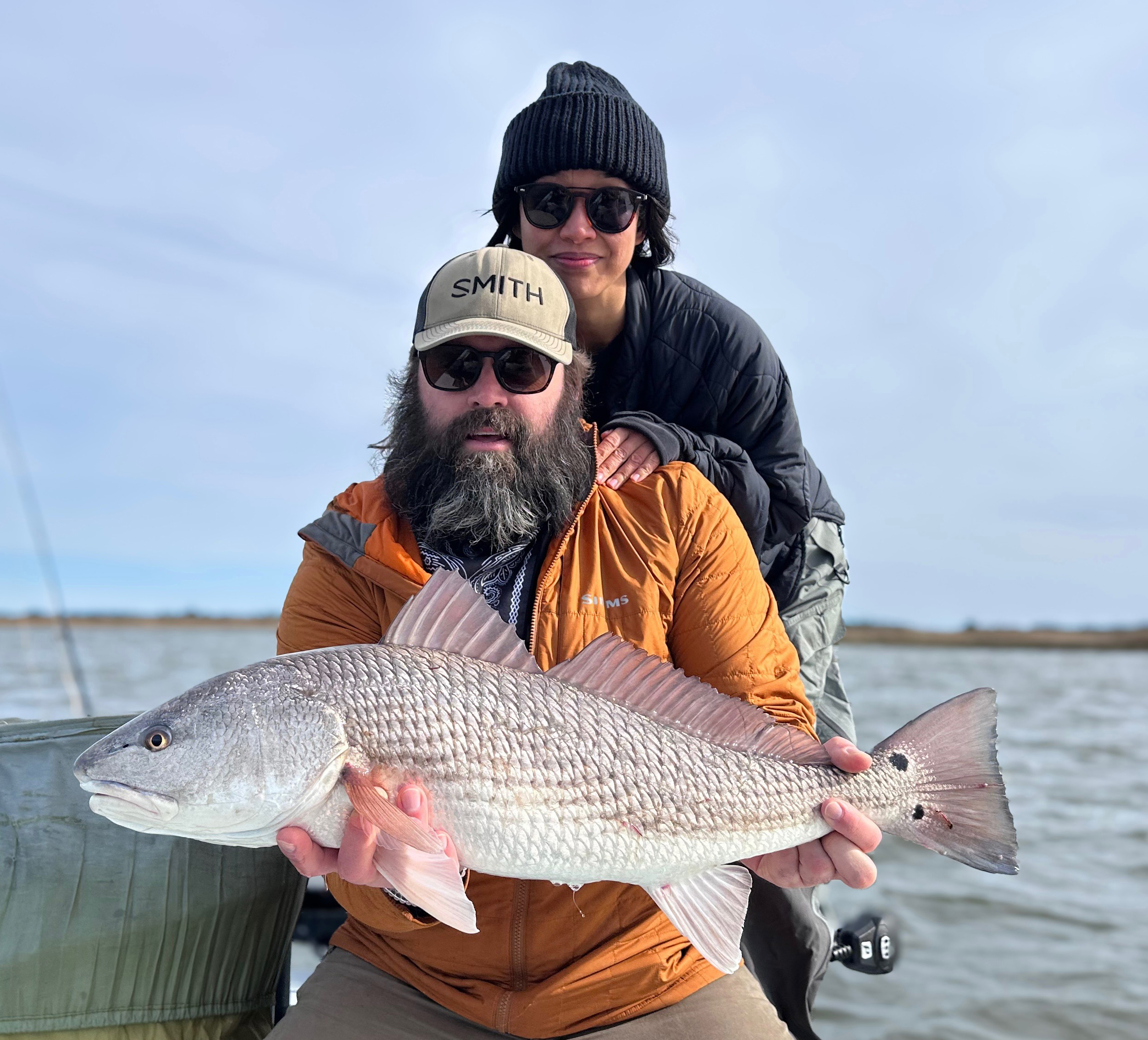
Allen Grant, of High Point, caught this red drum in the Cape Fear River on a Z-Man paddle tail. He was fishing with Capt. Allen Cain of Sightfish NC.
Mason, of Grand Slam Fishing Charters, reports that bait fishing with fresh shrimp is about the best bet this time of year for any red drum in the area. These reds have been moving really slow, so you need to just about drop the bait on them to get a strike. Soft plastics can also have success, but be sure to utilize scent.
Speckled trout can be caught in the backs of deeper creeks or in boat basins. MirrOlures or D.O.A. soft plastics fished extremely slow can entice a few bites, though it’s been an especially tough bite.
Striped bass are another option for anglers this time of year as they are hardier in the cold temperatures. Start a striper trip by targeting the grass lines or stumps up on the banks with soft plastics. If there’s no action or marks, slip back into the 12‑15’ range and try some vertical jigging.
Drew, of Strike Inshore Charters, reports that the best action has been sight‑casting for red drum in the shallows. These drum are in big schools. The cold really keeps them from moving too much, so plan on being patient in your search. Once finding fish, paddle tails have been working best.
On the colder mornings, look for these fish to have slid into a nearby deep hole, and slowing down the bait retrieve will be key in getting a bite.
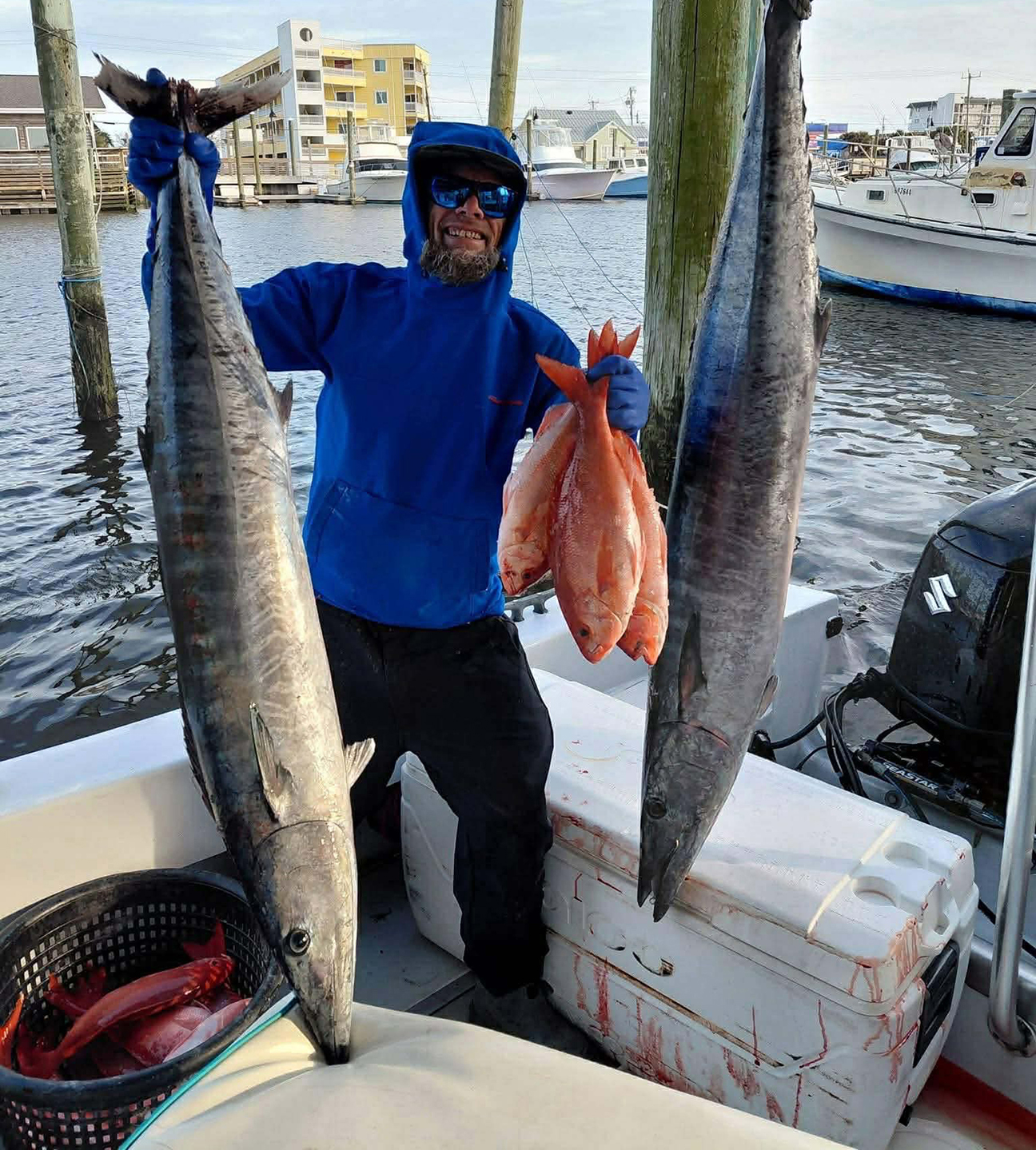
Capt. David Purvis, of the Dawn Marie, with a double header of wahoo caught offshore of Carolina Beach using ballyhoo on a pink and white Drone spoon.
Tony, of Reel Teal Charters, reports that black sea bass is the best option for nearshore anglers. You can find small fish with mixed keepers in relatively shallow water (less than 10 miles) this time of year, though the more consistent depths to catch the keepers starts at 10 miles.
Bottom fishing is also producing the occasional white grunts and ringtails.
Inshore fishing has been slow, with cut shrimp around docks the best bet to pick away at scattered red or black drum.
Sheepshead should start moving inshore by the end of March.
Barry, of Family Ties Charters, reports that offshore anglers will do best focusing on the great black sea bass action. Typically, keepers can be found in the 10‑12 mile range, but the 22‑24 mile range really kicks out the jumbos more consistently. Cut squid is the favorite and simply gets the job done.
Anglers won’t find too many other species outside the aggressive black sea bass in this range, except maybe some grunts and sand perch.
Out in the Gulf Stream, those trolling are finding some wahoo and blackfin tuna.
Rod, of OnMyWay Guide Service, reports that there is some great black sea bass fishing for anglers getting a window to run to the 22+ mile range. This range consistently produces jumbo‑sized fish, and the bite looks to continue throughout March.
Anglers know about fishing cut squid for black sea bass, but there are a couple of extra tricks to use for the bigger fish. The first option is to fish 4” vertical jigs, reeling up to about 3’ off the bottom and allowing the jigs to flutter down. The second option is using 3‑4 oz. bucktails with a Gulp soft‑plastic trailer, and then jigging them in the same method as the vertical jigs. Lastly, try dropping down some frozen finger mullet.
Other species mixed in the action are vermilion snapper and some big triggerfish.
The offshore trolling bite should be good in March. Anglers are already seeing some wahoo and blackfin tuna around, and the water temperatures are just getting in that 71‑74 degree window that wahoo love.
Kure Beach Pier was closed at the time of reports.
