
Carolina Beach – November 2026
Mason, of Grand Slam Fishing Charters, reports that most of the red drum have been holding shallow and up against oyster beds on the flats or near grass points. Carolina-rigged live mullet has been best, but finding mullet is getting tougher as bait moves out.
Speckled trout fishing is about to get going. These fish move around a bunch early in the season, with the ICW, inlet, and structure near the spoil islands all being good places to start a search. Using the current is key when trout fishing. Let the current bring your MirrOlures, soft plastics, or live shrimp right into the pocket of water you are focusing on.

Christian, of Seahawk Inshore Fishing Charters, reports that November means targeting red drum on the shallow flats as these fish move into the creeks and marshes. Most of these late fall/early winter reds are smaller (under-slot), but slot fish are often mixed in. Any variety of dead shrimp, mud minnows, or scented soft plastics will do the trick in the skinny waters.
Black drum will be found mixed in the action throughout the creeks and flats. For the black drum, dead shrimp on the bottom will work best, especially when cast up against marsh banks or on shell points. Most of these fish will be in the 14-16” range, but occasionally an upper-slot fish cooperates.
Speckled trout are going to continue to push into the lower part of the river and its creeks. Live shrimp is the hot ticket (when you can get live shrimp). Anglers should be targeting creek mouths during the falling tide.
Tommy, of Mungo Fishing Charters, reports that anglers are targeting red drum in creeks by focusing efforts around oyster bars, deep turns, and creek mouths using live shrimp, mud minnows, or dead shrimp. The reds can also be targeted with artificial baits on calm days when looking for schooled fish on big bay flats or along grass lines
Black drum can be caught in the same areas as the reds, but fresh shrimp or live shrimp is far and away the best option for the black drum.
Good numbers of speckled trout are showing up, and the best trout action has come from fishing creek mouths with D.O.A. shrimp, hard suspending baits, and soft plastic jerk baits.
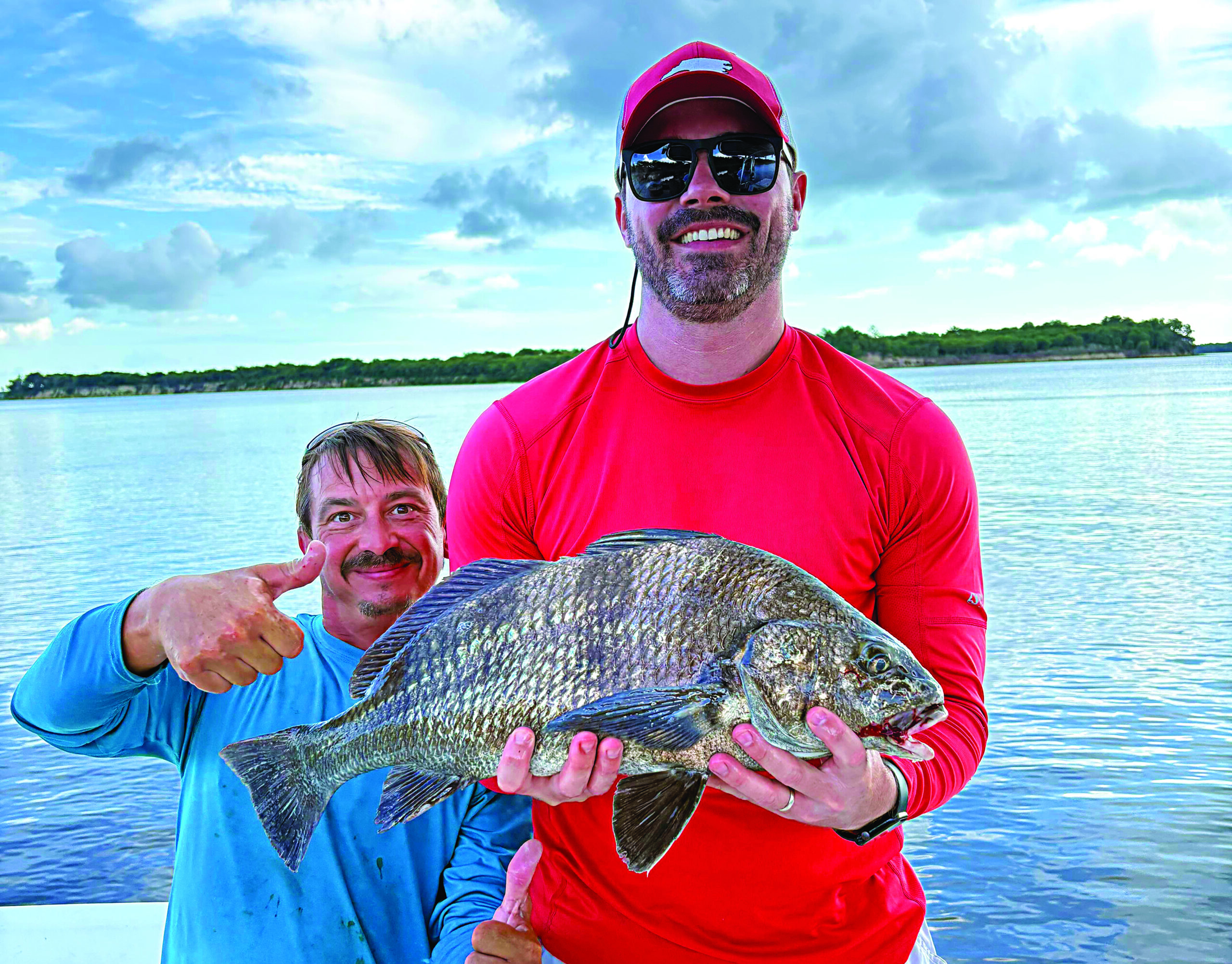
Kyle Alexander (right) with a 7.71 lb. black drum caught on live shrimp near Snow’s Cut. He was fishing with Capt. Tony Talman (left) of Reel Teal Charters.
Drew, of Strike Inshore Charters, reports that red drum are starting to school up and push into skinny water. Anglers will find that live shrimp, mullet, or just about any live bait is the key to success. Look in the backs of creeks with some structure and in holes in the creek bends.
A good push of speckled trout is underway. Anglers looking for trout should target shallow oyster banks or points with good water flow and some muddy bottom nearby. Also be willing to target some deeper holes if you are not finding any trout up shallow.
Barry, of Family Ties Charters, reports October saw a strong spanish mackerel bite, especially when pulling #00 sized Clarkspoons behind #1 or #2 planers, but the bite has started to fade.
Keep an eye out, as you might still see a bull red drum showing up under bait pods and around nearshore wrecks.
The nearshore king mackerel bite is best in the 10-15 mile range, but with all the bait on the beach, the shallow bite is still on, too. As water temperatures continue to cool off, the kings will school up more and move further offshore into the 20-30 mile range. The basic November plan for kings should be to look for any water temps over 67 degrees.
Further out, the bottom fishing action is still going strong, with lots of snapper, black sea bass, and grouper.
Offshore, the mahi bite has mostly faded out with the water cooling off, but the wahoo and blackfin tuna bite will be picking up moving through November and until the end of the year.
Rod, of OnMyWay Guide Service, reports that after getting through this run of north winds, the king mackerel fishing should be good right through November. The key for November king fishing will be to look for 70-degree water temperatures. That water temperature could be anywhere from 12-20 miles out, and it will continue moving further offshore the later we get into the year. Study your SST shot and focus efforts over structure, rocks, and live bottom in that 70-degree temperature area.
Closer to the beach, false albacore are showing up and tons of bluefish are around.
Spanish mackerel are thinning out. Anglers may be able to find some as the conditions clean back up, but the spanish will be working their way out. When water temperatures hit 65 degrees, the spanish will likely be gone.
For those wanting to bottom fish, the black sea bass bite will be excellent all of November. Tons of big grunts will be mixed in with the black sea bass anywhere in the 22-30 mile range.
Anglers can still find red grouper, scamp grouper, and triggerfish in the 35-38 mile range.
Out on the break, this is the time to be targeting wahoo. Offshore trollers will also find blackfin tuna, the occasional mahi, and even a possible late-season sailfish in the mix.
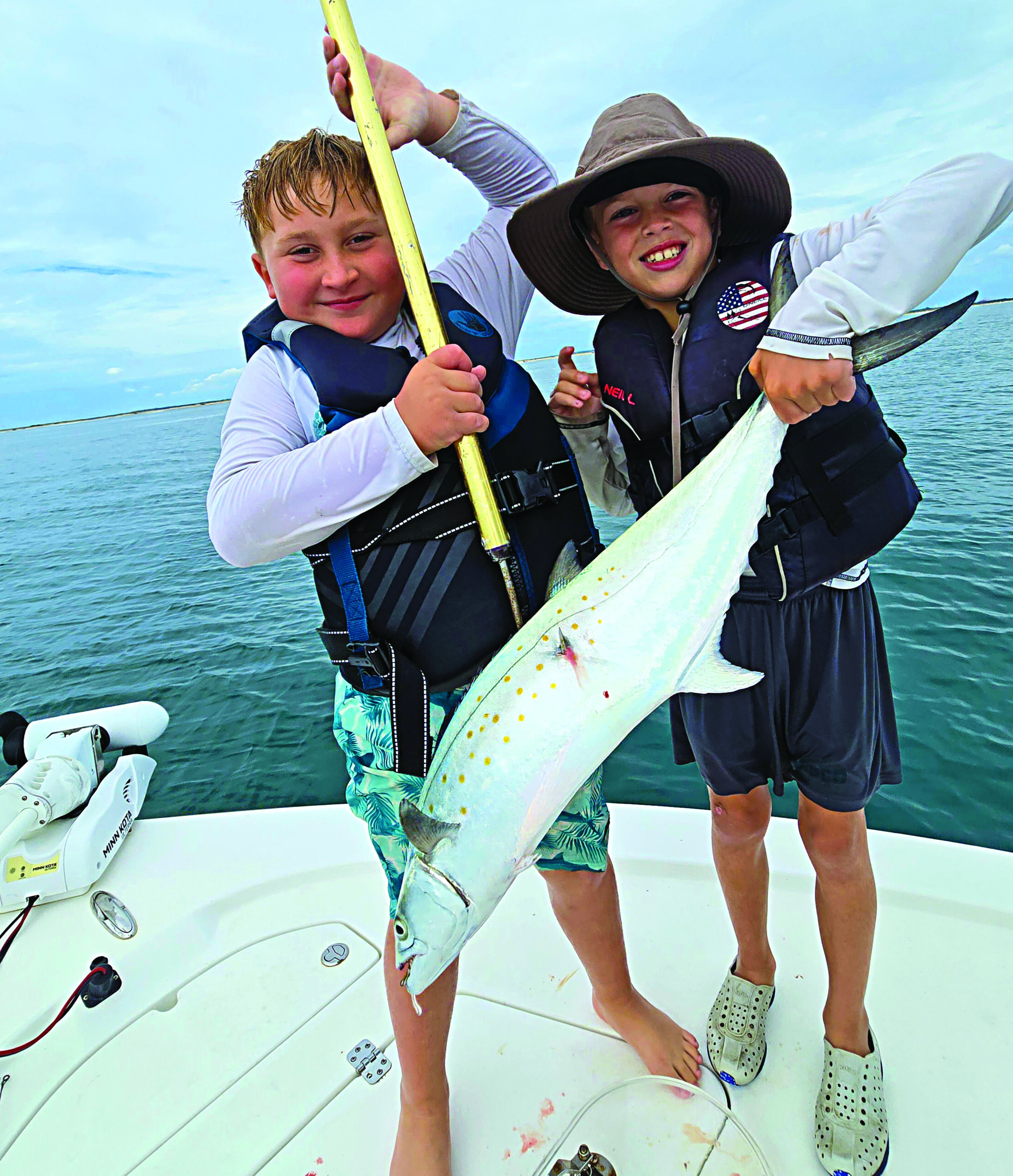
Hudson Lambert and Caleb Carr, both of Wilmington, NC, with a 7.9 lb. spanish mackerel caught off Carolina Beach while slow-trolling live pogies.
Jeremiah, of Kure Beach Pier, reports that decent numbers of bluefish and spanish mackerel have been caught by those casting plugs.
Some big red drum (to 40”+) came over the rails as a result of all the winds stirring up water conditions.
Whiting have been the main target for those fishing smaller cut baits on the bottom.
