
Carolina Beach – October 2025
Kevin, of Island Tackle and Hardware, reports that surf anglers are catching a mix of whiting, pufferfish, and croakers, as well as spanish mackerel and bluefish.
Large red drum are being caught both from the surf and in nearshore waters.
Not far off the beach, spanish mackerel and bluefish are schooled up out over nearshore structure.
King mackerel are starting their fall move, and they’re being caught as close as 5 miles.
Offshore bottom fishing trips are having success with vermilion snapper, triggerfish, and the keeper grouper species.
Red drum, flounder, and speckled trout are in inshore areas from the ICW back into the river. Live baits and soft plastics are both working, and the best plan is to target areas such as structure, creek mouths, or grass banks.
Sheepshead and black drum are around pilings and bridges, and they are most active when fishing fiddler or mud crabs.

Christian, of Seahawk Inshore Fishing Charters, reports that anglers are catching red drum on both live bait and soft plastics. Targeting shell bottom areas along grass edges is finding 19-22” lower-slots, with upper-slot and over-slot redfish (25-30”) mixed in.
Smaller black drum are in the creeks and around structure in the Cape Fear River. Fresh, frozen, or live shrimp work well. In a pinch, live fiddler and mud crabs are also producing hookups.
Some speckled trout are being caught while targeting red drum. These are mostly 15-17” fish, with the occasional larger speck (to 20”) hitting live mullet fished around creek mouths and grass points with current flow.
Off the beach, cut menhaden or mullet on bottom rigs are finding large drum around nearshore structures.
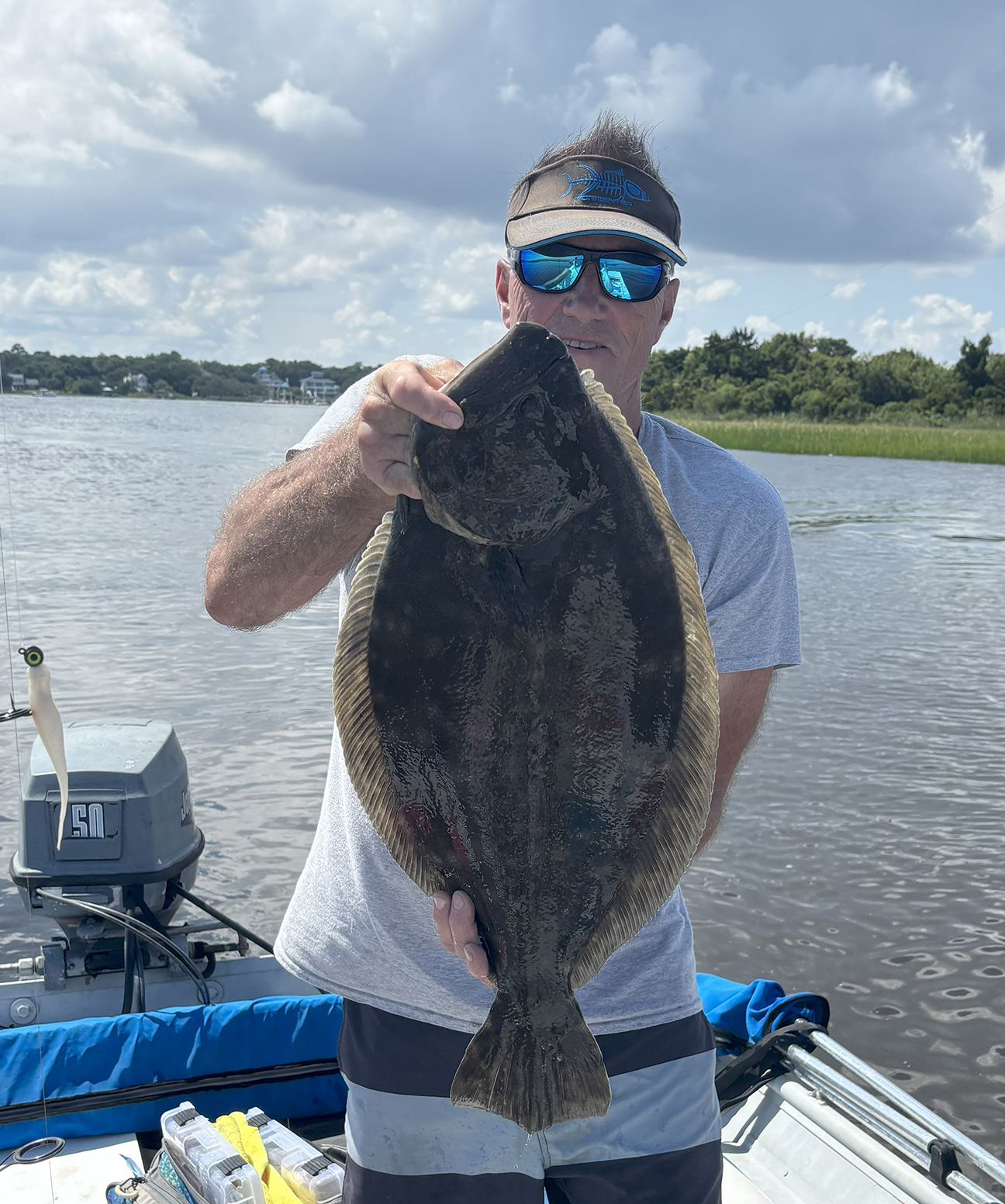
Kelley Winton, of Leland, caught this 26″ flounder in the ICW near Carolina Beach using a live finger mullet.
Tommy, of Mungo Fishing Charters, reports that targeting red drum around oyster bars and holes in the creeks is producing action. Cut popeye mullet or live mullet are the top producing baits.
The speckled trout action is picking up. Soft plastics on jig heads fished around current seams in the creek mouths is a winning combo. If out early, topwater plugs over structure (such as rocks or oysters) is a smart option.
Black drum are biting Carolina-rigged dead shrimp or crabs cast around hard structures such as rock piles or oysters.
Mason, of Grand Slam Fishing Charters, reports that the speckled trout bite has picked up. The main river has been unsettled, so fishing up in the creeks has been more manageable. Live mullet under corks or on the bottom have both produced, with the trash fish species still prevalent and tearing up live shrimp. Working current seams and eddies in the 4-8’ range in the early morning is a good way to start the search.
The red drum bite continues along banks that are holding bait. Larger live mullet (5-7”) are not only great for staying on the hook, but they will entice bigger fish.
Sheepshead are hitting mud crabs and fiddler crabs around hard structure with current.
Drew, of Strike Inshore Charters, reports that red drum are starting to push up into the shallows to feed on live bait. Carolina-rigged or popping cork rigged live mullet or live shrimp have been the top baits for the reds (and really all the inshore species). With bait being so plentiful, artificials are not as effective right now. The one exception would be scouting an area with a Z-Man PrawnstarZ or paddle tail.
Flounder are in these same areas, and they’re hitting Carolina-rigged live mullet.
Black drum are scattered around, and live shrimp is their bait of choice.
The speckled trout action is hit-or-miss, but the bite should be picking up as water temperatures continue to drop.
Bull drum should be showing up in early October.
Tony, of Reel Teal Charters, reports that flounder and red drum have been the top two target species. Carolina-rigged live mullet around grass banks and docks, or a 3/16 oz. jig head with white or mud minnow-colored soft plastics, have both had success.
Speckled trout catches should pick up as the focus on flounder fades and the water temperatures continue to drop.
Off the beach, false albacore and spanish mackerel are around, likely due to bait being plentiful just off the beach. Trolling spoons are effective in locating schools, if the schools aren’t actively feeding on the surface.
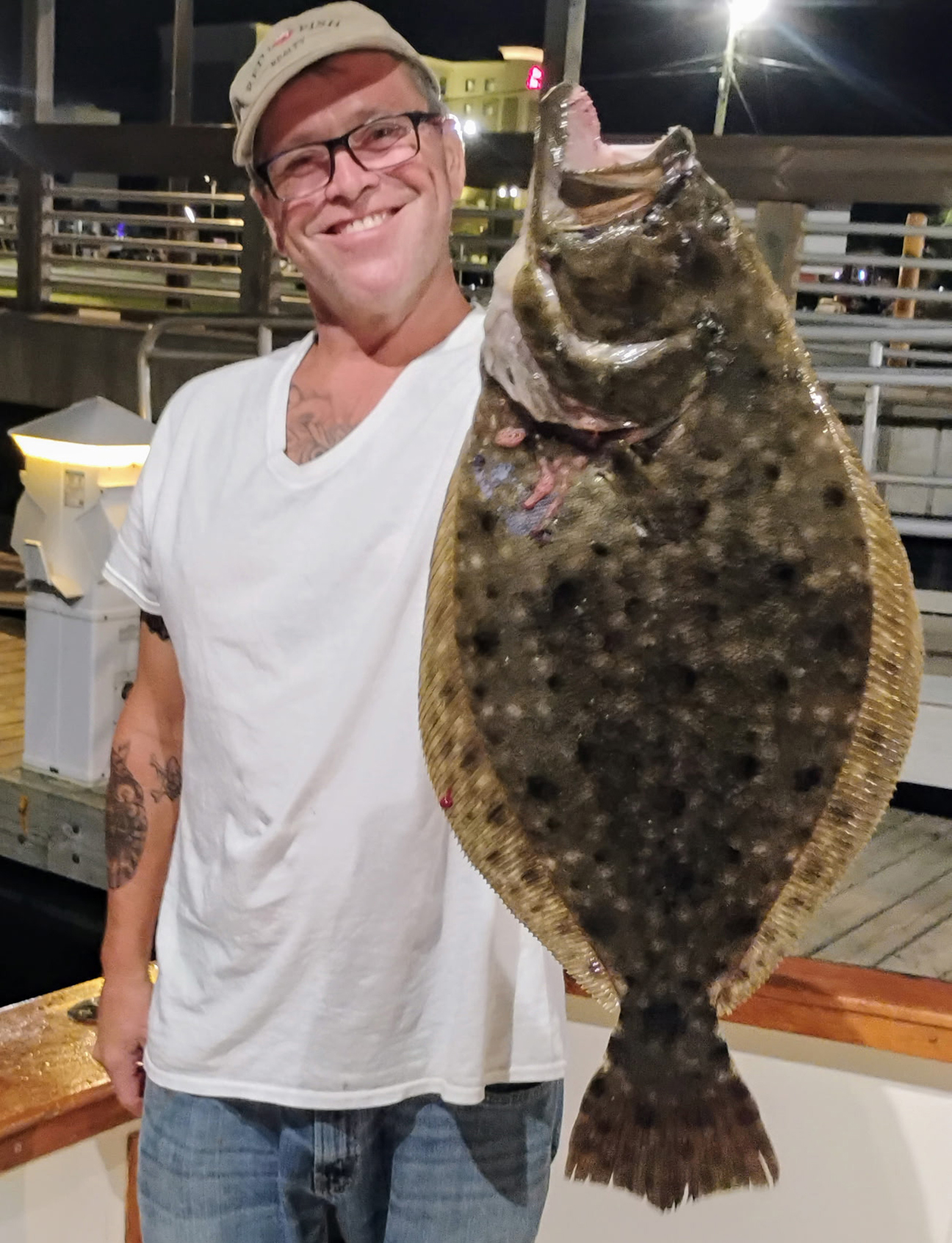
Theodore Wiseman, of Carolina Beach, caught this 8.9 lb. flounder in Snow’s Cut on a live finger mullet.
Rod, of OnMyWay Guide Service, reports that jumbo fall spanish mackerel are arriving as they work their way down the coast. Anglers can find these fish anywhere from just on the beach to out over nearshore structure. Both sight-casting and trolling #00 or #0 Clarkspoons will produce strikes.
Off the beach, anglers can find plenty of bluefish alongside the schools of false albacore.
King mackerel action is anywhere from the beachfront out to 10 miles. When off the beach, look for lesser-known rocks, ledges, and live bottoms. Focus on finding the bait first most, ideally in water with a good, clean, greenish color.
Offshore bottom fishing trips are successfully targeting the keeper grouper species (scamps, reds, and graysbys) and big vermilion snapper out deep (45-mile range).
The trolling bite will pick up as water temperatures continue to cool, and the spreads should produce wahoo, blackfin tuna, a few late-season mahi, and possibly sailfish.
Jeremiah, of Kure Beach Pier, reports that anglers casting plugs and spoons around bait are catching spanish mackerel and bluefish.
King mackerel should become active in October.
Flounder have been caught on the bottom, and other bottom fishing efforts are finding sheepshead, slot red drum, and the typical smaller species (whiting, croakers, and occasional spots).
