
Carolina Beach – September 2025
Grayson, of Island Tackle and Hardware, reports that surf anglers are finding a mix of pompano, the occasional red drum, and a ton of whiting.
Red drum are scattered along the banks and around docks from the ICW back into the Cape Fear River.
Some keeper speckled trout have been showing up.
Sheepshead fishing has been picking up with the cooling temperatures.
Nearshore anglers have been finding a bunch of spanish mackerel around.

Tommy, of Mungo Fishing Charters, reports that red drum action remains steady, with live bait on a Carolina rig being the most productive setup. Grabbing some popeye mullet and making chunks can also generate some action. Topwaters and soft plastics are having similar success.
For speckled trout, a topwater plug can give anglers some of the best chances of a hookup. On windier days, switch to popping cork setups, soft plastics on jig heads, or live bait on a Carolina rig to entice the bite.
Black drum are being caught with Carolina-rigged dead shrimp and cut fiddler or mud crabs, but a bunch of trash fish are still around.
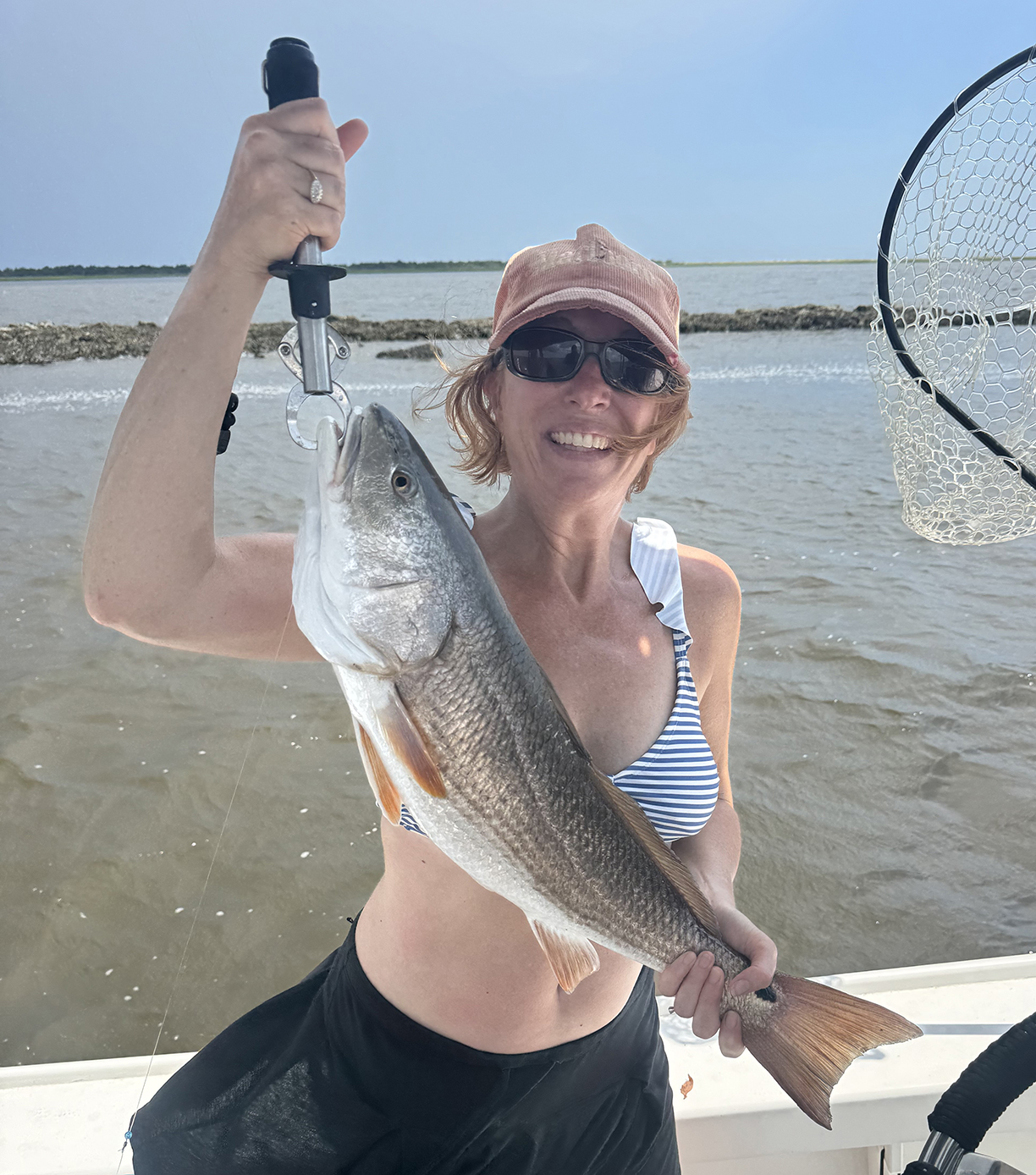
Amanda Brewer, of Wilmington, caught this 24″ red drum by the rock wall south of Fort Fisher on a finger mullet.
Mason, of Grand Slam Fishing Charters, reports that some speckled trout are in the Cape Fear River, with the early morning topwater bite being the best. The trout are also hitting a Carolina-rigged finger mullet meant for other species.
Red drum (to 26”) have been the main focus all summer. The reds are still scattered, though decent-sized groups (8-10 fish) are now being seen. On high tides, a Carolina-rigged mullet fished up against flooded and wind-blown banks has been productive. As the tide falls out, work the shallow flats or creek mouths, and having current is key. If focusing on the ICW, place your baits around structure, such as docks or oyster rocks.
Black drum and sheepshead are around, though it’s still a little early to comfortably be able to fish shrimp without the pesky trash fish species bugging you.
Drew, of Strike Inshore Charters, reports that late summer fishing means targeting a mixed bag of red drum, speckled trout, flounder, and black drum.
Anglers are catching a lot of red drum in the mid-slot and upper-slot range, with some over-slots mixed in. Big trout (to 20”+) have started to make a showing, and they’re being found alongside the reds in areas such as oyster banks and points with 2-8’+ of water. For both species, anglers can entice a strike with live mullet, live menhaden, and cut menhaden on Carolina rigs or under popping corks.
Black drum are being caught on Carolina-rigged live fiddler crabs or cut blue crabs in deep holes.
Anglers are having a bunch of success using artificials for flounder. Throwing jigs with soft plastic paddle tails up around docks has been an extremely productive way to land a flatfish. The natural or brighter colors have been producing best.
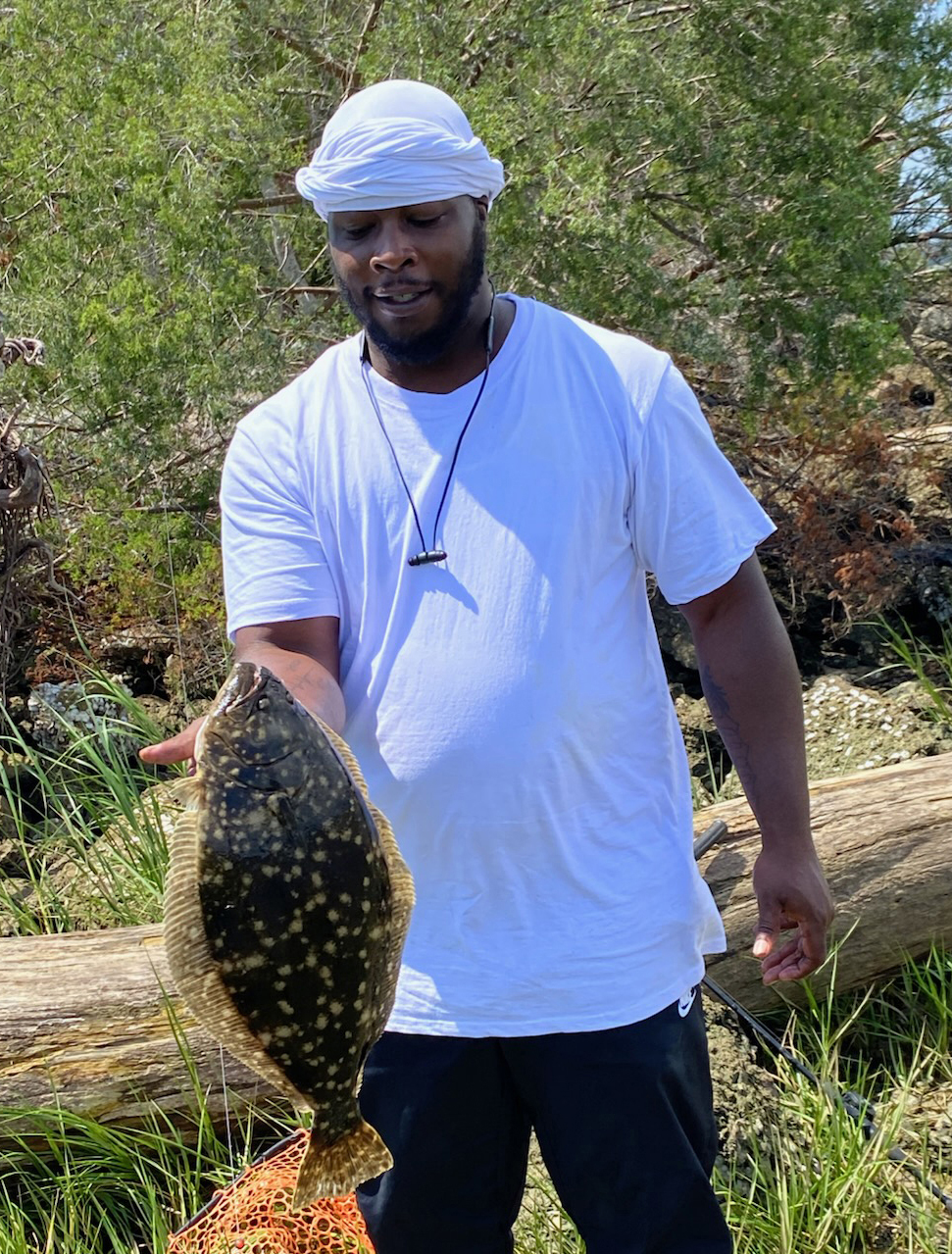
Robert Carter, of Elizabethtown, caught (and released) this flounder near the Carolina Beach State Park using a finger mullet on a Carolina rig.
Tony, of Reel Teal Charters, reports that live bait is the biggest key to a day’s success. Live shrimp or mullet are both great options to rig up under slip corks, and both will catch any of the inshore species. Target areas that are around docks and shoreline banks from the ICW back into the Cape Fear River.
The red drum are mostly under-slot with slots in the mix, and speckled trout have been mixed in.
When flounder season opens, anglers fishing live bait on the bottom should have no issue getting that keeper flatfish.
Sheepshead fishing has started to pick back up with temperatures cooling down. The best tactic is still fiddler crabs fished around bridges and older docks.
Nearshore runs are seeing the spanish mackerel finally show back up, and more king mackerel action should show up by the end of September.
Barry, of Family Ties Charters, reports that bluefish and good numbers of spanish mackerel have begun to show up thick off the beach, and soon the bigger spanish will start to mix in.
With offshore bottom fishing, vermilion snapper, keeper grouper species (scamps/graysbys), black sea bass, and triggerfish are all part of the action.
Slow-trolling live bait around these nearshore structures is a great way to get catches of barracuda, amberjacks, kings, and (still) some scattered mahi.
Running out to the break continues to produce blackfin tuna, mahi, and scattered wahoo.
Rod, of OnMyWay Guide Service, reports that king mackerel will soon be found anywhere from the beach out to 20 miles.
Spanish mackerel have started to show back up.
Some nearshore mahi will be around in September in the 20-35 mile range.
Bigger bottom species, such as black sea bass, are being found in the 40+ mile range.
Structure closer to the beach (to 20+ miles) are holding smaller black sea bass, jolt head porgies, and chocolate chip porgies.
Catches out to 35-40+ miles include the keeper grouper (graybys, scamps, and reds), big vermilion snapper, and triggerfish.
While bottom fishing, keep a free-lined bait set up for the possibility of mahi or cobia.
Offshore trolling is seeing wahoo and blackfin tuna action out off the break (130-250’). Skirted baits should be simple: on sunny days, run brighter colors, and on darker days, run darker patterns.
Jeremiah, of Kure Beach Pier, reports that bottom fishing has been producing pompano, whiting, and croakers.
Bluefish are around and hitting Gotcha plugs.
Anglers live-baiting off the end have just started to find some king mackerel.
