
Carolina Beach – September 2026
Lewis, of Island Tackle and Hardware, reports that surf anglers are having success catching the typical summertime mix of croakers, sharks, and the small stuff (such as pinfish).
Nearshore anglers have been finding some decent spanish mackerel action. Both trolling and sight-casting smaller spoons are producing strikes from a better quality of fish (2-4 lb. range).
Offshore, bottom fishing is still one of the best options under these hot conditions. A few scattered mahi are around, and they’re popping up near the boats that are bottom fishing.
The king mackerel bite has been quiet so far, with the occasional big king mixed in while trolling just off the beach.
Inshore anglers are catching plenty of sheepshead with live fiddler crabs both in the Cape Fear River and the ICW. Smaller black drum are mixed in for anglers fishing these same hard structures, though shrimp is the best bait option for the black drum.
Scattered red drum and a few speckled trout (mostly early mornings or evenings) are cooperating. Both species seem to be biting better in the lower part of the river.
Tons of flounder are both in the ICW and the river.

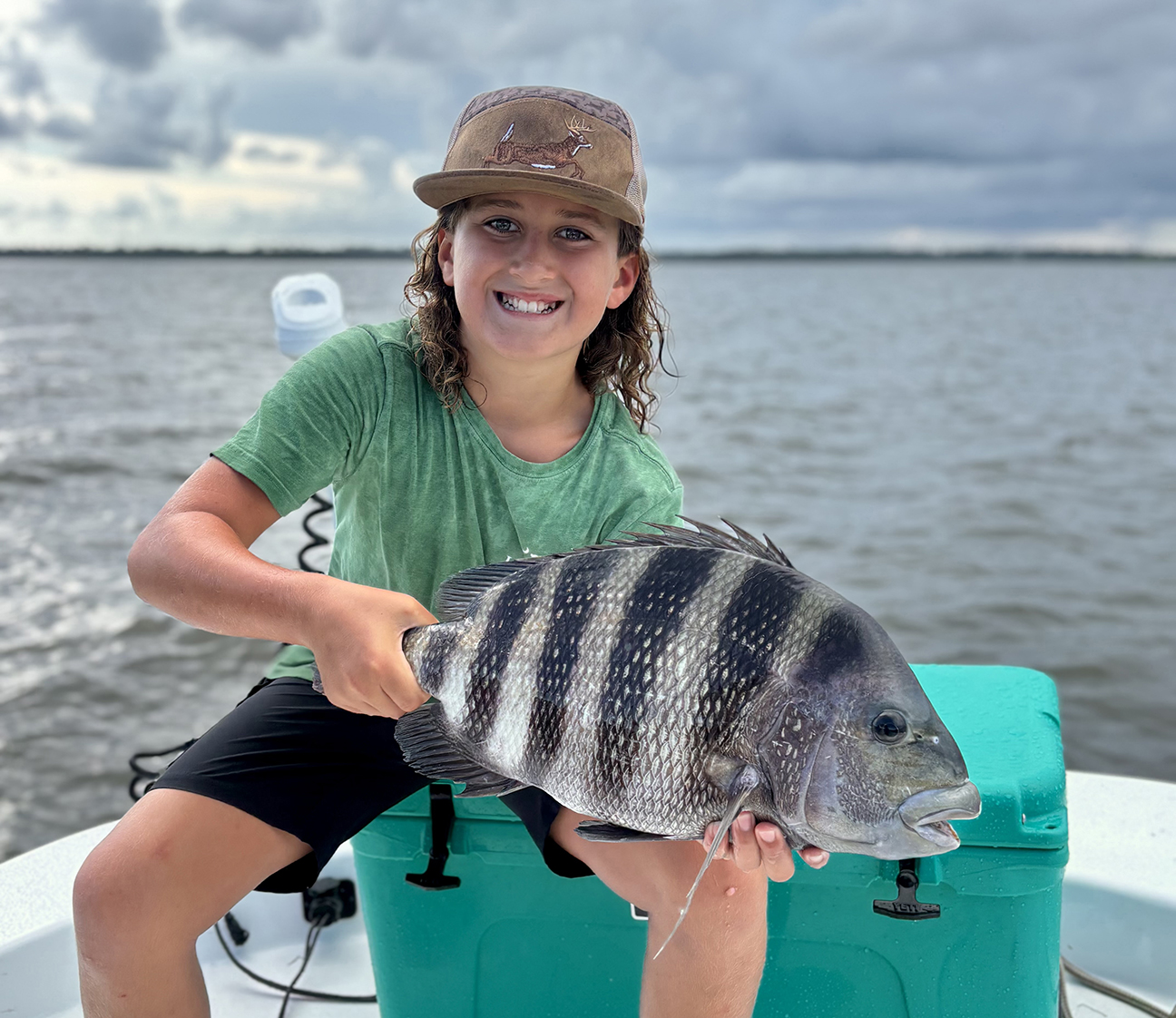
Lyle Clay, of Mount Pleasant, NC, with a 6.7 lb., 20″ sheepshead caught on a mud crab near the Snows Cut Bridge.
Christian, of Seahawk Inshore Fishing Charters, reports that better numbers of shrimp are showing up back in the marshes. Their arrival has brought some success with catching smaller black drum (with a few keepers mixed in) while using live shrimp rigged on jig heads and fished on the bottom.
Anglers fishing with Carolina rigs or jig heads baited with live finger mullet are catching slot-sized red drum and flounder. With both of these species, be sure to fish when the tides are moving. That water flow has helped in the battle against hot water conditions and sluggish fish.
Tommy, of Mungo Fishing Charters, reports that schools of finger mullet have been showing up well and have become the top choice of bait for targeting slot-sized red drum. Sometimes the fish want live baits, and sometimes cut bait is what’s needed to get these fish to feed.
Anglers are also catching some drum while sight-casting with topwater plugs. This is a great way to scout (and catch) redfish.
A few speckled trout are mixed in, and they’re hitting topwater plugs, D.O.A. shrimp soft plastics, and live bait offerings.
Mason, of Grand Slam Fishing Charters, reports that live bait fishing and moving around are the main tactics for finding red drum action. The summertime reds are scattered along banks or on mud flats around oysters, and they’re along the main river shorelines and in creeks of the lower Cape Fear. Current is key to summer success, so be sure to avoid slack water.
Anglers with live shrimp or fiddler crabs can find sheepshead and black drum by vertically fishing around deeper structures and pilings.
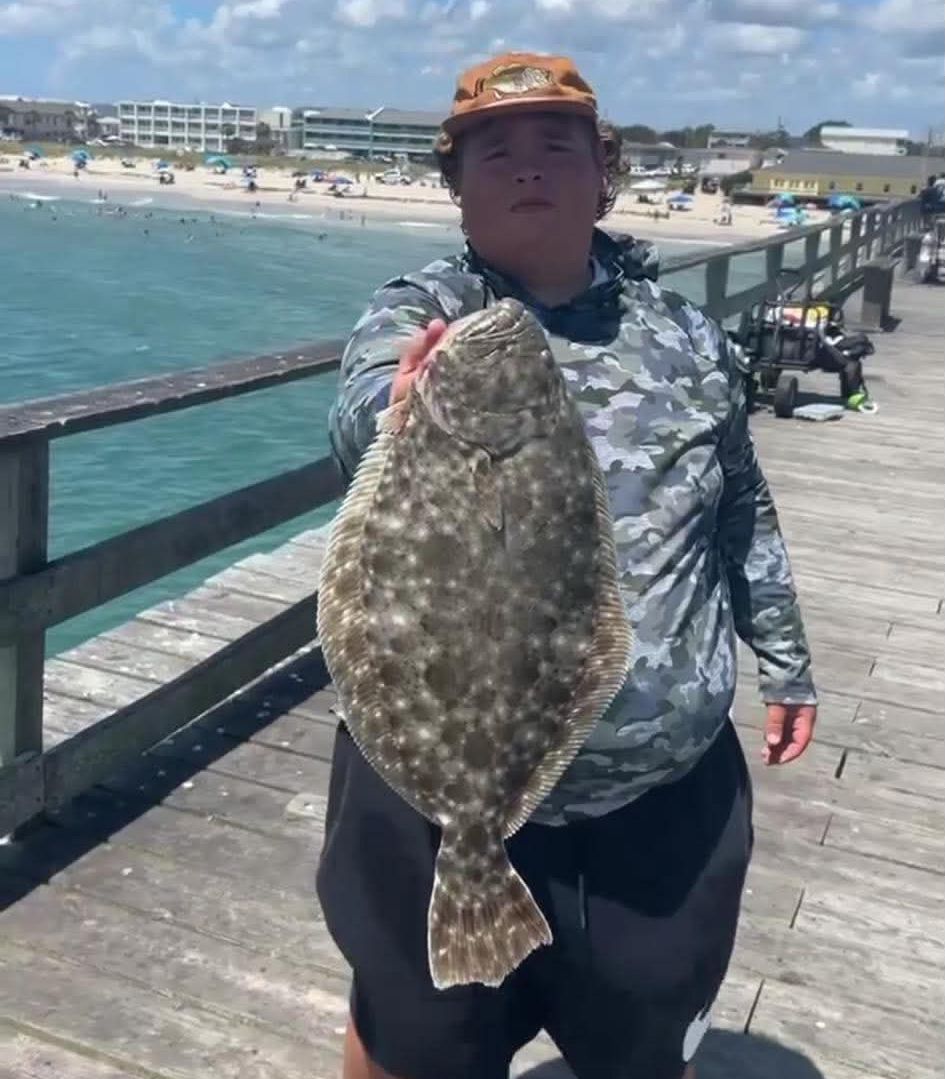
Isaac Bennett, of Cool Ridge, WV, reeled in this 23.5″ flounder from the Kure Beach Pier on a live finger mullet.
Drew, of Strike Inshore Charters, reports that the key to success is to focus on water flow—be sure to find moving water that cools the temps, match that with an area holding bait, and those are the conditions that typically produce bites.
The finger mullet are a good size, and they are now the primary bait for red drum fishing. The red drum are scattered and will key in on a live or cut finger mullet.
As temperatures start to cool off, anglers should see more black drum show up. The black drum stick close to structure, and fiddler crabs will usually get their attention.
Barry, of Family Ties Charters, reports that there’s been some great spanish mackerel fishing from the beach and out a few miles. The best catches have come from trolling efforts—pulling #00 Clarkspoons behind trolling sinkers or #1-2 planers.
Further offshore, the king mackerel remain hit-or-miss as they have been all summer. The good news is tons of bait are in the area, so anglers anticipate a good fall bite.
Mahi are spread out from 15 miles to the Gulf Stream. The best way to locate them is to fish around structure and any debris you see floating, and the top producing colors have been green/chartreuse and pink/white rigged with small ballyhoo.
Bottom fishing has been producing good numbers of grunts, black sea bass, and vermilion snapper. In the same areas are red snapper and various grouper species, including gags.
Rod, of OnMyWay Guide Service, reports that the spanish mackerel fishing has really picked up. The numbers are consistent, and a better class of fish (to 18”+) are being caught in the 20-40’ depth range.
The king mackerel action remains quiet.
Scattered mahi can be found nearshore, many times around the same areas where anglers are bottom fishing. These nearshore structures are also holding barracuda, amberjacks, and a few schools of false albacore.
Black sea bass fishing is better than one can expect for mid-August, with plenty of jumbos (up to 22”). Also in the bottom bite are triggerfish, porgies, tons of grunts, scamps, and red grouper.
Offshore trolling action has been quiet, though the truth is that it’s too hot to make the run out for spotty action at best.
Jeremiah, of Kure Beach Pier, reports that spanish mackerel action has picked back up. The smaller summertime fish are still predominant, but the quality of fish should soon pick up.
Bottom fishing has been producing a mix of whiting, pompano, and some keeper flounder.
