
Morehead/Atlantic Beach – July 2026
Nick, of Chasin’ Tails, reports that anglers fishing the surf are catching sea mullet, pompano, bluefish, and some spanish mackerel.
Nearshore action is mostly centered around trolling Clarkspoons for spanish mackerel and bluefish, with some sight-casting opportunities available when spotting surface-feeding frenzies.
Inshore anglers have been chipping away at red drum, with fish scattered in smaller groups everywhere from the inlet back up into the sounds and marshes.
The occasional speckled trout is around, though most of the action is up north in the rivers.
The sheepshead and black drum action has been fairly good for anglers picking up some fiddler crabs and targeting bridges and deeper hard structure around the Port.
A bunch of flounder are around, with some bigger fish being caught around the Port wall.
Offshore fishing has seen a bunch of billfish caught out at the Gulf Stream, and even more billfish have been up a little north.
A few wahoo are mixed in.
Mahi fishing has been really good in terms of both sizes and numbers. The bite is spreading out, though, with some fish pushed in as shallow as the 14 Buoy.
Bottom fishing trips are seeing mixed bags of grouper, yellow-eye snapper, vermilion snapper, triggerfish, and a ton of American red snapper releases.

Joe, of Carolina Traditions Guide Co., reports that anglers need to move around to find any of the scattered red drum. The best tactic is to use search baits, such as gold spoons and popping corks, to pick off some bites.
While the occasional speckled trout is around, there isn’t enough action to make them worth targeting.
Off the beach, bottom fishing in the 60-100’ depths is producing bigger black sea bass and amberjacks.
Some nearshore mahi are popping up as the warm water temperatures scatter them out and push them inside.
Spanish mackerel are moving into the inlets on incoming tides, and they’re loaded up out around (and inside) Cape Lookout.
Some false albacore are scattered around in shallow and are hitting casting jigs.
Keep a big bucktail ready, as a cobia could be around.
Daniel, of On Deck Fishing Charters, reports that spanish mackerel numbers have not only picked up, but a better quality of fish has moved in as well. Trolling Clarkspoons behind planers is the top tactic for locating fish, with casting small metal jigs a great way to get strikes when marking them or see them feeding on top.
Plenty of bluefish are mixed in with the spanish.
Red drum fishing inside has become more reliable. Natural baits, such as shad or cut mullet, fished under a popping cork has produced most of the action.
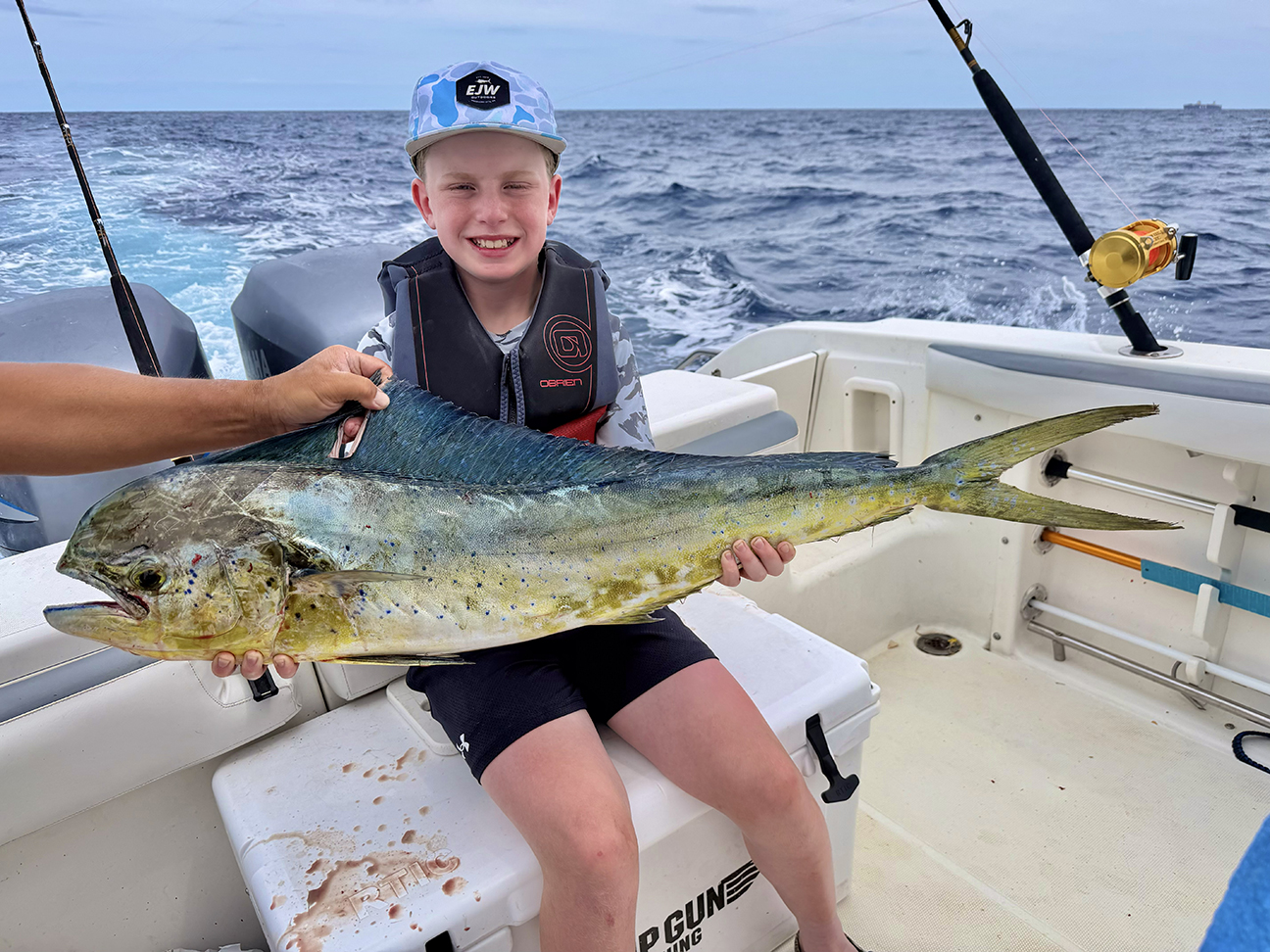
Luke Pate, of Bailey, NC, landed this mahi offshore of Morehead City trolling a skirted ballyhoo. He was fishing with Capt. Lee Winkleman of Top Gun Fishing.
Chris, of Mount Maker Charters, reports that the inshore fishing has slowly been improving for speckled trout and red drum. Anglers have been finding most of their slot-sized red drum scattered across the marshes, shallow bays, and up into the rivers. In the early mornings, topwater plugs are getting some action from both species, with the standard live or cut baits fished under popping corks and on the bottom producing most of the other times.
For spanish mackerel and bluefish, the morning and late afternoon bite is typically best, and trolling spoons is the most consistent way to put fish in the boat.
There’s been an uptick in the number of cobia being seen, but most of them are under the 36” fork-length mark to be keepers.
Off the beach, bottom fishing in the 60-125’ range has been good for gag grouper, triggerfish, black sea bass, grunts, porgies, and vermilion snapper.
This same range is also holding amberjack, king mackerel, cobia, the occasional wahoo, and an endless supply of sharks (both large and small).
Some mahi are starting to scatter out and push inshore to the 20-mile area.
Offshore, the mahi bite remains steady, but it’s starting to slow as fish move on north or spread out.
Lee, of Top Gun Fishing, reports that bottom fishing is finding a mixed bag of grouper, triggerfish, and large vermilion snapper (3-5 lbs.) in the 15-20 mile range. The typical setup is to run cut squid down on chicken rigs with circle hooks.
Keep a live bait handy, as cobia can also be in this same area.
Further out, the mahi fishing has been off to a great start with both numbers and sizes. The action is more scattered now, with fish being found anywhere in the 60-130’+ range.
Other species included in the trolling action are blackfin tuna and wahoo, and they typically start showing up when in 180’+.
Anglers trolling right off the beaches are finding spanish mackerel.
Byron, of Going Bogue Outdoors, reports that when running offshore, once in the 76.5 degree temperatures with that deep-blue color and some grass patties, the bite is on for plenty of bailer-sized mahi. These mahi are quick to hit strip squid baits or even Monkalurs.
The larger mahi have been more consistently found deeper while pulling plugs and ballyhoo.
Bottom fishing in the 100’ range has been holding plenty of vermilion snapper.
Getting out into 120’+ will allow anglers to get into some triggerfish.
The gag grouper are still biting strong, with keepers from as shallow as 50’ and on out to 300’.
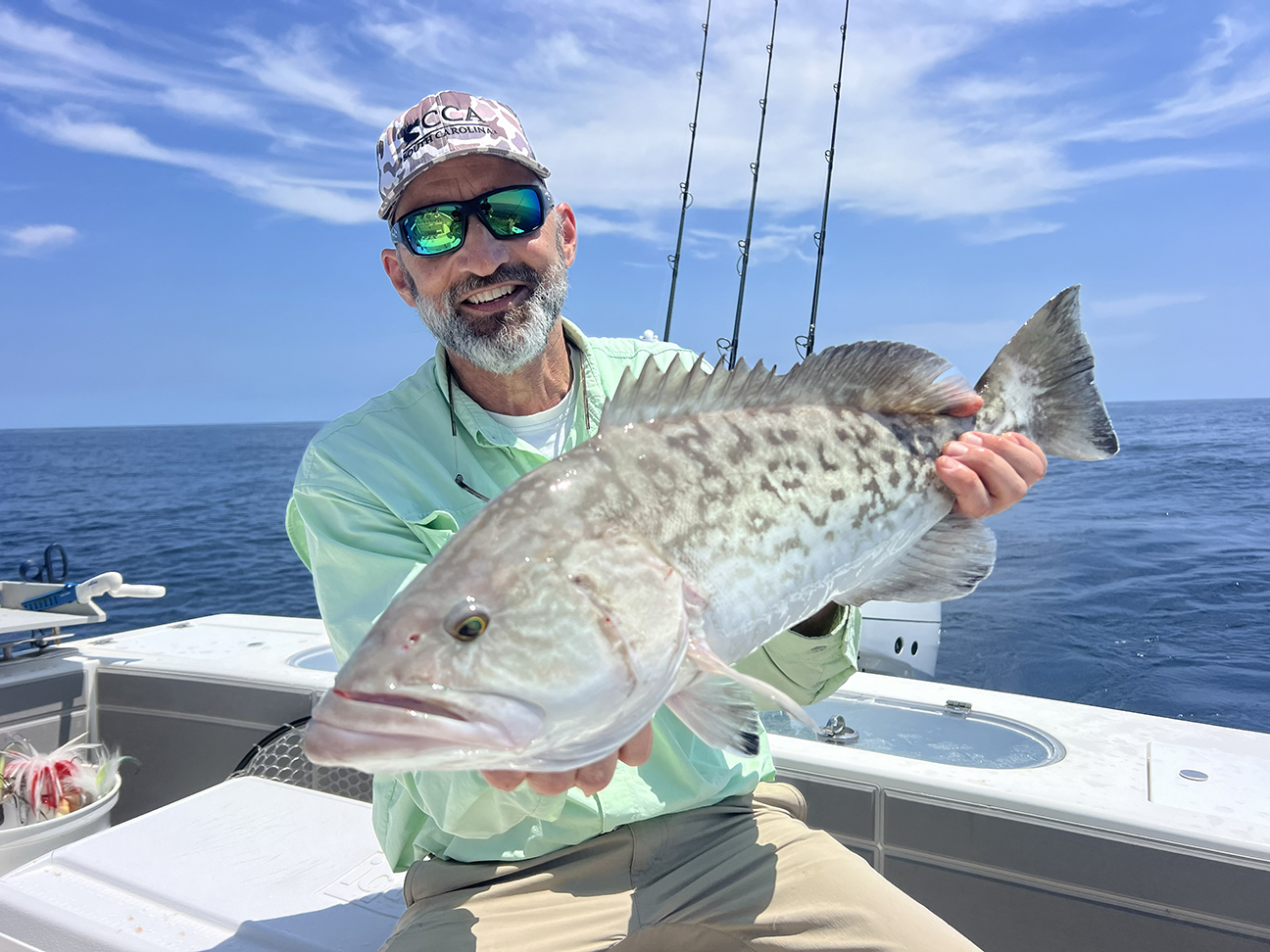
Pete, of Greenville, SC, landed this gag grouper offshore of Beaufort Inlet on live bait. He was fishing in 80′ of water with Capt. Chris Kimrey of Mount Maker Charters.
Cody, of Reel Time Charters, reports that the dolphin have made a good showing, with plenty of bailer-sized dolphin hanging around in the 80-100’ range on temperature changes and grass. Some gaffers are still around, but most of the larger fish have migrated north.
Anglers looking to bottom fish are finding good triggerfish action in the 100-140’ range.
Vermilion snapper are plentiful a little shallower (70-100’), with some keeper black sea bass as shallow as 60’.
Bri, of Oceanana Pier, reports that muddy water conditions have led to sharks and spots making up most of the action.
As conditions clean up, the bite should pick back up for sea mullet, croakers, bluefish, and the occasional pompano.
