
Morehead/Atlantic Beach – March 2026
Frank, of Chasin’ Tails, reports that inshore anglers are starting to see some keeper‑sized speckled trout, and red drum are scattered and slowly breaking away from their large winter schools.
The bottom fishing action for sea mullet and gray trout in the Port hasn’t kicked off yet, but it could happen any day.
Nearshore action is right on the cusp of coming alive. In the coming weeks, the ARs should begin holding larger gray trout, bluefish, and Atlantic bonito. Meanwhile, black sea bass fishing remains strong in the 10‑15+ mile range.
Offshore anglers have been catching wahoo, some blackfin tuna, and a couple of king mackerel from over on the east side of Lookout.

Joe, of Carolina Traditions Guide Co., reports that the red drum are getting more active back in the shallow, muddy bays. Water temperatures are still cold, so the fish will likely stay schooled up through April.
Bottom fishing action in the Port and inlet should fire off any day. Sea mullet, pufferfish, and gray trout move in together and stage in deeper holes, where cut shrimp and small jigs put keepers in the boat.
It’s worth keeping an eye off the beach for the early waves of bluefish, especially over on the shoals.
The first Atlantic bonito should also begin showing up nearshore at some point in April.
Daniel, of On Deck Fishing Charters, reports that the Cape Lookout jetty remains a productive spot for black drum, with shrimp being the go‑to bait. Gray trout should begin moving in over the ARs, jetties, and deeper holes throughout the Port at any time, and both shrimp and jigs will draw strikes.
Any chance to slip off the beach is worth using to look for the first schools of Atlantic bonito and bluefish. Both offer great sight‑casting opportunities, and jigging around marked bait at the ARs is a solid way to reach fish pushed deeper.
Inshore red drum are still holding in their marsh wintering areas, but warming water will soon have them responding to artificials such as topwater plugs and soft plastics under popping corks.
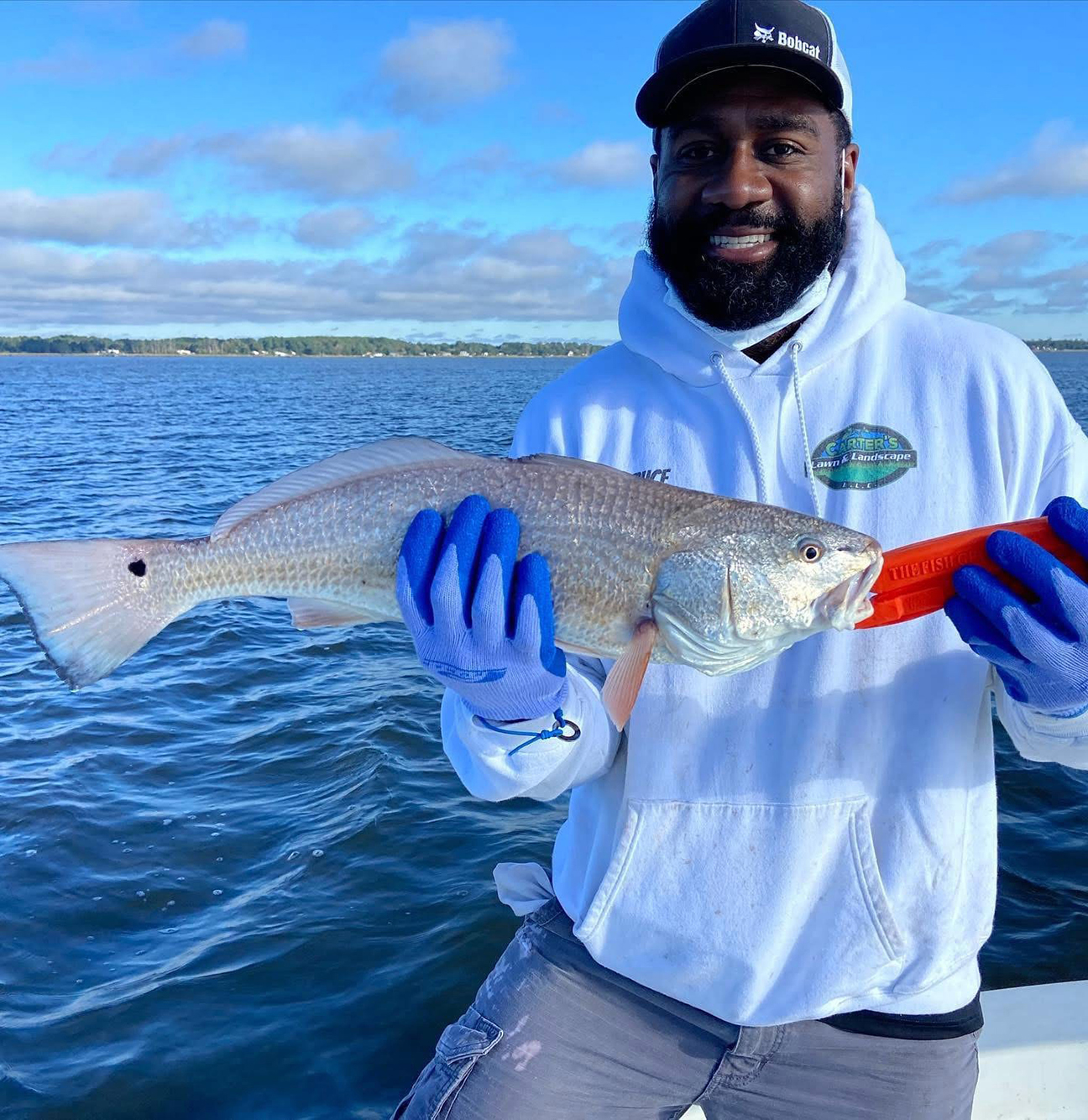
Former Dallas Cowboys Linebacker Bruce Carter, of Havelock, NC, caught this 24” red drum on live shrimp under a popping cork in the North River. He was fishing with Capt. Daniel Griffee of On Deck Charters.
Chris, of Mount Maker Charters, reports that there hasn’t been much talk of Atlantic bonito yet. Early efforts will center on the nearshore ARs with casting jigs, spoons, and deep‑diver plugs.
Offshore anglers should begin seeing more king mackerel, false albacore, and the occasional wahoo or blackfin tuna inside the break.
Inshore, speckled trout activity should start to improve, though the closure will keep most of the pressure off them. Red drum are getting more active around the inlet and in the backwaters, but they remain a bit inconsistent as they break out of their large winter schools.
Sheepshead and black drum make a solid target combo, with both species beginning to move back inside and around the deeper hard structures. Fresh shrimp or crabs will be the best bait choices for these two species.
Justin, of Breakday Charters, reports that anglers are still finding black sea bass to be the most reliable action as water temperatures slowly creep up.
Gray trout and sea mullet will soon be showing in the Turning Basin, and Atlantic bonito are close to moving onto the beachfront.
Inshore, black drum, speckled trout, and red drum are all scattered around.
Byron, of Going Bogue Outdoors, reports that wahoo and blackfin tuna remain the primary targets out at the break, with skirted ballyhoo still producing the most consistent strikes.
Bottom fishing has picked up, with some quality vermilion snapper and yelloweye snapper showing up on the deeper spots.
Nearshore, black sea bass fishing remains strong, and anglers will be watching for these fish to begin sliding deeper as spring conditions settle in.
Jason, of Ali-Kat Sportfishing, reports that anglers looking to put fish in the box will continue to find black sea bass as the most reliable option. These fish will begin pushing deeper as the water warms, but for now they’re still holding on the shallower wrecks and reefs.
Wahoo and blackfin tuna remain the primary offshore targets.
Nearshore anglers are eagerly awaiting the arrival of Atlantic bonito. Around this same time, gray trout will also begin showing up on the nearshore reefs and in the deeper areas around the inlet.
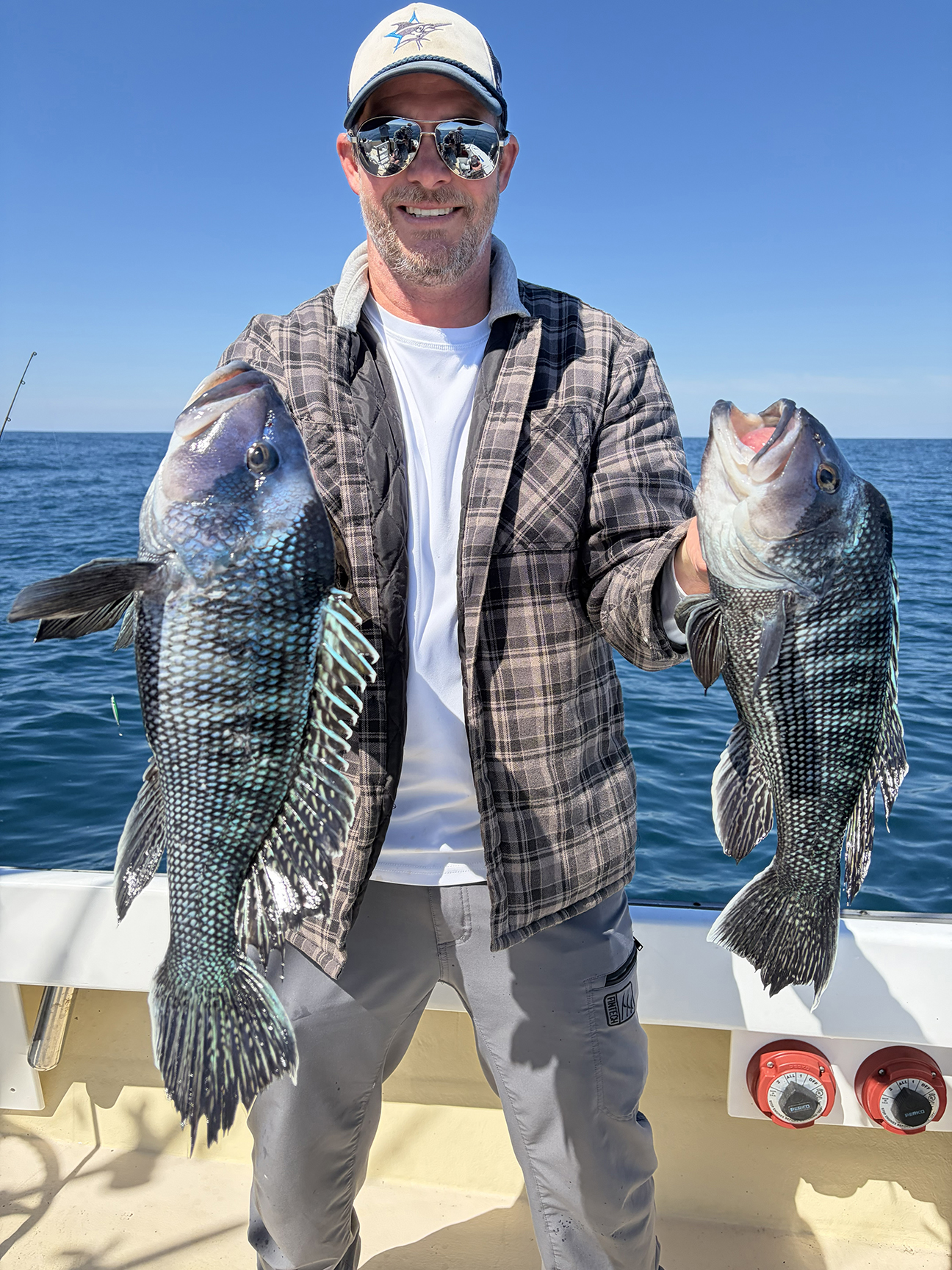
Michael Carter, of Cape Carteret, doubled up on black sea bass 20 miles offshore of Bogue Inlet. He was dropping a bucktail jig.
Lee, of Top Gun Fishing, reports that the inside waters, inlets, channels, and Turning Basin are seeing some small gray trout and bluefish starting to show up. These are all caught by jigging small metals or fishing dead shrimp on Sam’s Gitter Rigs.
Red and black drum are still being found in the backs of creeks or out along the Cape Lookout rock jetty.
The best nearshore action is black sea bass on wrecks in the 10+ mile range (AR-330, etc.). Cut squid on a chicken rig is all that is needed to put fish in the boat, with limits common and larger fish (18”) mixed in.
If hitting the bottom in the 25-35 mile range, anglers are catching triggerfish and vermilion snapper.
Cody, of Reel Time Charters, reports that anglers getting out to the break are seeing solid wahoo and blackfin tuna action, and the mid‑April and beyond window usually produces some of the best trips of the year.
Offshore structure along the break is holding some big vermilion snapper and yelloweye snapper.
The 15‑20 mile range continues to produce excellent numbers of black sea bass, and this same 15‑25 mile stretch should see king mackerel begin to move in and stage around the same structures.
Bri, of Oceanana Pier, reports that cold water temperatures have winter bottom species still making up most of the action. Anglers have been catching a mix of dogfish sharks, rays, and sand perch.
