
North Myrtle/Little River – August 2025
John, of Daves Outpost, reports that flounder have been all over the place both inshore and on nearshore structure. Any live or artificial bait worked slowly along the bottom is going to get attention.
Red drum fishing has been steady. Live bait has been the better option as the reds are currently a little more skittish towards artificials, and finding a little current along banks or oysters as the tide falls has been a good place to look.
A bunch of speckled trout have been caught by drifting live shrimp under slip cork rigs.
Fishing around docks or oyster beds with dead shrimp has produced keeper black drum.
Sheepshead fishing has been steady, with live fiddler crabs the best bait option.
In the surf, the catches are mostly the smaller bottom species and sharks, and a few king mackerel have been caught from the piers.

Chris, of Fine Catch Fishing Charters, reports that speckled trout have been keyed in on live shrimp.
Red drum, speckled trout, and flounder are staged around docks near the swing bridge and feeding on live baits.
Docks all the way out to the inlet are holding black drum and sheepshead. Deeper structures (such as oyster mounds) will produce these same fish.
Flounder are everywhere, especially over shell bottoms with cleaner water. A bunch of shorts are around, but bigger baits have meant bigger fish.
On the jetties, a bunch of speckled trout and flounder are up along the rocks. Live menhaden has been the best option. The end of the rocks are producing the occasional over-slot red drum.
Getting off the beach, the Three-Mile Reef is producing flounder, red drum, spadefish, and smaller cobia.
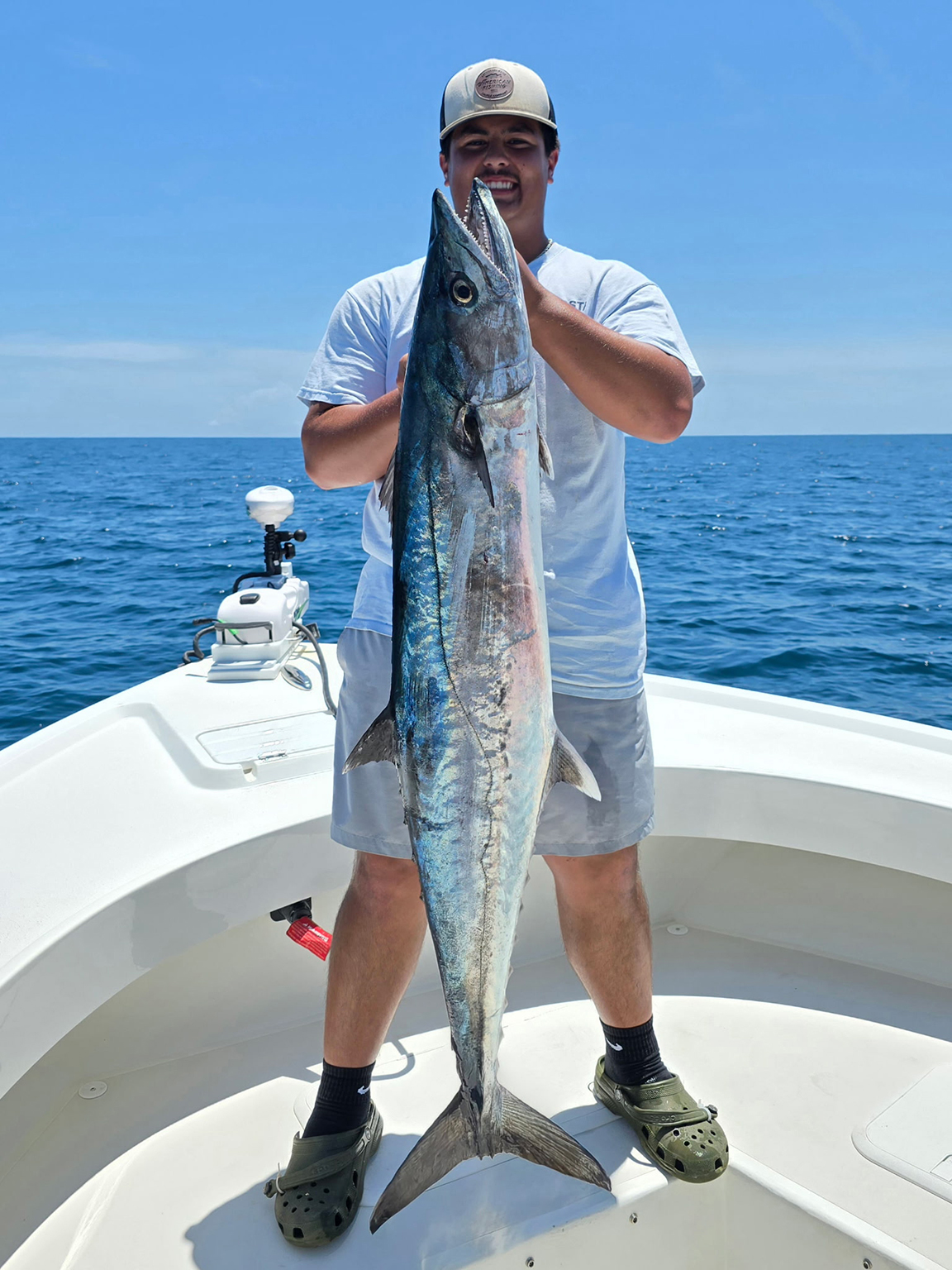
Leyton Cudar, of Clemmons, NC, caught this citation king mackerel offshore of Ocean Isle Beach trolling cigar minnows.
Buddy, of Captain Smiley Fishing Charters, reports that the flounder bite has been consistently good, with most fish coming from inshore creeks. Finger mullet and mud minnows are producing the most strikes, especially around any structure in the creeks as the tide falls out.
This flounder tactic is also landing red drum. The drum can also be found with live shrimp up on flats or along shoreline banks.
Speckled trout are mostly being found on the last couple hours of rising tides. They are staged up against grass banks with nearby oysters.
Off the beach, some spanish mackerel have been kinda cooperating. The bite has been much better first thing in the morning.
Bob, of Strange Magic Fishing Charters, reports that speckled trout are being caught on topwater plugs or live shrimp under popping corks. Target shorelines earlier in the day and progress out deeper as the day goes on.
Flatfish can be found on lower tides concentrated around structured points that have a strong bait presence. The flounder then spread out on higher tides, so look towards the shorelines of creeks and along the ICW.
Red drum are hitting Gulp baits pinned to jig heads or live mud minnows under popping corks.
Black drum are still holding around structures such as docks. Fresh shrimp is hard for the drum to resist, and shrimp also creates potential bites from redfish.
Jessey, of Shallow Minded Fishing Charters, reports that with water temperatures reaching the upper 80s, the natural baits (live or cut) are far outperforming artificials. Any mix of shrimp, menhaden, or mullet will work for red drum or trout.
Around the inlet, over-slot red drum (28-32”+) are hitting cut bait, especially during incoming tides.
Anglers have had success with the big black drum (to 40 lbs.) that are hanging around rocky structure in the ICW. Carolina-rigged shrimp or half a blue crab have been the top baits.
Most of the nearshore action has been focused in the 65-80’ range, with live menhaden producing cobia and king mackerel.
Further offshore, football-sized blackfin tuna, king mackerel, and a couple wahoo make up the trolling action.
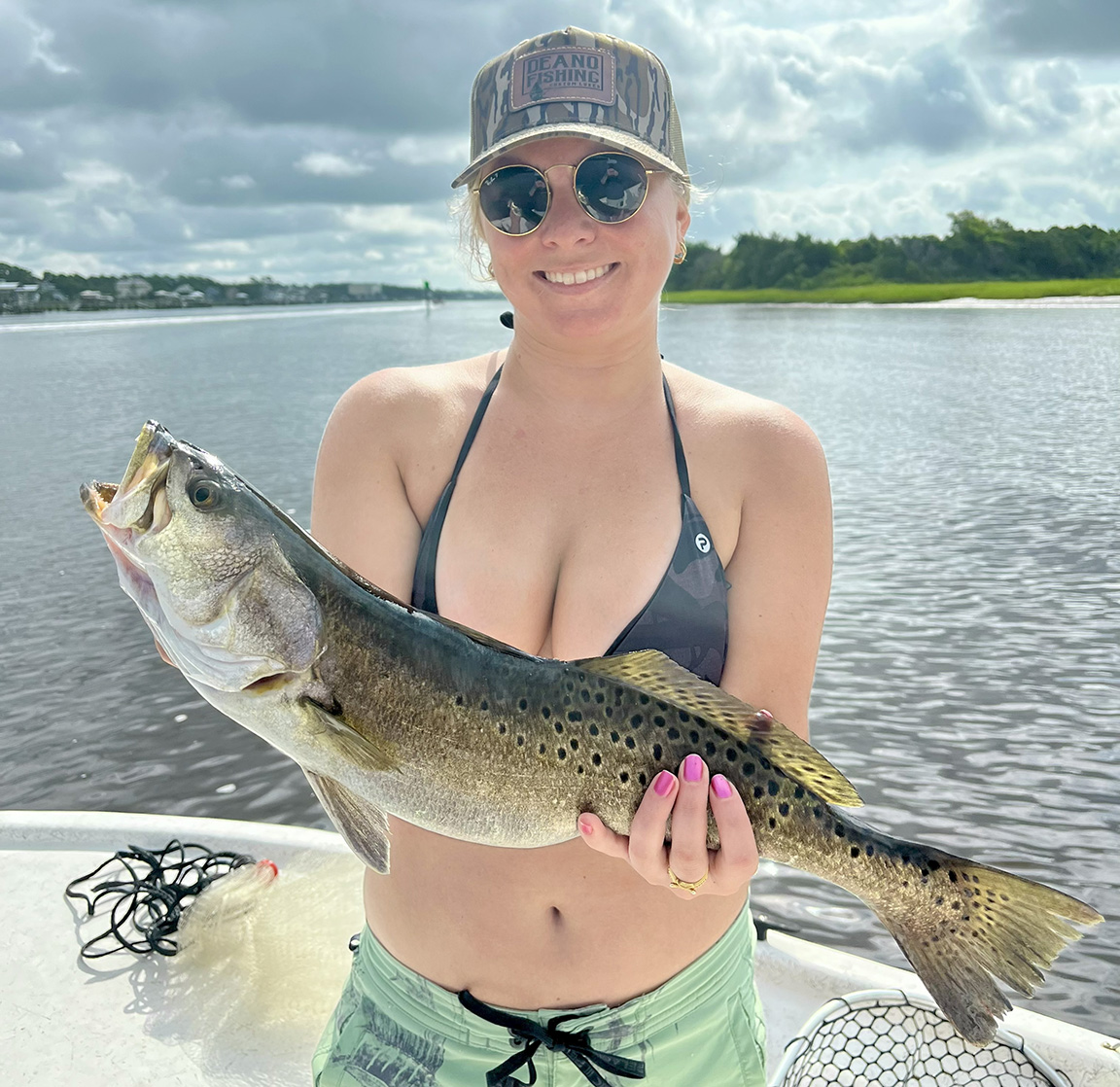
Hannah Todd, of Wilmington, caught this 23” speckled trout in the ICW around Sunset Beach using a custom topwater lure.
Bevan, of Chilly Water Fishing, reports that the trolling bite has slowed down due to warm water temperatures but bottom fishing remains a solid choice. Scamps are hitting live pinfish in the 110-130’ range, with strawberry and graysby grouper mixed in with vermilion snapper and triggerfish in the 90-110’ range.
The shallower structure (75-90’) has a bunch of grunts and porgies.
Most of the keeper sea bass are in 100’+ depths, but this bite isn’t consistent.
Larry, of Voyager Fishing Charters, reports that in the deeper bottom areas (120’+), anglers rigged with either squid or cigar minnows are bringing in a mixed bag of vermilion snapper, grunts, porgies, keeper scamp and strawberry grouper, and a bunch of bonus cobia.
The drift lines have been quiet since king mackerel have been a bit shy.
Those trolling around the Steeples and Blackjack have been hooking a number of sailfish.
Nearshore trips are landing a bunch of black sea bass, porgies, and sharks.
Josh, of Little River Fishing Fleet, reports that Gulf Stream bottom fishing is producing limits of vermilion snapper, porgies, keeper grouper species (strawberry and scamp), as well as some cobia.
Drift lines fished out over these areas are finding a bunch of smaller mahi and barracuda.
Anglers looking to test their tackle are catching a large class of amberjack out in the 45-50 mile range.
Nearshore trips are bringing up a bunch of smaller black sea bass on structure and finding hit or miss spanish mackerel action along the beach.
The shark fishing has been awesome, with anglers finding any variety of sharpnose, blacktips, and small hammerheads on live baits such as croakers.
Walker, of Apache Pier, reports that bottom fishing efforts are producing whiting, pompano, and a bunch of croakers.
Some keeper flounder are mixed in the action, and the best tactic has been fishing live bait or artificials slowly across the bottom.
Sheepshead are being caught from around the pilings.
