
North Myrtle/Little River – March 2026
Greg, of Daves Outpost, reports that red drum activity in the area is predicted to pick up as fish slide out of the shallow mainland creeks and hold more consistently around docks.
In March, the arrival of whiting is usually the earliest indicator along the beaches that spring is taking hold.
Nearshore fishing will likely remain sluggish for most of March, as water temperatures are still lagging behind, but conditions should steadily improve as we get deeper into the season.

Chris, of Fine Catch Fishing Charters, reports that anglers have found the docks and structure along the ICW to be the most productive areas to fish this time of year. These spots are holding a mix of red drum, black drum, and small sheepshead, with live or dead shrimp on Carolina rigs or jig heads producing well. On higher tides, focus on the water under the walkways, and on low tides, drop baits toward the ends of the docks.
Anglers are also finding success floating a live shrimp between docks and nearby structure, or along creek mouths and channel edges that fall off quickly.
Afternoons have been the most consistent time to fish inshore, as a few hours of sun helps bump up the water temperature.Back in the creeks, the bite can be all or nothing. Target the deeper holes and channels, especially in creeks showing mullet near the mouth. A quiet approach is key—these fish are spooky, and once they blow out, they’re tough to catch. Light jig heads paired with soft plastics (Gulp Shrimp, Vudu Shrimp, Z‑Man Trout Tricks) or live bait under floats help keep presentations natural.
The jetties remain a dependable option. Fishing the bottom where sand meets rock with shrimp on Carolina rigs or on jig heads will produce black drum and red drum, while Carolina‑rigged fiddler crabs can tempt sheepshead. Floating a live shrimp around the rocks may draw a speckled trout bite.
For anglers running off the beach, black sea bass are a solid target on structure in 50-60 feet of water. If shorts become overwhelming, pushing out to 70-80 feet usually finds better‑sized fish. Fresh cut bait or scented artificials on double bottom rigs are working well.
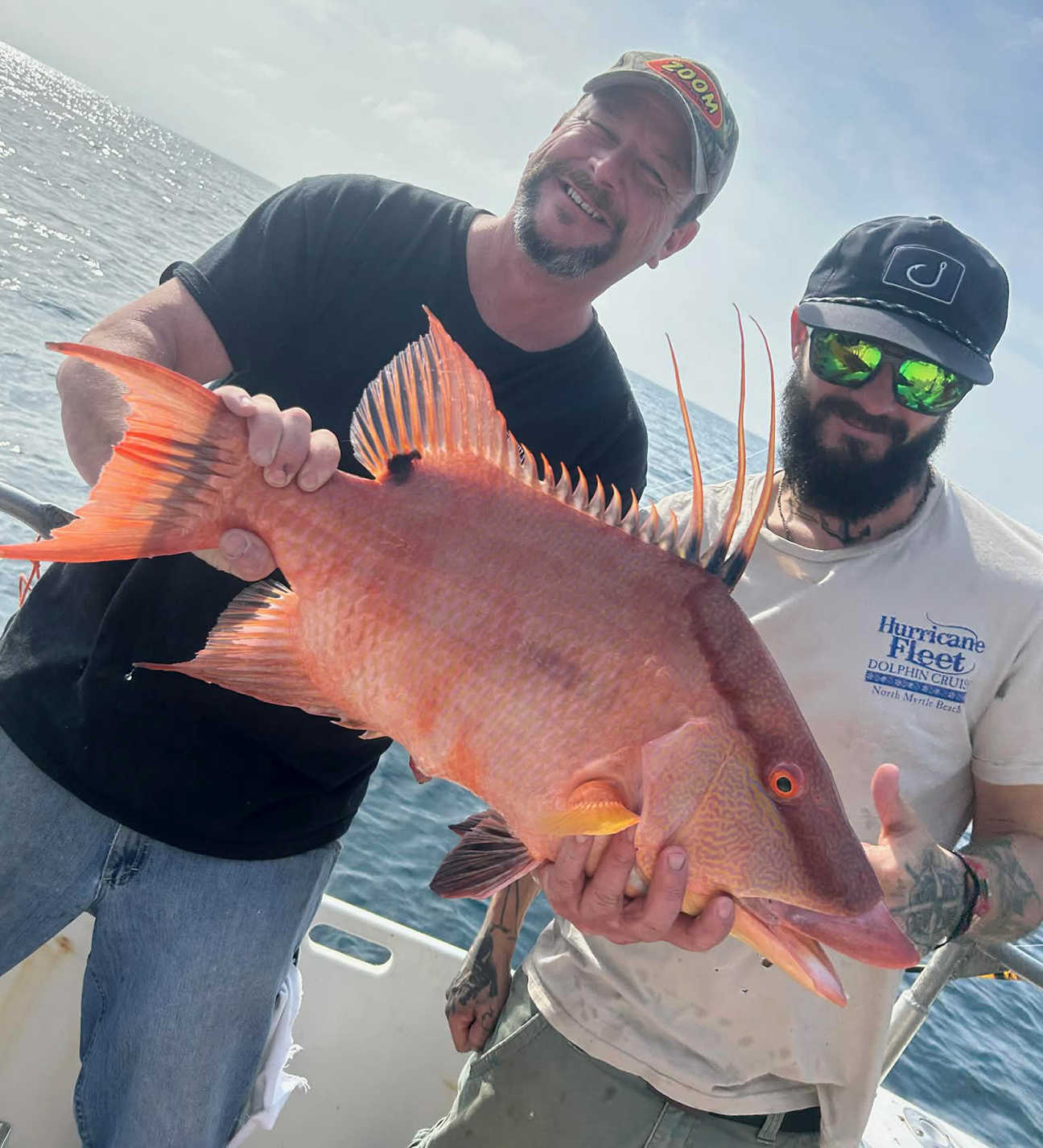
Robert Berry, of Ohio, landed this hogfish 47 miles offshore of Little River on a sardine. He was aboard the Little River Fishing Fleet.
Buddy, of Captain Smiley Fishing Charters, reports that black drum fishing should start picking up in March. Dead shrimp fished on a Carolina rig with smaller (6-16”) and lighter (15 lb. fluorocarbon) leaders will help entice bites in the cold, clean water conditions. Expect to find these fish around oysters or along the jetties.
This same setup will also produce some red drum as they begin sliding out of the mainland creeks where they spent the winter.
A few speckled trout will be caught as well, even after a tough winter, and anglers fishing live shrimp are typically the ones who find them.
Nearshore action has been basically non‑existent, with bluefish usually being the first sign of life as we move toward spring.
Bob, of Strange Magic Fishing Charters, reports that red drum will soon break out of their large winter schools in the backs of creeks and spread throughout the estuary. They become much more active in their feeding patterns and will hit anything from live mud minnows, fresh shrimp, or crab sections to a variety of soft plastics. Scent can be an important tool, as redfish rely heavily on it when feeding in early spring.
Black drum can be caught on fiddler crabs or cut shrimp fished under docks and in the deeper holes of the creeks and marshes.
Jessey, of Shallow Minded Fishing Charters, reports that red drum are usually one of the main targets this month, but it has taken more effort to locate the diminished schools.
Speckled trout are in the same boat—slower, but still offering some action. Most of the trout have been pushed farther up into the more brackish stretches, often holding alongside scattered striped bass. Live shrimp is hard to beat when you can get it, though anglers have also been getting strikes on Vudu Shrimp, Z‑Man Prawn StarZ, Z‑Man Trout Tricks, and smaller paddle tails. These same artificials have also produced some bites around the jetties.
Sheepshead are beginning to show up around the jetties.
Nearshore, anglers have seen strong black sea bass fishing in the 60-80’ range. Slow‑pitch jigs have been the preferred way to put fish in the boat.
Offshore has been a little slow, with scattered blackfin tuna available for those willing to make the run.
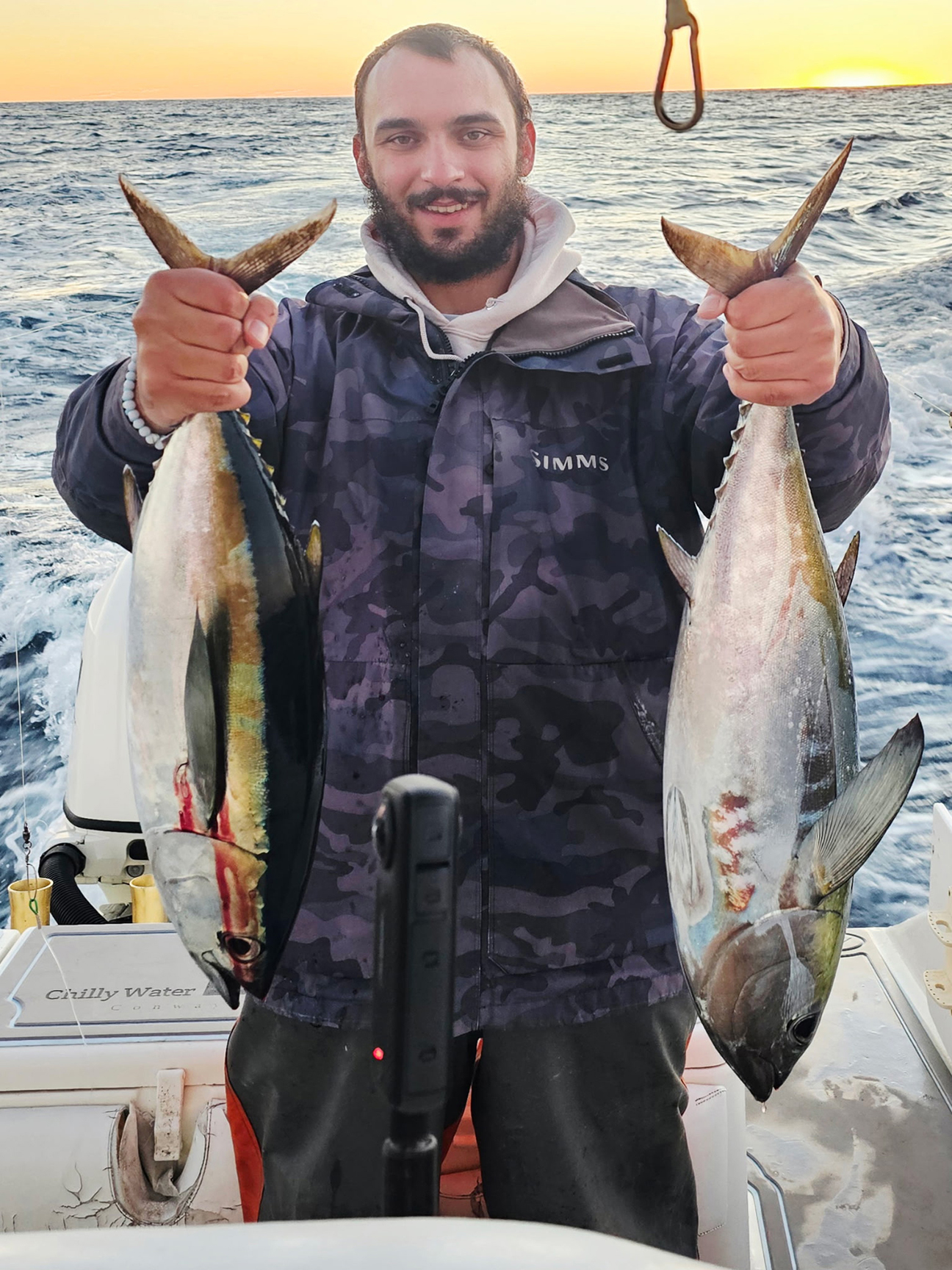
Ty Costello, of Cherry Grove, doubled up on blackfin tuna on a sunrise bite at the Scarp. He was pulling cedar plugs with Capt. Bevan Hunter of Chilly Water Fishing.
Bevan, of Chilly Water Fishing, reports that black sea bass fishing has been solid in the 65-80’ range, with some bigger fish (20”) mixed in.
Pushing out a little deeper (into 100-200’) has been the sweet spot for triggerfish, with cut squid being the preferred bait.
Larry, of Voyager Fishing Charters, reports that anglers in March will be able to find some great black sea bass and grunt action on the nearshore trips.
Offshore bottom trips anticipate seeing a mixed bag of big vermilion snapper, triggerfish, porgies, black sea bass, and the various jack species.
Josh, of Little River Fishing Fleet, reports that on the 100-120’+ bottom trips, anglers are seeing a huge variety, including big triggerfish, plenty of vermilion snapper, white grunts, Key West porgies, hogfish, almaco jacks, and lots of rudderfish.
The jumbo black sea bass are everywhere, with limits coming from as close as 50 miles offshore.
Lynn, of Apache Pier, reports that croakers and some whiting make up the majority of the catches from the crowd bottom fishing with cut shrimp.
A few small black drum have been in the mix.
Larry, of Cherry Grove Pier, reports that there isn’t much fishing action, but as conditions slowly warm up, the whiting and croakers will be the first species showing up for anglers fishing the bottom.
