
Ocean Isle/Holden Beach – March 2026
Jeff, of Ocean Isle Fishing Center, reports that black drum are a great target during these cooler winter months. Look for black drum to be staged up around oyster beds, where some dead shrimp fished on the bottom will entice bites.
Red drum stick around all year long, and though a little slower now, they will be getting more active as temperatures warm. Target the reds around dock pilings with the same Carolina‑rigged shrimp or a live mud minnow.
The next species we look forward to is the arrival of whiting and gray trout. These schools will move in and set up in deeper holes in the inlet and around the river mouths. Drop down some dead shrimp on a simple double‑spot rig with #6 hooks to get action from both species.

Brant, of Ocean Isle Fishing Center, reports that coming out of a cold winter, the trolling action out at the break has been tough to access. When you can find a good weather window, there seems to be an oasis out there holding some blackfin tuna and wahoo. Anglers need to really focus on temperatures and chlorophyll shots to find those areas where water temperatures are in the low 70s and have a blue or blue‑blended coloration.
Bottom fishing is always a good option year‑round despite the grouper and snapper being closed. Vermilion snapper and triggerfish can be caught in good numbers out on the break, if the trolling action isn’t panning out.
Black sea bass fishing has already been good, and March is another great month to target them. Water temperatures in the low to upper 60s and structure in the 60‑100’ range are really what to look for when running out to target the larger keepers.
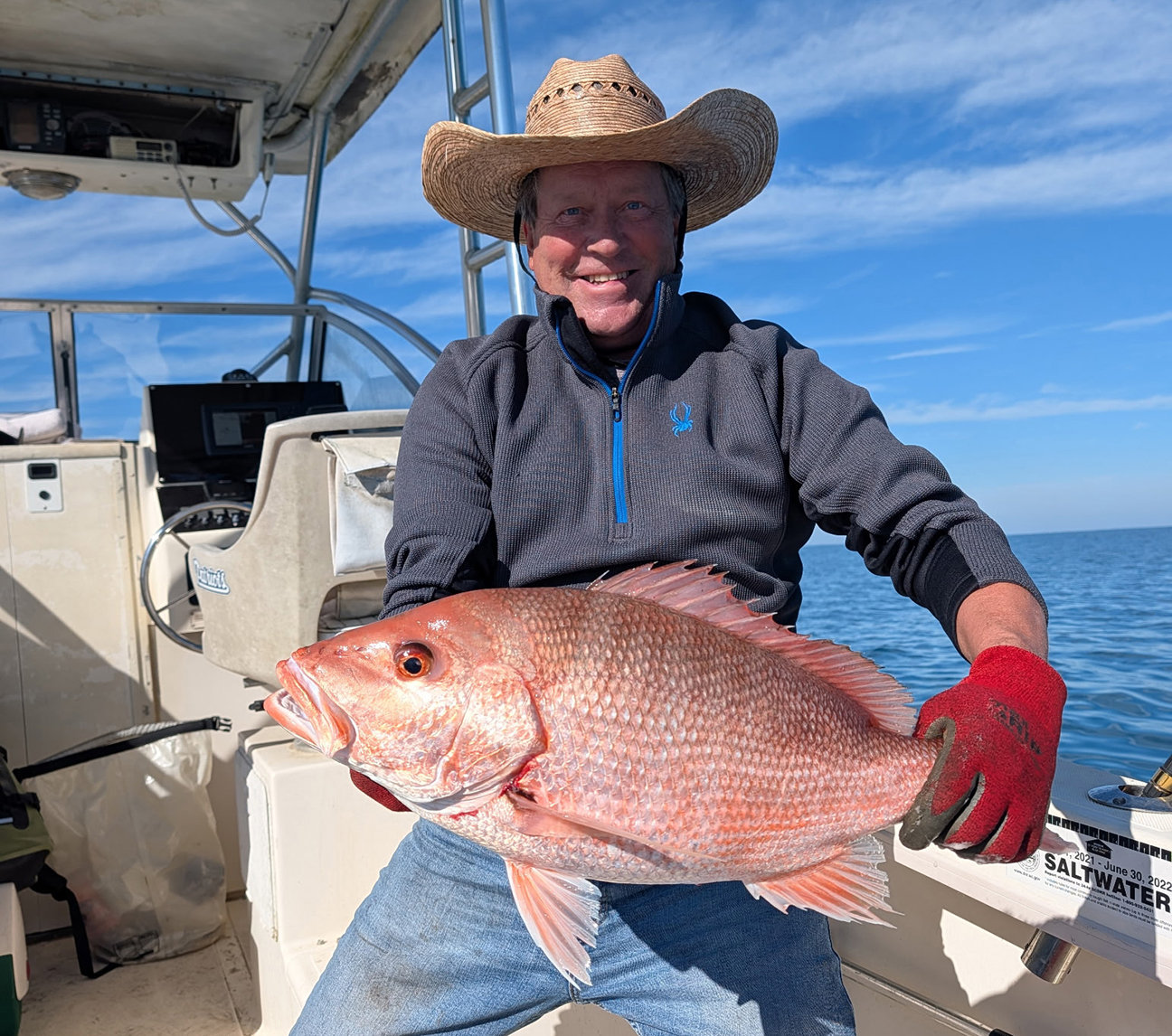
Rich Valpey, of Massachusetts, caught (and released) this 20 lb. red snapper on the bottom while 15 miles offshore of Little River. The fish fell for frozen mullet.
Tim, of Tideline Charters, reports that fishing has been tough as we come out of a winter where water temperatures stayed low for so long. Red drum are still in big schools back in the shallows, but they are very spooky and not biting well. Throwing very small soft plastics with finesse or casting out live mud minnows are the best options for getting bites.
A few small schools of speckled trout have been found throughout the ICW, but in general, most anglers are actively trying to avoid them after a hard winter.
Some black drum are being caught in the ICW. While the best action is on the lower tides, the bites on nay tide are still few and far between.
Tripp, of Capt’n Hook Outdoors, reports that red drum have been the primary focus inshore and that will continue right through March. Anglers are targeting the reds in the backs of the shallower creeks where schools have been staged up around oyster banks or under docks. The best tactic is to target them on a warm or sunny day when water temperatures have crept up just enough to get these fish more active. Paddle‑tail soft plastics on super‑light jig heads (1/8 or 1/16 oz.) generally produce most of the bites this time of year.
Black drum are also around and get more prevalent as temperatures warm up. Dead shrimp fished around structure with some moving water is the best formula for hooking a black drum.
The speckled trout that survived the cold are starting to become more active as we move into March. The same paddle‑tail soft plastics, rigged super light and fished very slow, give you the best chance at a hookup until live bait becomes more readily available.
Off the beach, bottom fishing for black sea bass is a great option for these first few months of the year. Anglers using squid and other cut baits are finding most of the keeper fish in the 50‑80’ range.
When getting the chance to run offshore, the wahoo and blackfin tuna bite has been decent and only picks up in March. Ballyhoo setups pulled at 7 knots have been the best producer, with temperature breaks and a deep‑blue water color being two of the most important factors for success.
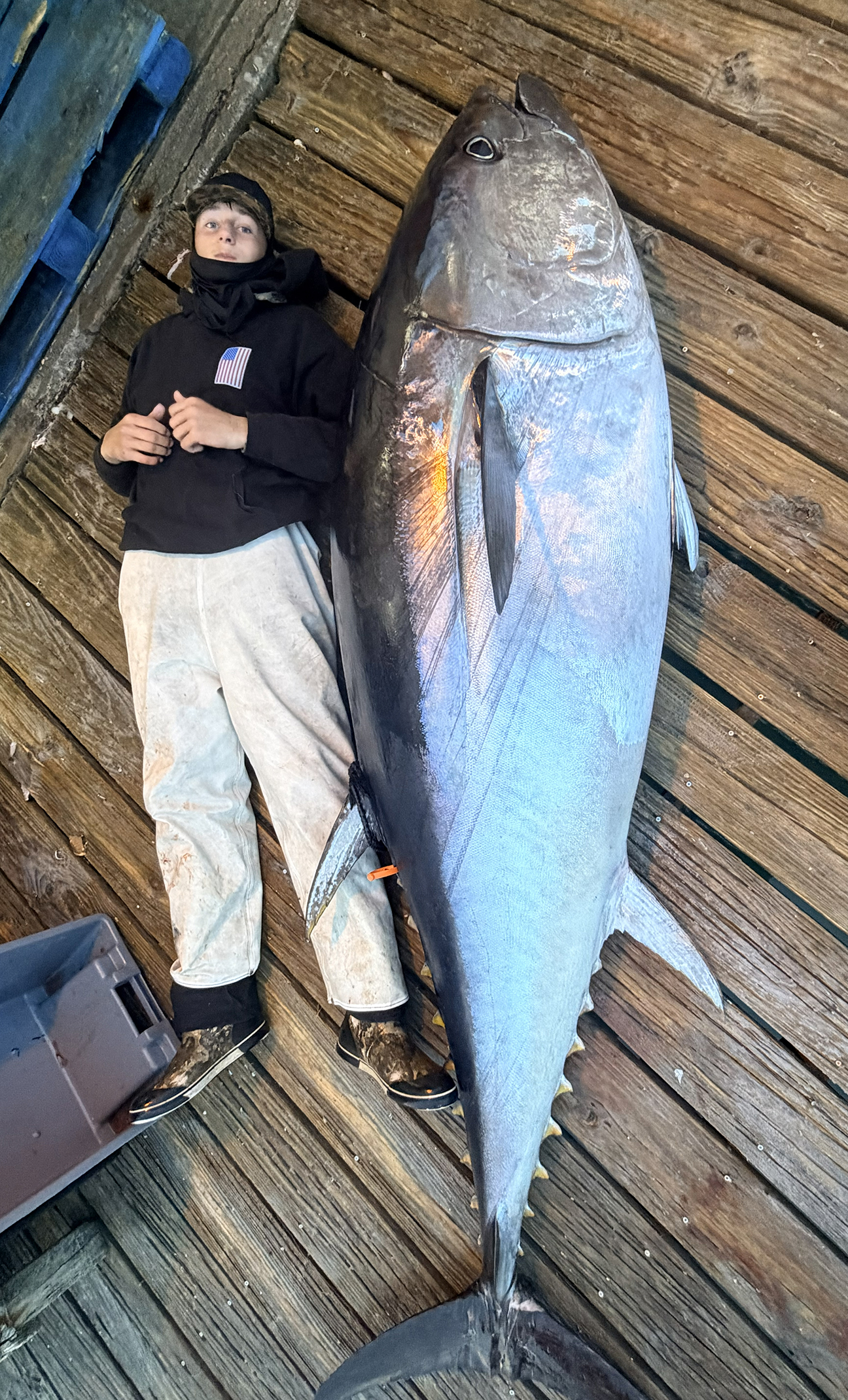
Maddox Tennant, of Bald Head Island, landed this 97″ bluefin tuna offshore of Holden Beach on a live pogie.
Jamie, of Rigged and Ready Charters, reports that those who can catch a weather window to run offshore can expect to find some wahoo. Wahoo will remain the top target throughout March, with some blackfin tuna mixing in as we move further into the month.
If the water temperatures near the beach make a quick turn upward, we could start seeing bluefish, Atlantic bonito, and possibly a super‑early spanish mackerel.
Also in March, surf anglers should start to see croaker and whiting when fishing with shrimp.
Inshore anglers will be targeting oyster beds and docks and looking for any mix of sheepshead, black drum, and red drum.
Anthony, of Salt Fever Guide Service, reports that offshore runs in March will be all about targeting wahoo and blackfin tuna. The tuna that are typically found are the 15‑25 lb. class, and they’re most likely to hit ballyhoo under Sea Witches while running 60 lb. fluorocarbon leaders.
The wahoo have ranged from 25‑45 lbs., and they are also favoring ballyhoo on Ilanders. Timing a trip around the new moon in March should see the best bite of the month.
There is also the possibility of finding the occasional sailfish mixed in.
Philip, of Rod and Reel Shop, reports that a few anglers looking to break “cabin fever” have been able to catch some black drum in the ICW.
Inshore, speckled trout and red drum are the main options for anglers heading up shallow and targeting the mainland creeks and canals, and this bite will certainly improve in March.
Looking further into March, the whiting should start showing up alongside the occasional pufferfish. Some cut shrimp will work best for both species.
The area could also start seeing some bluefish show by the end of March.
