
Southport/Oak Island – July 2026
Angie, of Dutchman Creek Bait and Tackle, reports that when surf anglers aren’t battling dirty water and plenty of seaweed, they are finding a mixed bag of whiting, croakers, bluefish, small sharks, and pompano.
The local piers have seen a few kings (to 15 lbs.).
Sheepshead fishing has been good for the inshore crowd, with live fiddlers being the top bait option. Some sheepshead are also being caught from the local piers, with the same fiddler crabs fished near pilings producing bites.
Red drum fishing inshore has been scattered. While there is some artificial action, especially with topwaters early, most of the bites are coming from live or cut bait.

Josh, of Oak Island Sporting Goods, reports that inshore anglers have been finding red drum scattered along the ICW and back into the creeks. Expect to bounce around a bunch to locate these smaller groups of fish that are doing a lot of moving.
Some black drum are mixed in, and they’re mostly being found around docks and oysters in the creeks.
Sheepshead fishing has been picking up, with fiddler crabs being the top bait option.
Surf anglers have been catching a mix of whiting and some pompano. Sand fleas and shrimp make good bait options when targeting both species.
Bluefish and spanish mackerel are in the surf zone, though pier anglers are doing much better getting lures out to them.
Getting off the beach has been producing some spanish mackerel, with trolling being the top tactic.
Ian, of Fin Fisher Charters, reports that red drum are scattered along grass banks in the waterway and under docks. A piece of cut menhaden on a Carolina rig has been the most reliable bait option. Anglers looking to break out the artificials are finding some success early in the morning with topwater plugs or soft plastic shrimp imitation lures.
Flounder are working their way inside.
A bunch of fiddler crabs are on the banks of the ICW, which are great for targeting sheepshead and black drum under docks.
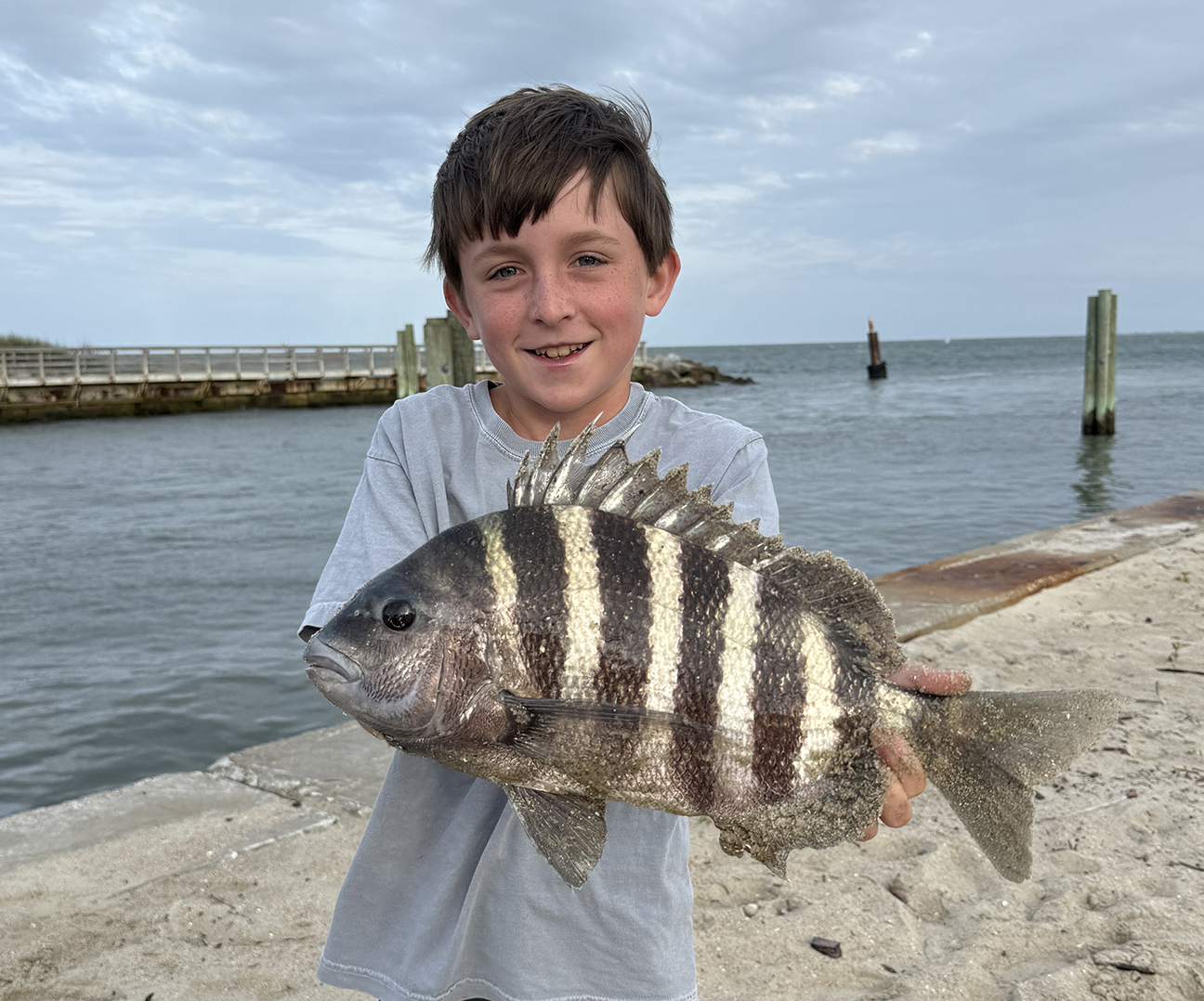
Hayes Connor, of Wilmington, caught this sheepshead near Bald Head Island on live fiddlers using a #2 hook and pinch weights.
Zane, of Falling Tide Fishing Adventures, reports that anglers have had some success finding a mix of red drum and speckled trout while throwing topwater plugs first thing in the morning. The lower and incoming tide has been best, and though the trout aren’t around in numbers, the ones being caught are a good size.
After the morning bite, target the red drum with cut bait on grass banks and areas with oyster beds.
Flounder are all over the place and can be caught when fishing just about any bait on the bottom.
Steve, of Oak Island Fishing Charters, reports that good numbers of red drum are scattered throughout the creeks and around feeder creek mouths. Some variation of live or cut menhaden and shrimp has been the best bet to get them to strike. The lower tides (falling-low or low-rising) have been a bit better.
Hard structures such as oysters, pilings, and docks are seeing a more consistent sheepshead and black drum bite now that more fish have pushed in from the ocean. Fiddler crabs and mud crabs are without a doubt the best bait option for both of these species.
Flounder fishing has picked up tremendously. The flatfish can be found everywhere from grass points, out in the river, and on mud flats back in the creeks.
Wally, of Oak Island Fishing Charters, reports that for targeting king mackerel, the 15+ mile range is a good starting point. Live bait fishing is the top tactic for the kings and can also produce any mix of cobia, amberjack, and even the scattered mahi.
Bottom fishing is an excellent way to put meat in the boat, with grouper season off to a good start in the 80’+ area.
Offshore trolling is producing some bigger mahi.
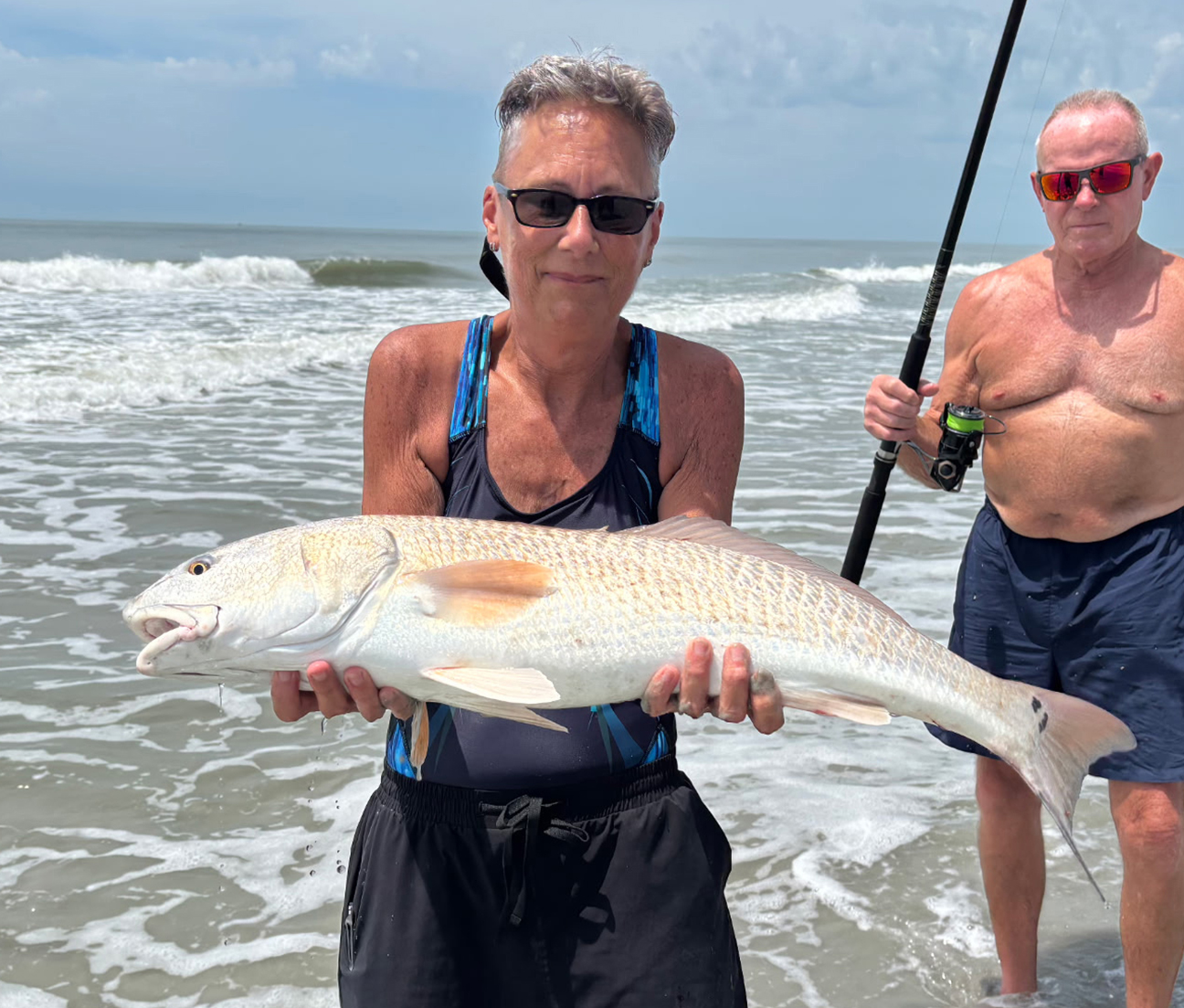
Trish Clary, of Oak Island, reeled in this red drum from the Oak Island surf using fresh shrimp on a two-drop bottom rig. She was fishing with Capt. Wayne Ayers of Reel Good Surf Fishing.
Ryan, of Fugitive Charters, reports that anglers trolling off the beaches are catching a bunch of bluefish and spanish mackerel (to 27”).
Further out, gag grouper fishing has been good, with the better fish coming from some of the lesser-known spots and ledges in the 60-100’ range.
Getting to the deeper side of that range (100’+) also presents the opportunity to add vermilion snapper and triggerfish to the box. Cut baits work best for both.
Keep an eye out in this range for some cobia to be hanging around the deeper structure.
Mahi is another species moving in closer with the warming water temperatures, but these are mostly smaller fish.
Pushing out into the 30-40 mile range is where the larger mahi can be found. This area usually sees the well-formed mats and more pronounced grass lines.
King mackerel fishing has been steady, with most of the kings scattered out in the 20-30 mile range.
Steele, of Catherine Anne Sportfishing, reports that anglers enjoyed a strong start to the mahi season, and now these fish are scattered about with the hot water temperatures. Anglers can find fish in the 65-150’ range. The same live baits fished by the king mackerel anglers can get mahi bites, with a standard trolling spread and skirted ballyhoo also working.
The better grouper fishing is being found over bottoms in the 65-100’ range.
Keep some live bait or a bucktail on the ready as these offshore structures are also holding a fair number of cobia.
James, of Ocean Crest Pier, reports that smaller baits (such as shrimp, sand fleas, or bait strips) on bottom rigs are producing croaker, whiting, and some scattered spot.
Spanish mackerel and bluefish are around, but king mackerel anglers have had a tough time with the dirty water conditions.
Ben, of Oak Island Pier, reports that bottom fishing efforts have been producing whiting, croakers, and a few speckled trout.
Casting jigs around bait balls or near surface-feeding action is garnering strikes from a mix of spanish mackerel and bluefish.
The king bite has been slow.
