
Swansboro/Emerald Isle – June 2026
Morgan, of The Reel Outdoors, reports that spanish mackerel have been moving in in good numbers into the nearshore areas and along the beachfront.
The bluefish bite remains really good, with some true “choppers” (to 10 lbs.) in the mix.
Anglers fishing smaller bottom rig setups in the surf with shrimp or sand fleas (which are now showing up) have been catching sea mullet, black drum, and a few pompano.
Inshore, better numbers of sheepshead are moving in, though a lot of these early fish are on the smaller side.
Fishing around docks, oysters, or bridges is producing a mix of black and red drum.
Pockets of gray trout and plenty of bluefish are around the mouth of the White Oak River.

Rob, of Sandbar Safari Charters, reports that from the moment you break the inlet, schools of spanish mackerel can be found feeding under birds, around bait balls, or at times deeper around structure. Trolling has been the most surefire way to put fish in the boat, with both deep diver plugs and spoons doing the trick. When you do find fish breaking the surface, any variety of small metal jigs ripped through the frenzy will get strikes.
Inshore, better numbers of red drum are around. If throwing artificials, topwater plugs and paddle tail soft plastics are the go-to options, and those looking to soak natural baits are having success with small shad, shrimp, and finger mullet.
Sheepshead are inshore in better numbers, and they’re staged up on shell points and around dock pilings and bridges. Fiddler crabs or sea urchins are the top bait choices for targeting them.
When riding around, schools of bluefish and spanish mackerel are along the waterway edges and around the river mouths. The mornings usually give the best shot at these fish, with any variety of glass minnow imitations getting bites.
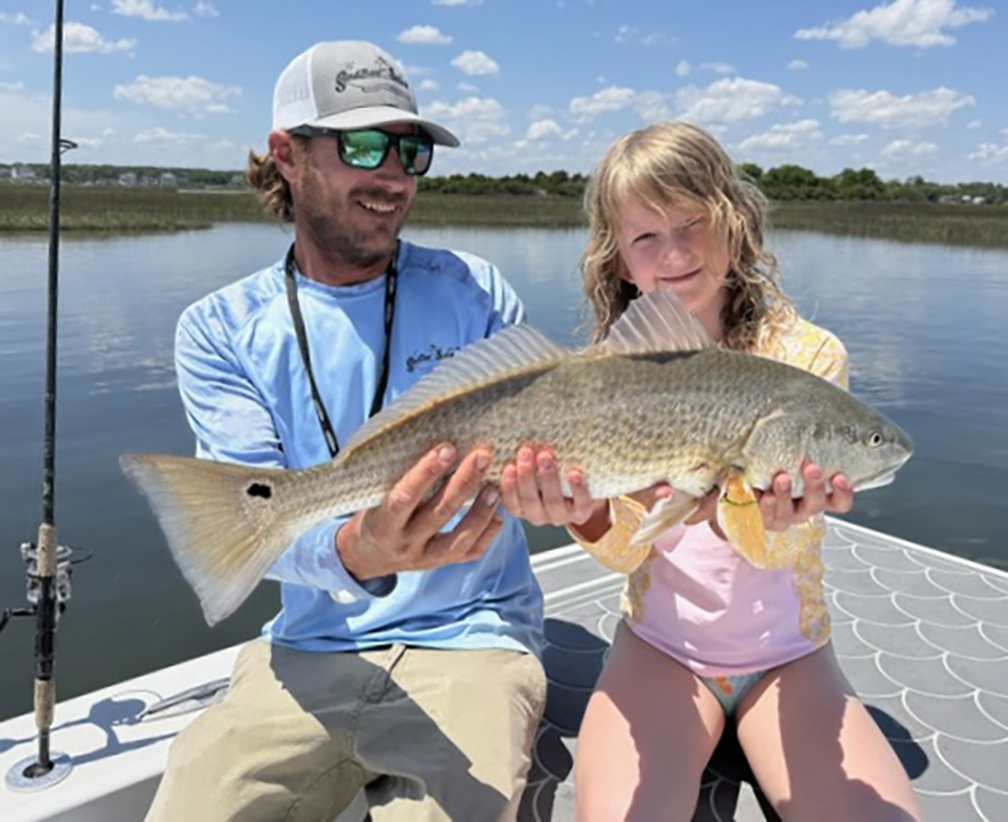
Maple Meekins, of Cary, caught this 25″ red drum on a swim bait near Swansboro. She was fishing with Capt. Rob Koraly of Sandbar Safari Guide Service.
Matt, of Friendly City Fishing Charters, reports that red drum are pretty scattered. The main key to catching redfish is to get on the trolling motor and start covering water. Overall, cut bait is currently the top producer.
Some finger mullet are in the marshes and back in the creeks. With finger mullet around and shrimp not too far behind, the red drum bite should pick up quickly.
A ton of bluefish have moved in, and they will hit almost anything thrown at them.
The gray trout and sea mullet bite has slowed down a bit after a hot start.
Jacob, of Southern Tides Fishing Charters, reports that bluefish and spanish mackerel are the top targets. Both species can be found from the inlet back into the waterway. Often they aren’t on top, so work the schools of bait you see.
Some sheepshead and the occasional black drum are around, mostly when fishing bridges, but a bunch of smaller fish (pinfish, croakers, etc.) are also inside now.
Red drum are in the shallow bays and around oyster beds. Cut bait is the best call as these fish are scattered about and searching for food.
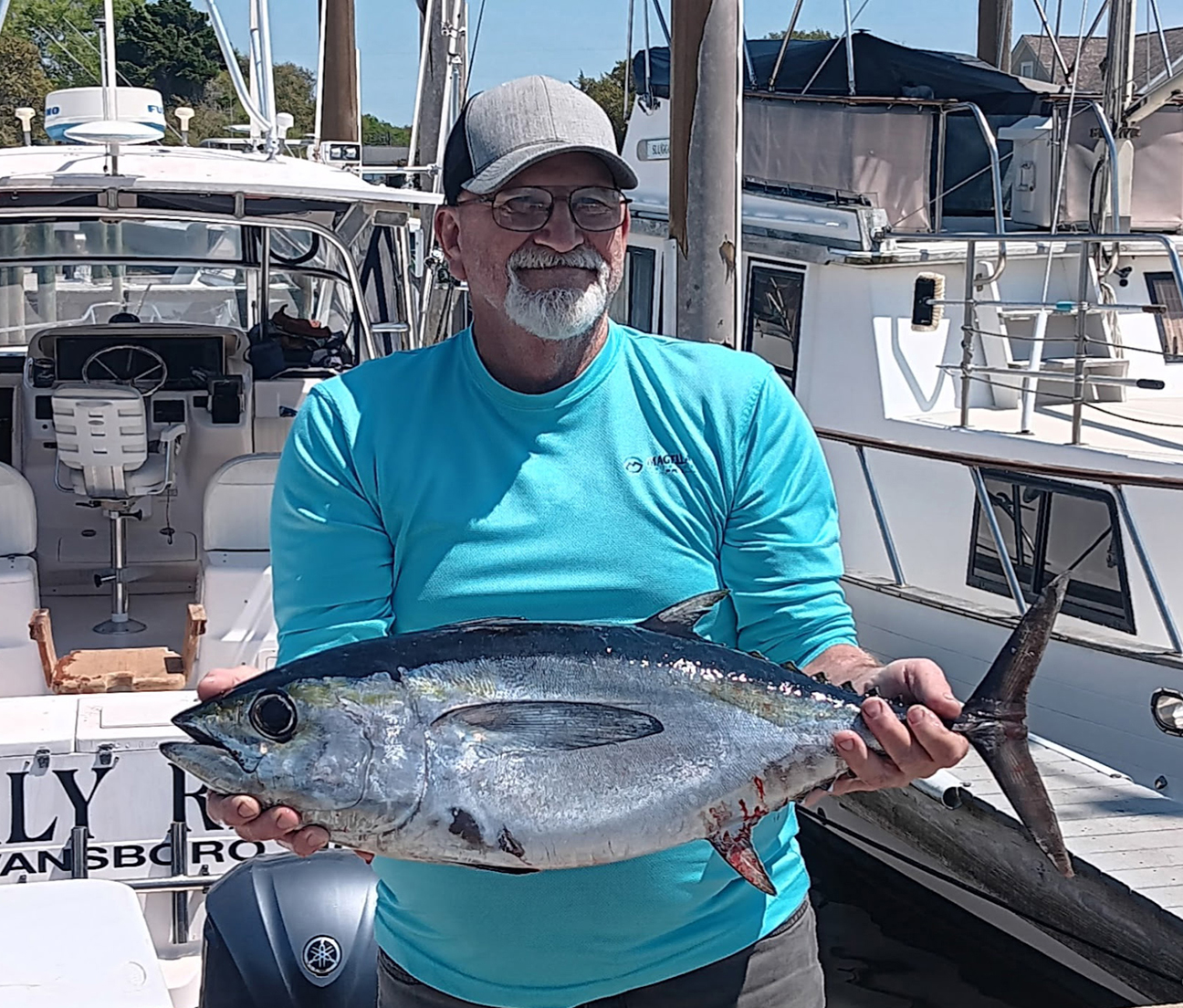
Mike Ponsock, of Richlands, landed this blackfin tuna offshore of Bogue Inlet in 60′ of water. He was trolling a Yo-Zuri crystal minnow with Capt. John Parks of Early Riser Fishing Charters.
Tony, of Fin Finderz, reports that the nearshore action is mostly spanish mackerel. Trolling with spoons or deep diver plugs will put fish in the boat, though these fish will also hit Big Nic Spanish Candies pulled across the surface when the fish are feeding on top.
Offshore anglers are seeing the wahoo bite pick up.
Mahi are moving in, but there haven’t been any big numbers just yet.
If out on the nearshore wrecks (10+ miles), expect to find amberjacks at home.
Scott, of King Mackerel College, reports that some great billfish action can be found in the 50-100+ fathom range. Ballyhoo and bigger lures have been best when targeting the billfish.
Dolphin are showing up, and skirts in green/yellow color patterns are having the most success.
Wahoo remain mixed in, with most strikes coming from baits fished deeper on the planer rod. For the wahoo, ballyhoo on skirts with darker color patterns (black/red or blue/black) are typically the better options.
All of these meat fish options (including blackfin tuna) are showing up from the 30-fathom area on out.
Closer to the beach, more spanish mackerel are arriving with each day.
John, of Early Riser Fishing Charters, reports that the king mackerel have been working inshore and are now pushed into the 10-15 mile range. The majority of these fish are the smaller “schoolie” kings (in the 10 lb. range), with a couple big ones mixed in. The kings are mostly hitting dead cigar minnows.
Anglers should keep a rod ready, rigged up with a bucktail and large soft plastic paddle tail or grub trailer, as the cobia can pop up just about anywhere. Bait balls should be appearing in bigger numbers on the beach, and when that happens, the first stop each morning should be to check for a cobia (and pick up a net of fresh bait for the day).
Out at the Gulf Stream, some good wahoo and tuna fishing is going on. For the blackfin tuna, most of the hits are coming from ballyhoo rigged both naked or under small blue/white skirts.
Gaffer-sized mahi have moved in, and they like poppers and baits with green or pink skirts.
Mike, of Bogue Inlet Pier, reports that anglers looking for some sight-casting action have been catching a bunch of bluefish (to 9 lbs.) and spanish mackerel.
Bottom fishing is picking up with the cleaner water conditions and temperatures creeping up. Anglers have found a mix of sea mullet, sheepshead, black drum, croakers, and a few pompano moving in.
