
Swansboro/Emerald Isle – March 2026
Rick, of The Reel Outdoors, reports that the black sea bass action nearshore has been the main target for anglers finding the opportunity to get offshore.
Water temperatures in the surf are really cold, and there just isn’t much happening there yet. Moving into March, anglers are hoping those temperatures swinging up will drive sea mullet onto the beachfronts.
Some bluefish should also be showing up around that same time, with the additional chance of finding an early spanish mackerel if there is a quick warm‑up.
Inshore, March should see red drum beginning to move back in from the ocean and joining speckled trout up in the shallows.

Rob, of Sandbar Safari Charters, reports that March is a great time for anglers to spend days hunting red drum on the mud flats. Artificials work well for this sight‑casting action, with any variety of Zoom or Gulp flukes and paddle tails getting strikes. If wanting or needing to fish bait, some cut shrimp or a live mud minnow Carolina‑rigged or under a cork can do the trick.
Even with a hard, cold winter, anglers expect to see some speckled trout still being caught in the mouths or first few bends of mainland creeks and rivers. For the trout, light suspending lures or paddle tails seem to work best.
By the end of the month, gray trout and sea mullet will start pushing into the inlets and setting up in the deeper areas of the ICW. Fish Bites artificial bait strips or cut shrimp on bottom rigs will help find these fish.
Once on a school, you can also start jigging some metals or soft plastics to locate the bigger gray trout.
Matt, of Friendly City Fishing Charters, reports that red and black drum are going to be the main targets for anglers going into March. A lot of fish had a hard time over the extreme cold, and these two species (especially the black drum) will typically have fared better.
Black drum will be found by targeting deeper shell bottoms or structure with cut shrimp on Carolina rigs. Both mainland creeks and bends in the marsh will be good areas to look for fish.
Red drum are still holding in winter schools, though water temperatures need to pick up a little to get them more active, as they are really slow right now.
Back in the creeks, a bunch of smaller “rat” reds will be mixed in while fishing the same Carolina‑rigged shrimp. As the red drum start to transition out of the cold, cut bait will continue to out‑fish artificials. These reds are skittish between the clear water and the cold, and they are simply wanting an easy meal.
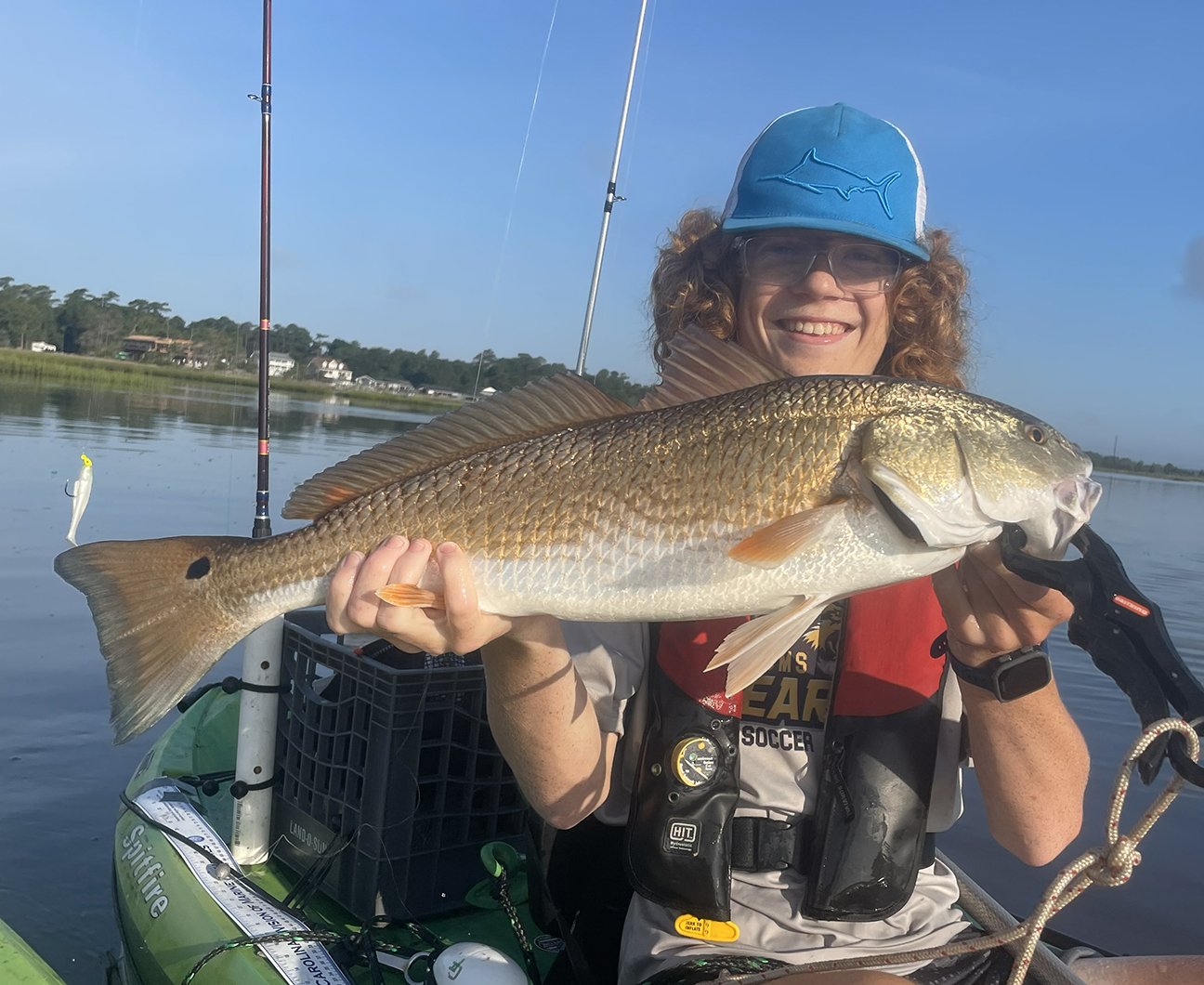
Porter Degan, of Swansboro, landed this red drum in Queen’s Creek on cut mullet.
Jacob, of Southern Tides Fishing Charters, reports that after the big snowstorm, schools of red drum have been steadily getting more active back in the marsh bays. The cold water has these fish stacked tightly together, where riding around and sight‑casting is the main tactic. Light‑weighted jig heads paired with a small paddle‑tail bait have worked best when trying to entice a bite. Anglers will do best focusing their efforts closer to mid‑day when the fish have warmed up and are most likely to eat. This same pattern and tactic should stay productive right through March and into April.
Heading back into the mainland creeks with dead shrimp could land some black drum. Carolina‑rigging the baits and fishing shell structure or docks is the way to go.
Throwing darker‑colored artificials in these same creeks could also produce the occasional speckled trout or scattered red drum.
As the water temperatures warm more toward the end of March, gray trout should be moving in. They stage up in large schools in deep, moving water near the inlets. You can use anything from a spec rig to metal casting jigs, soft plastics, or cut baits dropped to the bottom to catch these fish.
Anglers usually find schools of sea mullet moving in right alongside the trout, with dead shrimp on the bottom being the best option for the mullet.
Scott, of King Mackerel College, reports that offshore anglers look forward to wahoo action as we move into spring. Most of the wahoo caught will come from ballyhoo fished on a planer rod at around 7‑8 knots. In addition to blue skirts, the general consensus is that darker colors such as purple/black, red/black, and green/black have the best success.
Some of the early‑season “schoolie” king mackerel should start to show up. These 9‑10 lb. fish could be here by the end of the month, with good numbers of fish already being caught up around Hatteras.
Bottom fishing anglers are mostly running out to catch keeper black sea bass.
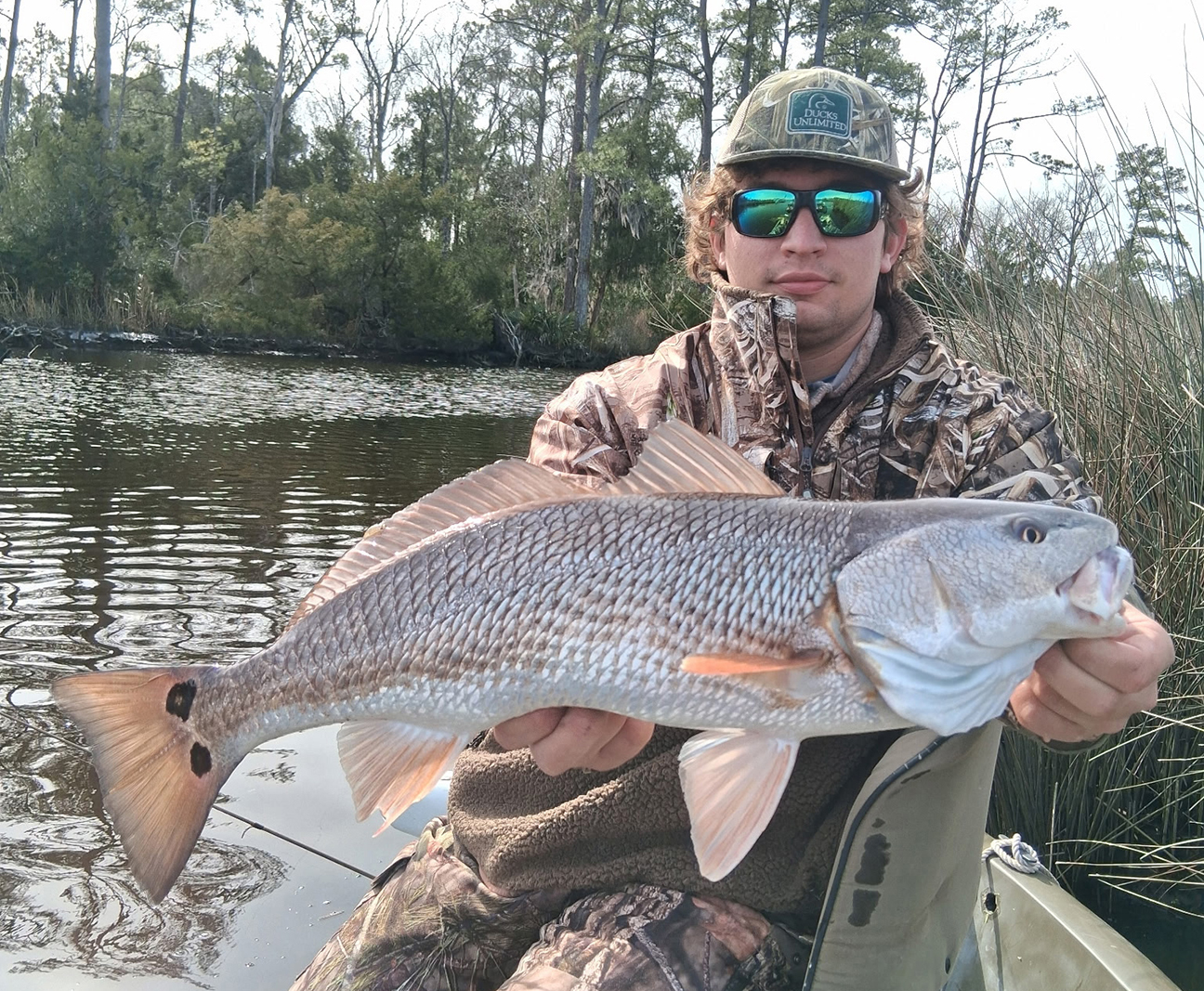
Christian Taylor, of Stella, landed this red drum on a Gulp shrimp in the White Oak River. He was fishing with Capt. Jeff Cronk of Fish’N4Life Charters.
John, of Early Riser Fishing Charters, reports that after the major cold snap, anglers continue to find some red drum action in the deeper sections of creeks off the main river. These fish seem to have fared pretty well, and anglers are having success fishing natural cut or scented baits on the bottom. A bait approach should switch to more artificials as temperatures warm up and fish get more active.
This is also a great time of year to find some red drum action out in large schools throughout the surf zone. The biggest challenge is that all the stars need to align when it comes to the right combination of wind, clarity, seas, and sunshine.
Local anglers anticipate the first few Atlantic bonito showing up by the end of March. Target them by casting jigs with light tackle, though pulling smaller lipped plugs or live bait on circle hooks may also be needed to get the strikes.
Bogue Inlet Pier was closed at the time of reports.
