
Topsail/Sneads Ferry – July 2026
Nathan, of East Coast Sports, reports that inshore anglers have been finding some red drum, with the early morning bite on topwaters being the highlight. Later in the day, bottom fishing with cut baits is the better option.
Sheepshead fishing is getting better. Many of the fish have finished their transition back inshore and can be found around the deeper docks and hard structures.
Surf anglers are seeing their typical summertime fare, including whiting, bluefish, croakers, and the occasional pompano.
Spanish mackerel are in close enough for pier anglers to have success catching them.
The spanish can also be caught by anglers trolling Clarkspoons off the beach.
King mackerel are scattered anywhere from 5 miles on out.
As we move into July, the mahi will be pushing closer to the beach. Anglers can find fish as close as 15+ miles.

Ray, of Spring Tide Guide Service, reports that red drum are scattered all over, from the inlet back into the ICW and upriver. With summertime fishing, the better success is coming from hitting spots closer to the inlets that have slightly cooler water temperatures. Topwater plug variations, such as MirrOlure She Dogs, Rapala Skitter Walks, and Heddon Spooks, have made great scouting lures for working through areas in search of the small groups of reds that are spread out.
Speckled trout are up in the river and around the bigger creeks, with topwater plugs also being the best bet for the specks.
Some black drum are being caught around hard structures such as bridges.
Off the beach, spanish mackerel fishing is picking up after a slow start to this season.
Mike, of Native Son Guide Service, reports that spanish mackerel have been mostly shallow off the beach (in anywhere from 15-35’).
Plenty of black sea bass and grunts are in the 10-15+ mile range. This range is also holding some king mackerel, and anglers should always keep a rod rigged up in case a curious cobia pulls up.
The key for inshore red drum and flounder has been to stick near the inlets and focus on grass banks and points.
Anglers have caught some speckled trout in the area, though most of the trout action has been in the New River.
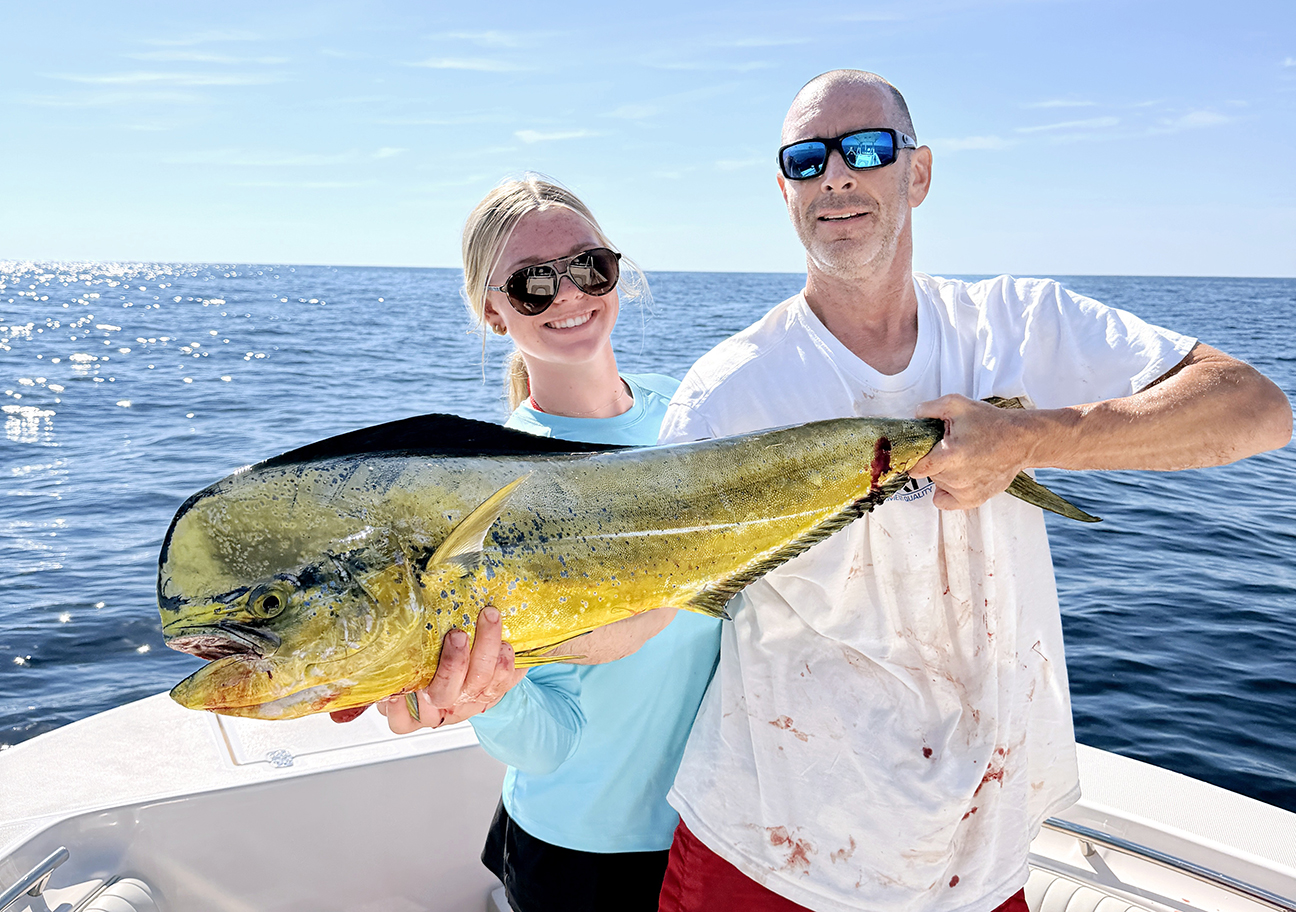
Taylor and Brad Weathersby, of Raleigh, caught this mahi 16 miles offshore of Topsail Island on a cigar minnow.
Adam, of Carolina Flats Fishing, reports that red drum fishing has been picking up, especially when getting on the water early and using topwaters to work through target areas. Once the sun gets too high, it’s time to break out the natural bait options or artificials that will target the bottom where temperatures are cooler.
With red drum now in smaller groups and scattered about, there isn’t one specific area to fish. These fish can be holding on anything from oyster beds, grass banks, and ICW docks, right on out to the inlet. Sticking closer to the inlets can help, as it seems the ocean-side reds are just now pushing in.
Some good-sized flounder are around, and the numbers of fish are great.
Sheepshead are starting to move in and set up around the inshore hard structures.
The spanish mackerel bite has been spotty.
Ricky, of Speckled Specialist Charters, reports that some slot red drum are working the shallow river shorelines and marsh areas closer to the inlet.
Topwater plugs are a great option for speckled trout in the early morning, but then later in the day target deep ledges near the inlet. Rig up live shrimp or menhaden under slip corks and let them drift over drop-offs that range anywhere from 5-20’.
A bunch of bluefish are around the inlet.
When up on the shallow banks or drifting live bait near the bottom, anglers will also find plenty of flounder.
Jim, of Plan 9 Charters, reports that the spanish mackerel bite has been good right outside the inlet in 30-40’ of water. Anglers are finally seeing a better quality of fish, starting in the 16-20” class. Size #0 or #00 Clarkspoons pulled behind #1 planers or trolling weights has been the simple yet extremely productive setup to put fish in the boat.
Some “schoolie” sized king mackerel are in the 50-70’ range. Anglers are getting on the king bite by pulling spoons or deep diver plugs. Fishing around structure, especially structure holding bait, is key for targeting the kings.
A good mahi bite has started to move into the shallower areas (20-25 miles). For the nearshore mahi, run mahi chains and small skirted ballyhoo,
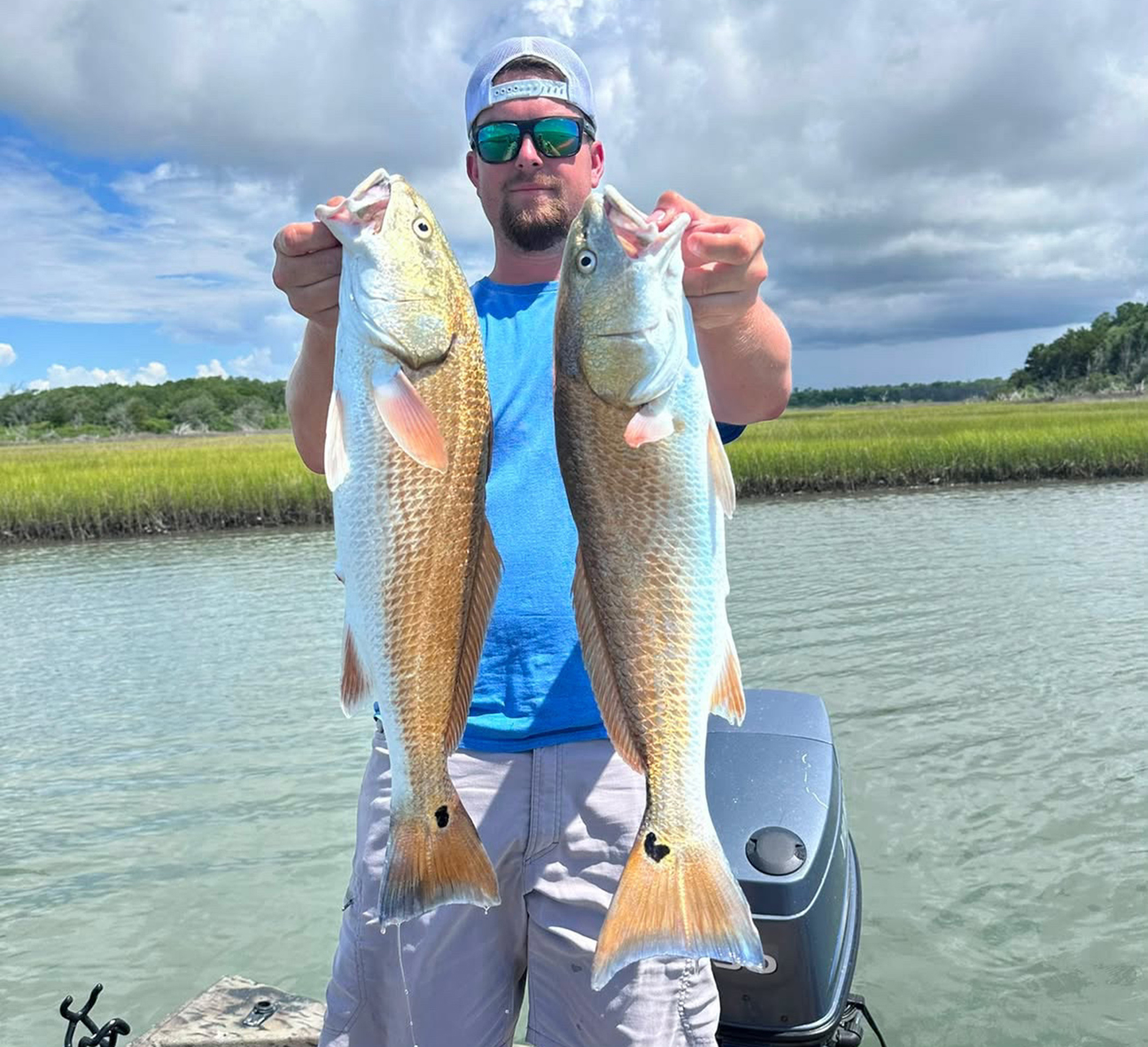
Owen Elliott, of Asheboro, doubled up on red drum in the Sneads Ferry area. He and David Lambeth were casting Z-Man PrawnStarz on 1/4 oz. jig heads to fish pushing water along a grass line.
Taylor, of South End Adventures, reports that anglers sticking nearshore have been enjoying some good spanish mackerel action around the inlet. It sounds simple, but the Clarkspoon and planer combo is a local favorite for a reason—it works great.
Bottom fishing is another great option for this time of year. Anglers are having a bunch of success in the 70-100’ range finding gag grouper, keeper black sea bass, and grunts.
King mackerel fishing has been best out in the 15-mile range when pulling Drone spoons or strip baits under Sea Witches.
Mahi are starting to scatter and move inshore, and they can be found closer in, especially if along a nice weed line.
Robin, of Jolly Roger Pier, reports that king mackerel (31 lbs.) have been landed. Anglers fishing off the end have also released some big tarpon (to 80+ lbs.).
Sight casting with Gotcha plugs is producing blues and spanish mackerel. The morning and late afternoon hours are best for the opportunity to find these fish breaking the surface.
Bottom fishing is good, though the action has been better at night. The mixed bag includes spots, croakers, bluefish, sea mullet, red drum, and the occasional speckled trout.
Vinita, of Surf City Pier, reports that bottom fishing anglers have seen a mixed bag of sea mullet, croakers, bluefish, and some spots being caught both at night and throughout the day.
Those throwing Gotcha plugs are hooking bluefish and spanish mackerel.
