
Topsail/Sneads Ferry – November 2026
Joe, of East Coast Sports, reports that with all this wind, the local piers have been catching a few big red drum (32”+), especially on the north end of the island.
King mackerel fishing from the piers was on fire before this last stretch of winds, with piers catching into the double digits per day.
Spanish mackerel and bluefish action has really slowed down with the wind stirring up the conditions.
In the sound, anglers are enjoying a mix of smaller red drum and the occasional speckled trout, and the focus will shift to almost exclusive trout action as the weather continues to cool.
The occasional speckled trout can be found in the surf.

Mike, of Native Son Guide Service, reports that bait has been pushed around by this long stretch of winds. The water temperatures have just started to cool with the colder evenings, so stable weather should put the area into trout mode. Target those main creeks and waterways and focus on the deeper seams (5-8’).
Red drum are scattered about inside, with most of the reds being the same schools that have been around all summer. The bite should only get better as the surf zone fish move back inside. Anglers can find a red drum bite by throwing artificials, but cut bait will likely produce the best results.
Off the beach, October produced some of the best spanish mackerel fishing (to 4 lbs.) that anglers have seen in a few years.
Plenty of good-sized bluefish should still be just off the beach, with false albacore also in the area (hopefully). The best tactic for the false albacore will be sight casting to surface action.
Bottom fishing at the nearshore reefs is always a reliable option, and the cooling water temperatures bring better fish in shallow.
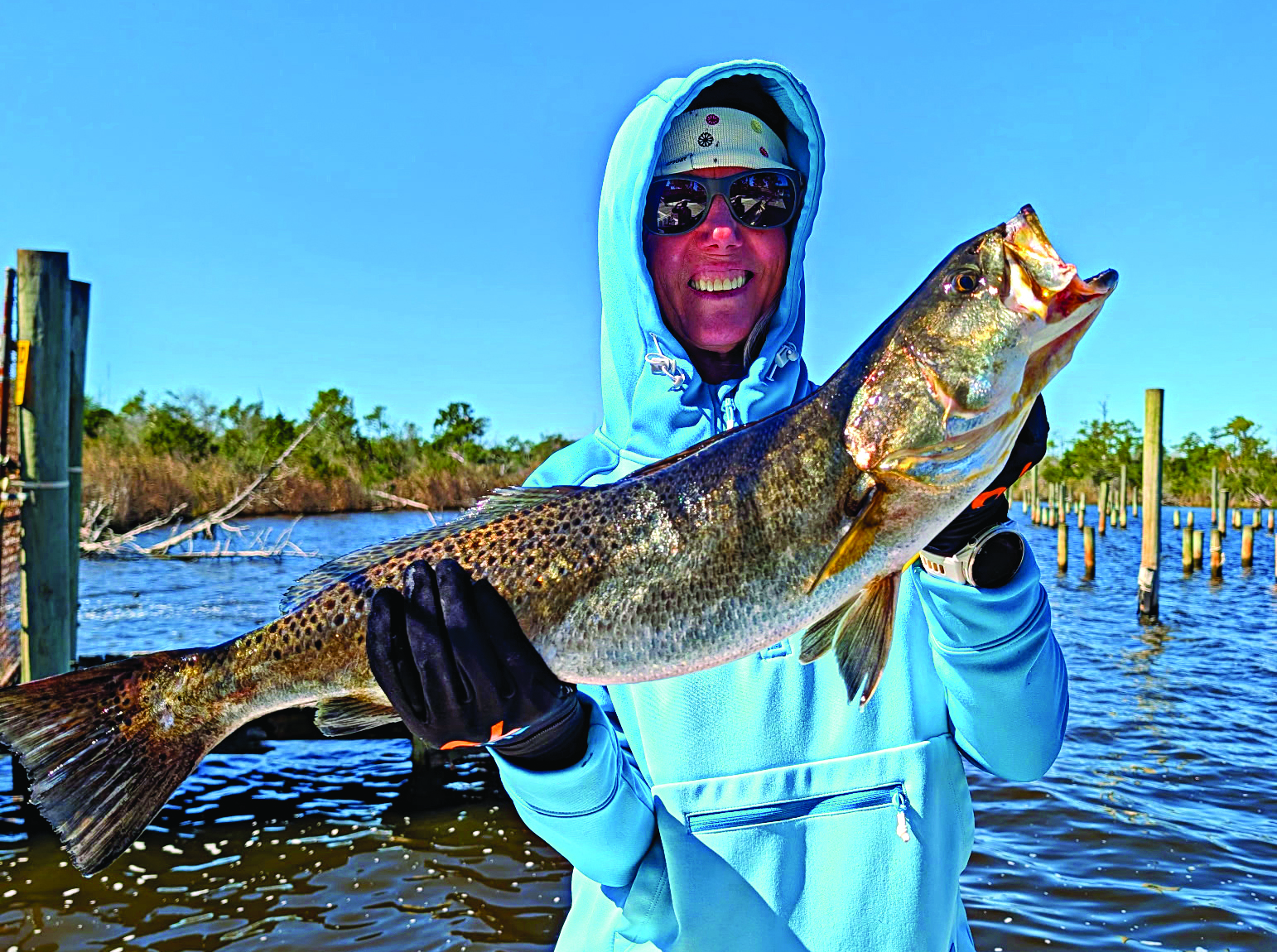
Elizabeth Koehncke, of Onslow County, with a 27″ speckled trout caught on live shrimp in the New River. She was fishing with Capt. Ricky Kellum of Speckled Specialist Charters.
Ricky, of Speckled Specialist Charters, reports that anglers are already seeing tons of smaller speckled trout, with some larger fish (to 28”) mixed in. Floating live shrimp under a cork is the best way to go, as trout can’t resist a live shrimp. Try focusing on areas from 4-16’, with the 4-8’ range being the most common spots to find fish.
Outside of looking for the right depths, structure and current are also important. Early in the season is a great time to scout new spots, as the smaller fish will be schooled up all over.
If looking to fish artificials, go with light weight (3/16 oz.) jig heads matched with your favorite soft plastic (such as a Slick Jr.).
While floating live shrimp, anglers can also catch plenty of black drum (to 18”), especially if fishing over structure.
A bunch of smaller red drum are mixed in and can be targeted with the same floating bait tactic.
Adam, of Carolina Flats Fishing, reports that topwater fishing is a great option for scouting out schools of trout when on the water early. As the day moves on, search around in the deeper depths to figure out which holes the trout have slid into.
The red drum will fire up in a sort of “last blitz” before bait gets really thin inshore. For the reds, target oysters and grass banks with soft plastics (such as Gulp).
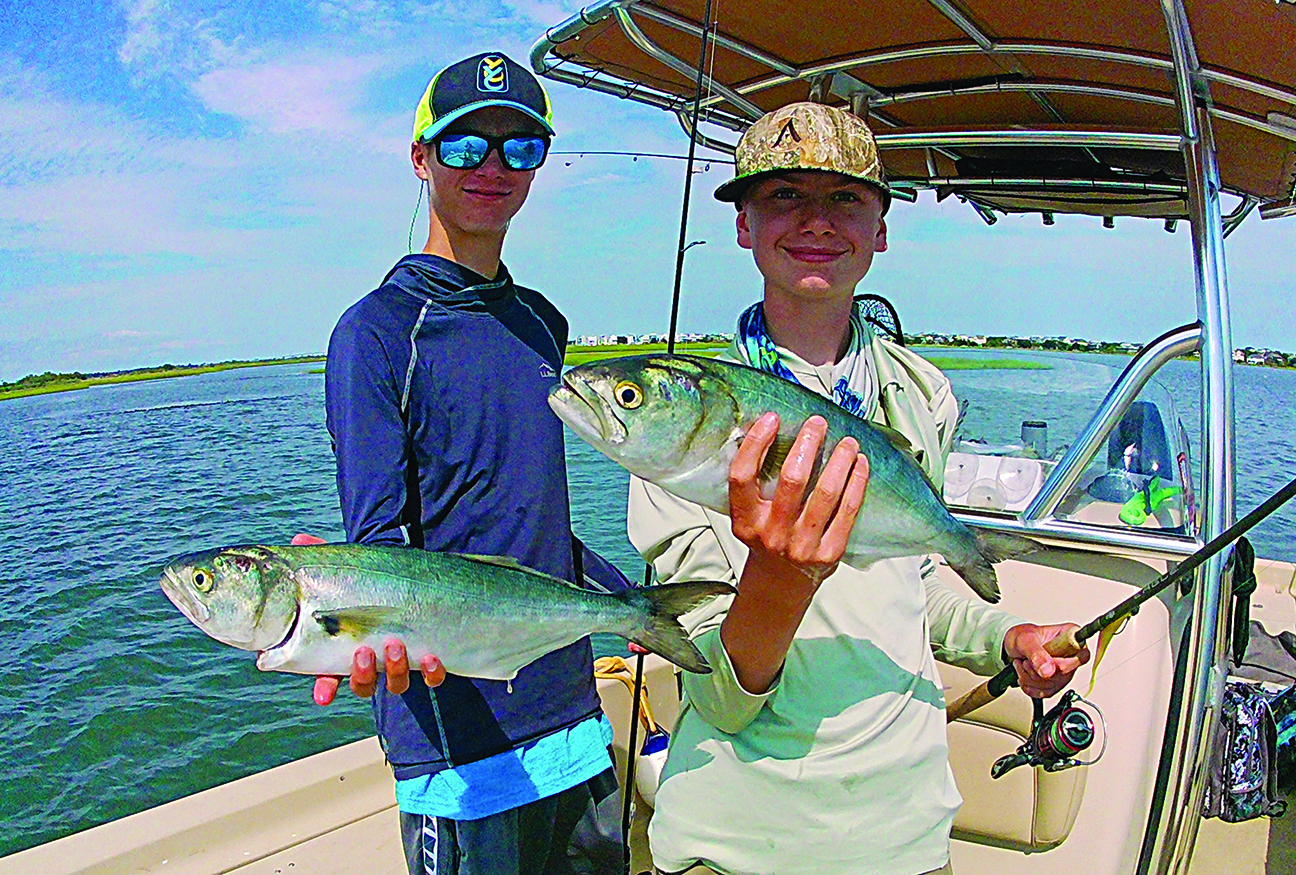
Syler Richardson and Klaus Johnson, of Hampstead, doubled up on bluefish near Topsail Island casting topwater plugs along grass lines.
Jim, of Plan 9 Charters, reports that the fall weather has been great for the king mackerel bite. Anglers have been finding not only good numbers of kings, but quality fish as well. The best success has come from slow-trolled live and/or dead bait or trolled plugs, and most of the action seems to be focused in the 50-60’ range.
Keep an eye out when over any nearshore structure because plenty of bluefish, false albacore, and gray trout are around. Try throwing any variety of diamond jigs, smaller epoxy jigs, or soft plastics.
Bottom fishing is another good offshore option, with the best action out in 60-80’+ depths. Anglers are catching a mix of black sea bass, snappers, and triggerfish, and all three species are feeding on cut baits and jigs.
Taylor, of South End Adventures, reports that a mix of spanish mackerel, bluefish, and false albacore have been feeding around bait and structure.
A few nearshore king mackerel are still around. The 8-12 mile range has been the sweet spot, and that range should stay the target area until the water really cools off and pushes them out.
If bottom fishing, plenty of gag grouper are biting in the 10-20 mile range.
As the water temperatures drop, anglers should see the black sea bass move in, with action picking up in the 5-15 mile range.
Robin, of Jolly Roger Pier, reports that the pier has started seeing some scattered speckled trout showing up.
Bottom fishing action has been better at night, with catches of good-sized Virginia mullet and spot.
Bluefish have been pretty thick, especially in the early mornings.
Vinita, of Surf City Pier, reports that bottom fishing efforts have produced a mix of pompano, black drum, and croakers.
There have been some casting opportunities for both spanish mackerel and bluefish.
King mackerel fishing was really good before this last blow, and hopefully the king bite isn’t done just yet.
