
Wrightsville Beach – April 2026
Tex, of Tex’s Tackle, reports that anglers making it out to the Gulf Stream are finding a few wahoo.
Closer to the beach, everyone is still waiting for the arrival of Atlantic bonito. There have been fish offshore, so hopefully it won’t be long before they push closer to the beach in numbers.
Inshore, red drum fishing is providing most of the action. These fish are just beginning to move around as they prepare to break away from their larger winter schools and spread out.
Surf and pier anglers have started to see the first sea mullet of the year, and that bite should only improve each week as more fish push into the area.

Ben, of Intracoastal Angler, reports that in the Cape Fear River, anglers are catching a few striped bass and red drum on weedless‑rigged soft plastics around the downtown area.
Inshore boats are seeing a few more speckled trout being caught in the ICW, the creeks, and other inlet‑area spots. The same wintertime lures are still producing, with D.O.A. soft plastics, Rapala X‑Raps, and MirrOlure MR‑17s all having their moments.
Schools of reds are showing up across the ICW, in boat basins, and in the creeks. Throwing soft plastics or casting out dead shrimp on a Carolina rig have both been effective for getting strikes.
Anglers fishing around the jetties or out on the nearshore wrecks in the 3-5 mile range are catching sheepshead and tautog on crabs and shrimp.
Black sea bass fishing remains strong, with the best quality fish coming from the 20‑mile range.
Atlantic bonito are working their way in, with anglers finding schools out around the 10-mile areas. These bonito will soon push closer, and trolling deep‑diver plugs or Clarkspoons will serve anglers well.
The offshore bite has picked up, with wahoo, sailfish, and blackfin tuna hitting ballyhoo pulled under a variety of skirts, Jr. Ilanders, and Blue Water Jags. Nomad lures such as the DTX Minnow have also been producing.
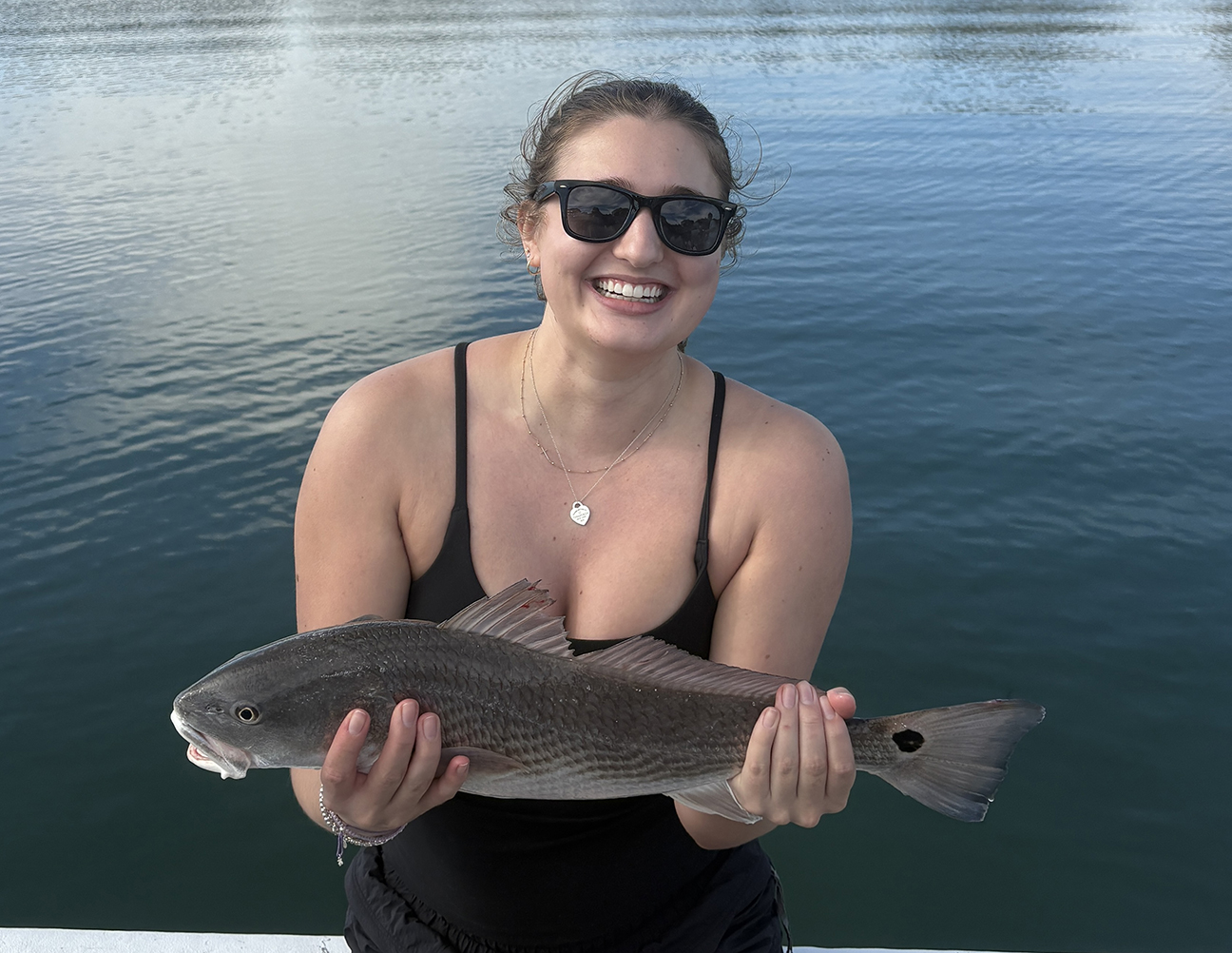
Avery Langan, of Columbia, caught this red drum on cut mullet in the ICW near Wrightsville Beach. She was fishing with Capt. Pierre Agena of Rising Sun Fishing Charters.
Luke, of Coastline Fishing Charters, reports that Atlantic bonito are starting to work their way in from offshore, but a big push hasn’t happened yet. When it does, the nearshore ARs are a good place to start marking fish, unless they’re feeding on the surface. Sight‑casting or jigging metals on lighter setups is the best way to target the bonito, with trolling another solid way to put fish in the boat.
Inshore, the red drum have started to transition with the warming water. In April, anglers should see bait moving around, and that’s usually when these reds break off into smaller groups and scatter throughout the ICW.
While working docks for red drum, some black drum will also be in the mix, and dead shrimp is the top bait for them.
Some sheepshead are moving back in, with the jetties and docks closer to the inlets being the best places to look in this early part of the season.
Pierre, of Rising Sun Fishing, reports that red drum are moving around a bit more, with feeding activity around docks and oyster bars becoming noticeably more aggressive. As these fish begin breaking into smaller groups, anglers should find action in more areas.
Black drum are being caught right alongside the reds around inshore structure.
Black sea bass fishing is still going strong off the beach. Fish can be found in the 5‑mile range, though many of these sea bass are smaller and need to be picked through, with better quality showing up the deeper you go. These fish aren’t picky and will hit a wide range of jigs or just about any bait on a chicken rig.
Atlantic bonito should be showing up soon, and they typically kick off around the nearshore structures.
Out around the jetties, anglers are finding some smaller sheepshead along with a mix of ringtails and black sea bass.
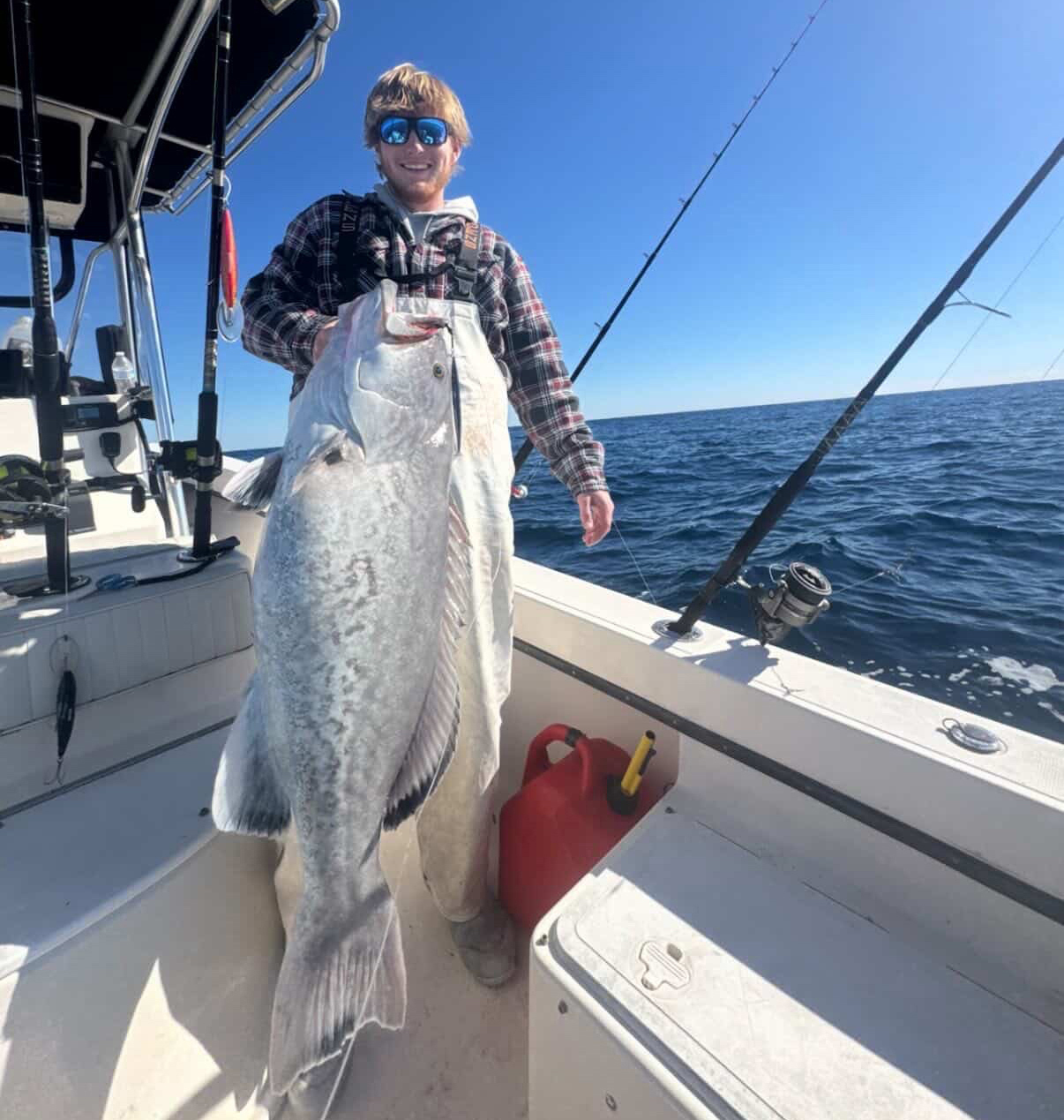
Bogan Herstine, of Wilmington, landed this 46 lb. gag grouper 70 miles offshore of Wrightsville Beach. He was using a stick jig.
Victor, of Carolina Charters, reports that smaller sheepshead are moving in from outside the inlet. Smaller J‑hooks tipped with shrimp are getting most of the bites.
Red drum and black drum are still schooled up around structure and docks, much like they’ve been all winter. Overall, the drum bite is a little on the slow side as anglers wait for them to transition and spread throughout the ICW. Soft plastics can pick off a few reds, but shrimp remains the more reliable option for both species.
Rick, of Living Waters Guide Service, reports that offshore water temperatures haven’t climbed very quickly just yet. Anglers heading to the Gulf Stream will do best making wahoo and scattered blackfin tuna their main targets.
April is a great time to target blackfin tuna with jigs, which will also draw strikes from amberjacks and (possibly) African pompano.
Swordfishing remains a year‑round option, and while spring can be windy, the good weather windows tend to be longer than what we see in February and early March.
Jordan, of Johnnie Mercers Pier, reports that dogfish sharks and rays remain a staple due to the colder water that still hasn’t warmed up consistently.
Anglers have been happy to see the first sea mullet and the first bluefish of the year caught.
