
Wrightsville Beach – August 2025
Jack, of Tex’s Tackle, reports that anglers are finding a decent topwater bite on red drum when out on the water early in the morning. As temperatures heat up moving into the day, cut mullet or menhaden will help stay on the bite.
Sheepshead are being caught with fiddler crabs around docks and pilings.
Surf anglers are finding a mix of croakers, pinfish, whiting, and sharks.
A few tarpon have been hooked up from the oceanside (and back in the river).
The nearshore action has been a little quiet outside of some smaller spanish mackerel and bluefish scattered around.
Pushing into the 10-20 mile range creates the opportunity for the occasional king mackerel, and going out a little further, the bottom fishing action has been steady for scamp grouper, vermilions, and the occasional cobia. While bottom fishing, keep an eye out for smaller mahi that might pop up at any time.

Ben, of Intracoastal Angler, reports that the red drum bite has been good. Anglers have had some success on flooded flats with artificials, while live or cut baits have been the better option for targeting deeper oyster banks or docks.
Both black drum and sheepshead are being caught with live fiddler crabs fished around docks along the ICW, out around the jetties, and in the river.
A few speckled trout are being caught early with topwater plugs. The best areas have been in the river and around the inlets.
The action off the beach has been tough, with bluefish and the occasional spanish mackerel being caught.
A few king mackerel are being found in the 10-15 mile range.
Runs offshore are producing keeper scamp grouper and keeper black sea bass in the 25+ mile range.
A handful of mahi are in the 20+ mile areas, and anglers trolling at the break have been finding a few wahoo.
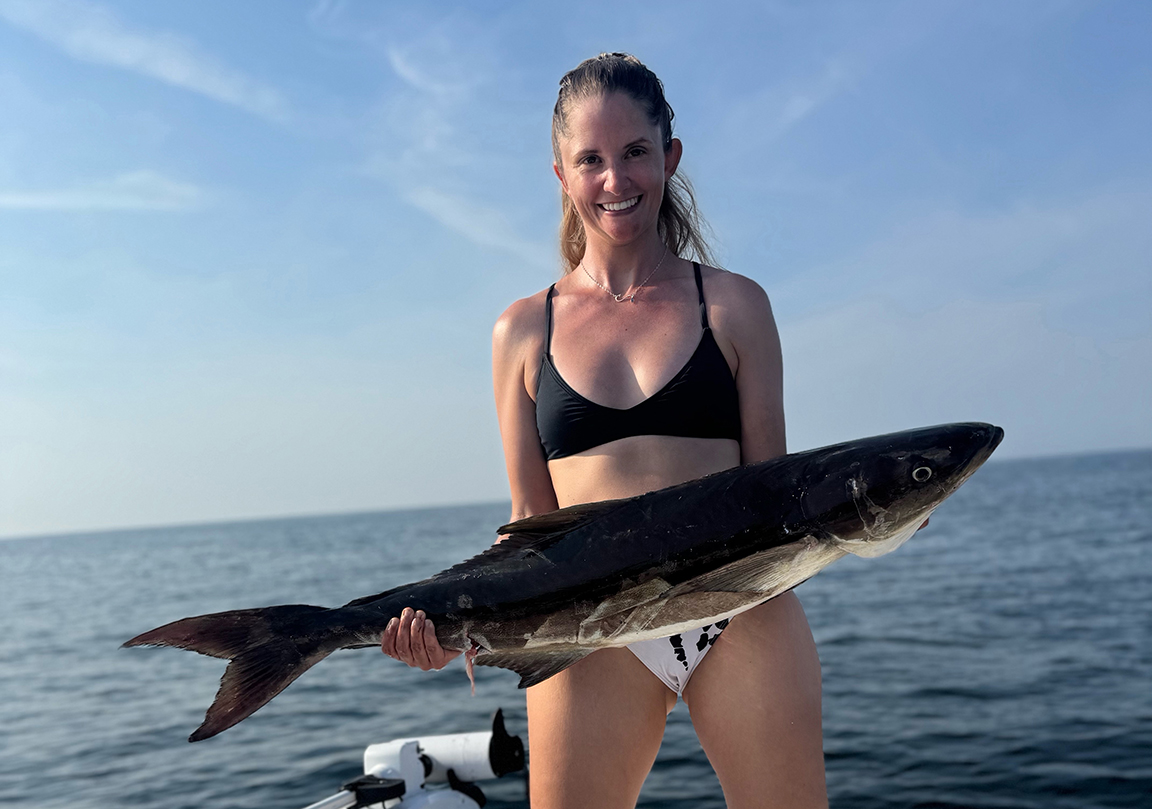
Holly West, of Wilmington, caught this cobia offshore of Wrightsville Beach using a live pinfish.
Luke, of Coastline Fishing Charters, reports that the red drum bite inshore has been good, with plenty of action on topwater plugs in the early morning. After the sun gets up, the reds start to slow down with the heat. To stay on a bite, live or cut bait will be the better option.
Some speckled trout are mixed in with the red drum topwater bite, but after morning time, the trout slide into deeper waters (where anglers aren’t really targeting them).
Docks and bridges in the waterway are holding some sheepshead.
Outside the inlet, some red drum can be found with Carolina-rigged bait on nearshore structures. Gray trout can be caught with metal jigs or live bait at the same nearshore spots. A lot of flounder are holding here, too, and the flounder are hitting most any live bait offerings.
Spanish mackerel is one species that has been slower than normal, with schools only scattered at best.
Pierre, of Rising Sun Fishing, reports that the jetty wall has been producing some action, especially on the lower end of the tides. Live bait is the best option on the jetties as it opens up the option for a wide variety of species, such as red drum, trout, flounder, sharks, and even the possibility of a cobia or tarpon.
Black drum and sheepshead are around for anglers looking to drop some fiddler crabs around structure.
Red drum inside are really scattered this time of year, but they are feeding well. Topwaters can make a good search bait, especially on lower tides for anglers looking to utilize artificials. That being said, live or cut baits are probably the best choice overall.
There is a topwater bite for speckled trout, but with the heat, this action is strictly happening in the daybreak hours (or even before first light) before shutting off.
Off the beach, the spanish mackerel bite has been sporadic, and a few scattered king mackerel around.
Guion, of Green Creek Outfitters, reports that inshore anglers have been picking away at the red drum that are scattered about from the jetties back into the marshes.
Flounder are all over the place, and they’re hitting just about any artificial or live bait fished along the bottom.
Off the beach, spanish mackerel have mostly been holding pretty shallow around the smaller inlets north of Wrightsville. Clarkspoons (#1 sized) and planers make the best setup for targeting spanish in the heat of summertime.
Runs out to the 10-20 mile range have produced black sea bass, grunts, amberjacks, and scattered king mackerel.
Victor, of Carolina Charters, reports that red drum have been the most active around the mid-rising tides. Moving around a lot is key in this summer fishery, with fish scattered all over around docks and grass flats. With so much natural bait around, these slot fish (and the occasional over-slot fish) are preferring cut mullet.
Sheepshead and black drum have also been preferring that mid-rising tide. With hotter water temperatures, look for these fish to be a little deeper, and the majority of both species are feeding on live fiddler or mud crabs.
Rick, of Living Waters Guide Service, reports that Gulf Stream trolling efforts are producing sailfish and white marlin.
There has also been a little bit of a summer wahoo bite in the 150-300’ range.
The 150-225’+ depths have been producing the best bottom fishing action. A bunch of amberjacks are in this area, along with keeper scamp, red, and yellow-mouth grouper. Also in the bottom fishing action are yellow-eye snapper, vermilions, and grunts.
Brent, of Johnnie Mercers Pier, reports that when anglers spot surface action, they are casting Gotcha plugs to hook bluefish and a couple spanish mackerel.
Off the end of the pier, some barracuda have been caught (to 20+ lbs.).
Bottom fishing efforts are mostly producing whiting.
