
Wrightsville Beach – March 2026
Tex, of Tex’s Tackle, reports that anglers looking for some winter fishing action have done well in the Cape Fear River catching striped bass and scattered red drum.
Along the coast, the ICW and nearshore areas have been slow after this tough winter, with really cold water temperatures still holding.
When the window opens to run offshore, some good black sea bass fishing is in the 20‑30 mile range.
Anglers still have a way to go before seeing a spring king mackerel bite, with the fish right now way out in the 50‑mile range.
Also, many look forward to hopefully seeing the first few Atlantic bonito by the end of March (though April typically sees more consistent numbers).

Arlen, of Intracoastal Angler, reports that anglers in the Cape Fear River have had plenty of success catching striped bass this winter. Throwing larger soft plastics or trolling deep‑diver plugs have produced most of the strikes.
Up and down the creeks off the ICW, anglers are seeing some red drum caught around docks with cut shrimp and the occasional Gulp soft plastic.
These same bottom‑rigged shrimp around docks may also hook the occasional black drum.
Off the beach, nearshore structures are holding some sheepshead and tautog, with anglers finding success using frozen crustaceans for bait.
Black sea bass fishing has been excellent, with great numbers of larger (5+ lb.) fish being caught. Anglers can find keeper fish as close as 10 miles, but the real quality action is in 90‑100’.
The Gulf Stream bite has been decent, with several healthy wahoo (to 70+ lbs.) caught in the last few weeks. Most of the wahoo action seems to be on Blue Water Candy high‑speed setups, with DTX minnows and classic skirted ballyhoo also having their moments.
Nearshore, if water temperatures make a quick jump, the Atlantic bonito currently out in the 20‑mile range will push in, and their arrival becomes the first true sign of spring.
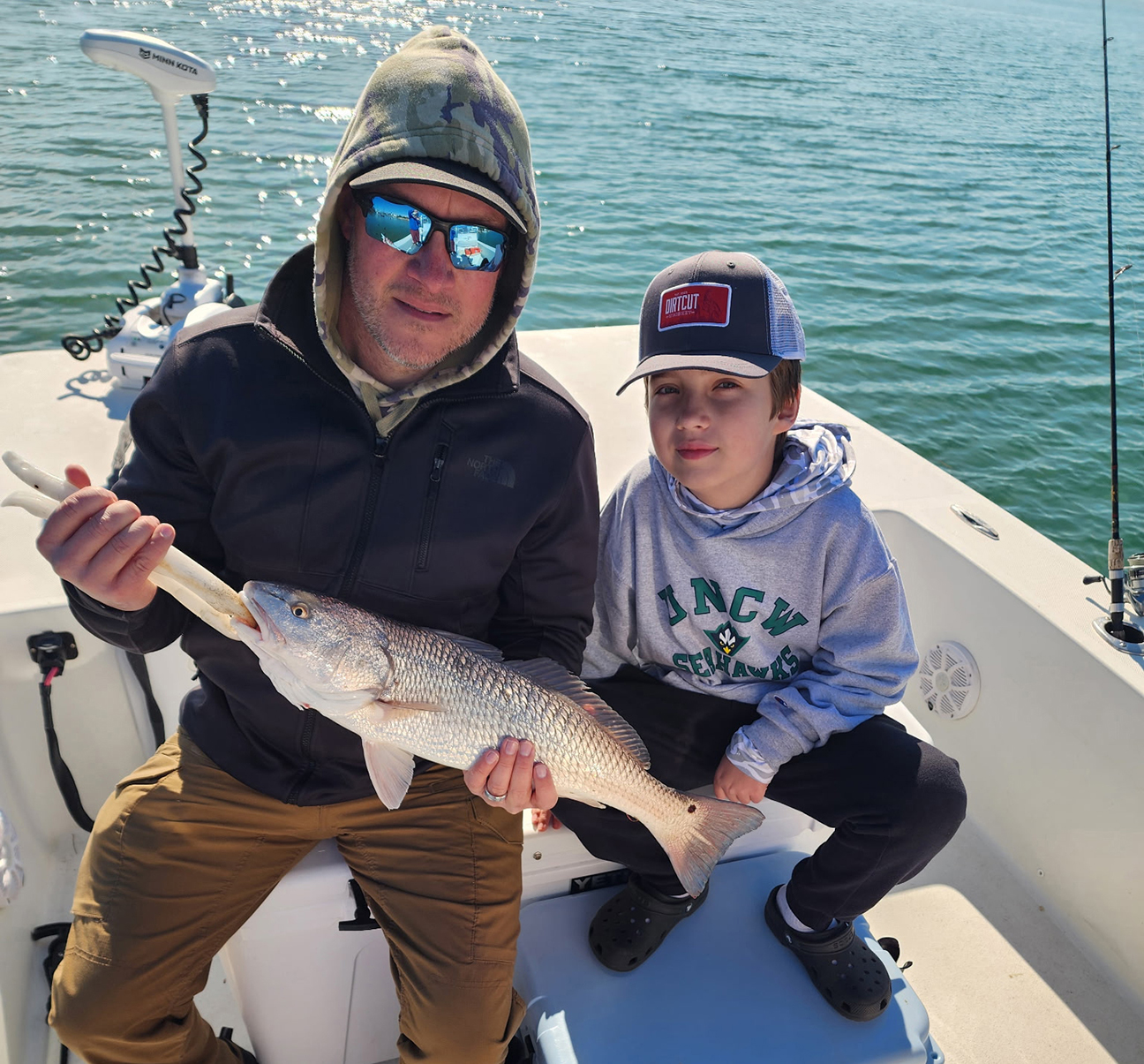
Kelly and Sawyer, of Brevard, NC, with a red drum caught in the Wrightsville Beach area using a Gulp shrimp on a jig head. They were fishing with Capt. Tommy Mungo of Mungo Fishing Charters.
Luke, of Coastline Fishing Charters, reports that anglers have been finding both some speckled trout and red drum. Deep holes way back in the mainland creeks, as well as around docks in the creeks, have been the main target areas.
Black drum are also around this time of year, and while a few fish can be found, the action has definitely been slower than previous seasons.
Nearshore has remained slow outside of anglers running farther off the beach to find black sea bass on the nearshore reefs.
Atlantic bonito may be showing up by the end of the month, and schools of false albacore typically show up around the same time or shortly behind.
Inside, the red drum will become much more active as these cold‑water temperatures turn around. The schools will begin moving out of their wintering areas and breaking up into smaller groups.
Trout fishing will likely continue to be much slower this spring after a hard winter.
Pierre, of Rising Sun Fishing, reports that anglers are finding schools of reds holding tight to the grass, and the best way to entice a bite is with cut shrimp. However, the bite is slow, with the fish not interested in eating much more than they need to survive. Look for these reds to slide shallow on sunny days as they try to warm up, and then the fish will drop back into a hole when the weather shifts.
Anglers are also seeing some scattered black drum action, and smaller sheepshead may be mixed inside as well. Black drum fishing could easily pick up in the next few weeks, as these fish typically feed better in the cold, with cut shrimp on the bottom being the main tactic.
Speckled trout can be found around some of the oyster beds in the middle to back sections of the creeks and also out at the jetties.
Victor, of Carolina Charters, reports that this time of year can have anglers burning a lot of gas as they ride around looking for any signs of red drum. The good news is that when you find them, the reds are typically stacked up in larger groups.
White paddle‑tail soft plastics and dead shrimp are two great options for enticing bites. Don’t get discouraged if you find a school but can’t buy a bite. Between cold water temperatures and super‑clear conditions, there will be times when you only get to watch them swim around you. Moving further into March, longer warming trends will start to break these big schools up and scatter the fish.
Black drum can also be found mixed in around these schools of red drum and throughout the creeks and marshes, with shrimp being the best bait.
Sheepshead fishing is another great option as we move into spring. Over the winter these fish hold offshore, but they’ll begin pushing back in with the warmer water. Anglers typically see the smaller fish arrive first, with the bigger sheepshead showing up in April.
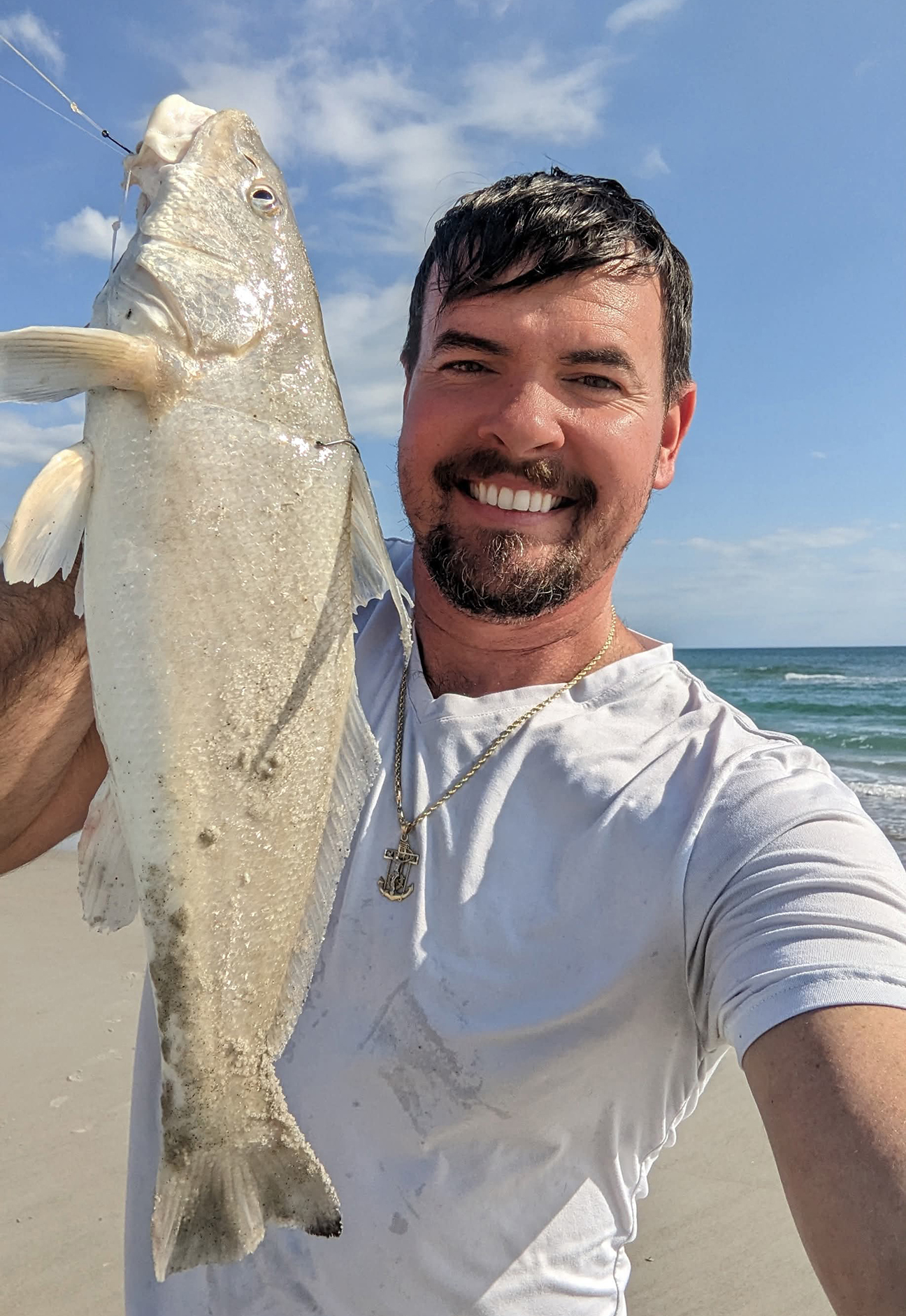
Derek Kelly, of Wilmington, with a 2.5 lb. whiting caught from the Wrightsville Beach surf using live sand fleas.
Rick, of Living Waters Guide Service, reports that the trolling bite will be picking up in March, with both wahoo and blackfin tuna being the top targets.
Jigging trips over offshore structure start to get really fun this time of year, with big African pompano and amberjacks moving in.
Swordfishing is another great target in March when heading out deep.
Brent, of Johnnie Mercers Pier, reports that the overall action has been a bit slow, with anglers catching a couple of red drum, a few pufferfish, and the occasional early whiting while bottom‑fishing with cut shrimp.
Moving into March, the whiting action should continue to improve, with (hopefully) some bluefish not too far behind.
