
Wrightsville Beach – October 2026
Jack, of Intracoastal Angler, reports that surf anglers have been finding a bunch of small sharks, and bottom fishing from the sand is producing pompano, sea mullet, and scattered red drum.
Anglers are able to sight cast jigs to spanish mackerel and bluefish from the beach, but this action has been better from the piers.
Nearshore, bigger spanish are showing up. This bite is not quite consistent just yet, though.
A couple nearshore kings have been caught from the beach out to the 10-mile range.
Offshore anglers are mostly focused on bottom fishing. Pushing deeper has been the method to find red grouper, scamps, triggerfish, and vermilion snapper.
Wahoo will soon be showing up in better numbers.
The inshore red drum bite has been steady, with live or cut mullet producing most of the action.
Flounder season was great with plenty of fish caught (to 10 lbs.).
The speckled trout are still quiet.

Luke, of Coastline Fishing Charters, reports that speckled trout are biting in some of the creeks. Topwater has been best first thing in the morning, and once the sun gets up, soft plastic shrimp or swim baits are the best chance for bites. The speckled trout action should only continue to improve with temperatures cooling off.
The red drum bite has been good while fishing live finger mullet or cut baits around oyster bars and docks. The topwater red drum bite has also been really good first thing in the morning. Good numbers of slot drum (with bigger fish mixed in) can be found around the jetties while fishing live baits on a Carolina rig.
Sheepshead are on just about any hard structure up and down the ICW. Dropping crustaceans tight to the pilings is likely to produce some action.
The spanish mackerel bite remains strong while trolling and sight casting to surface-feeding schools first thing in the morning.
The nearshore king mackerel bite is starting to become more predominant while fishing live baits on the beach. These live baits are also producing some bigger spanish.
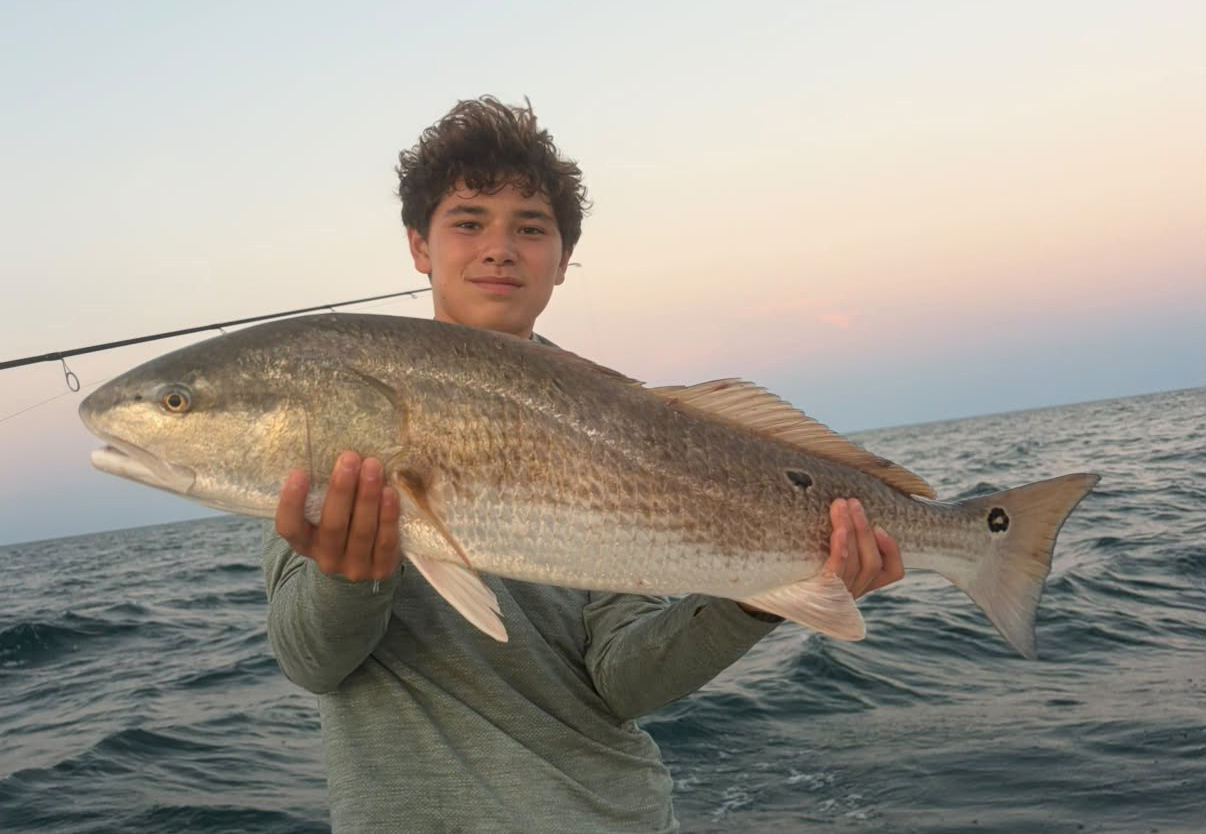
Kai Groesbeck, of Wrightsville Beach, with a 36″ red drum that he pulled up offshore of Wrightsville Beach using mullet.
Pierre, of Rising Sun Fishing, reports that spanish mackerel action has been good in the 1-3 mile range. The sizes of fish vary, with plenty of small fish around but bigger ones moving in. This is mostly a sight-casting bite, as many schools are now holding up top longer as they tear up the bait balls that are becoming more plentiful.
Anglers fishing around the inlet and jetties are catching red drum and flounder.
Flounder made a decent showing during the keeper season. While there were plenty of keepers, most were on the smaller side of keeper range.
Red drum are moving closer to the inlet. In the ICW, bays, and creeks, the redfish are hitting topwater plugs in the morning. As the day moves on, anglers will do best switching over to cut bait.
While there haven’t been too many specked trout, numbers should pick up soon.
Victor, of Carolina Charters, reports that the red drum bite has been spotty. On some days, the fish are fired up, and the next day, it’s a grind finding them. Most of the searching for red drum inshore is by hitting a bunch of docks on both rising and falling tides. In addition, anglers have also been able to catch some over-slot and upper-slot fish on the jetty with whole or cut mullet.
The flounder bite was great. On rising tides, throwing paddle tail soft plastics or live finger mullet around creek mouths was best, and as the tide topped out, pitching baits around grass lines and oyster beds was the better tactic.
Sheepshead are staged up on deeper docks at low tides, with the key being to target docks with moving current. Bites are coming on both fiddler and mud crabs, with mud crabs as the favorite of the two.
Black drum are around, and they’re hitting fiddler or mud crabs on shallow docks with some heavy current. The sizes of the black drum varies, so expect to pick through the smaller ones to find the big ones.
The speckled trout bite has started picking up a little more. For the specks, throw topwater plugs at first light inside creeks that are holding a bunch of bait. For the majority of the day, though, look for them in the 4-6’ depth range and use live mullet.
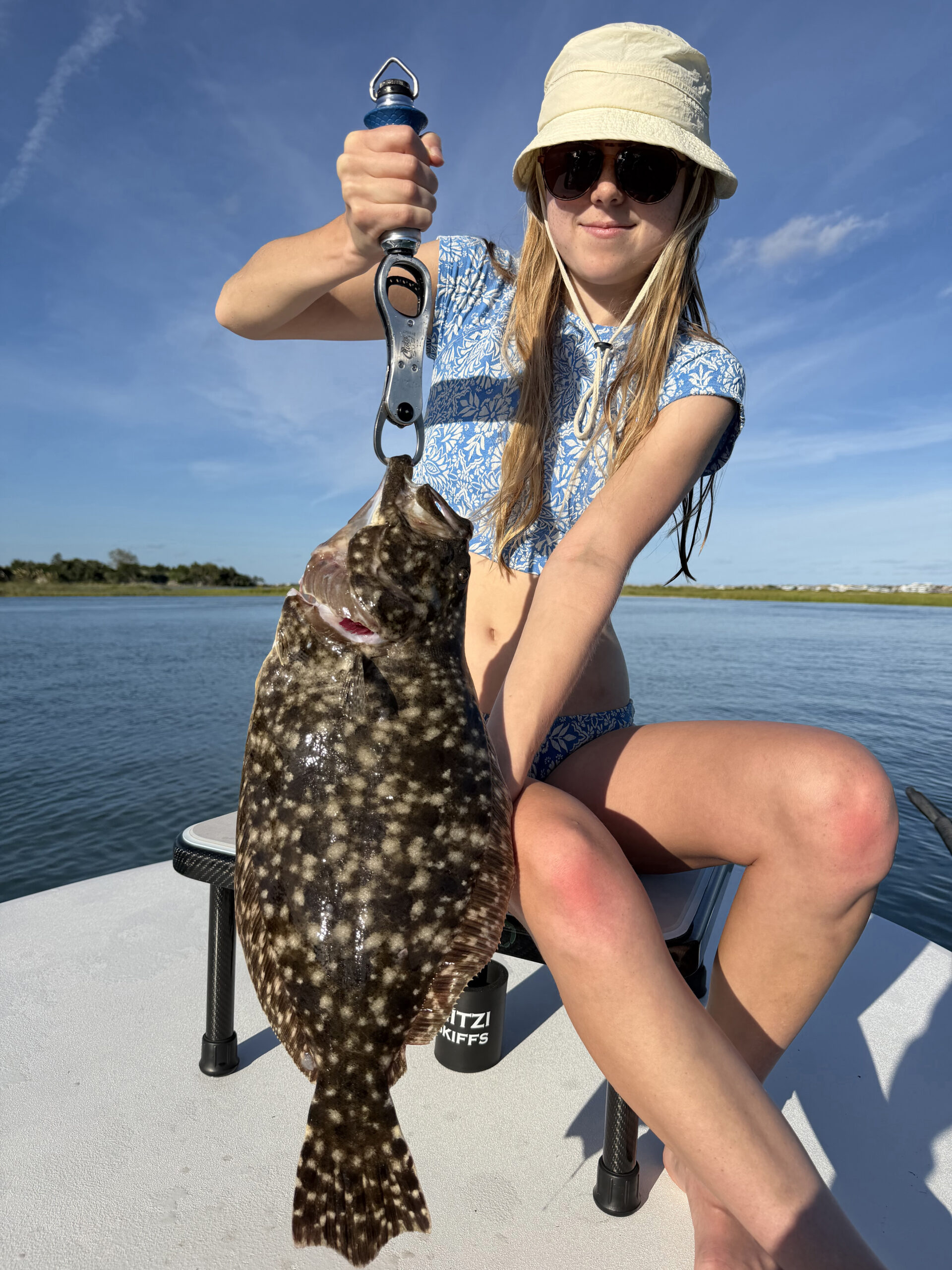
Annalise Chmil, from Wilmington, NC, caught this 4.5 lb. ocean flounder on a white bucktail jig. She was fishing off Wrightsville Beach with Michael Mosure.
Cole, of Island Guides, reports that massive schools of both finger mullet and larger mullet are moving throughout the area, and good numbers of shrimp are beginning to show up in the creeks.
Red drum are providing steady action while fishing around docks, creek mouths, grass banks, oyster beds, ledges, and deeper holes, especially in areas closer to the inlets.
During flounder season, many of the keepers fell in the 18-22” range, with a handful of 5-6 lb. fish mixed in.
Nearshore anglers can find a good spanish mackerel bite. Many are still on the smaller side, but some bigger spanish (in the 3-4 lb. range) are mixing in.
Some schools of false albacore have arrived in the 5-8 mile range, and they should continue moving in closer as the water cools.
Matt, of Johnnie Mercers Pier, reports that anglers getting out to sight-cast plugs are finding a strong spanish mackerel and bluefish bite all day long, from early morning right up and into dark.
Schools of false albacore have been randomly popping up.
King mackerel (to 33 lbs.) are starting to show.
Bottom fishing efforts were all about flounder over their keeper season, and efforts are now more focused on red drum. However, getting a red drum hookup has been more difficult than a flounder hookup.
Anglers are enjoying an improving pompano bite.
