
Wrightsville Beach – September 2026
Ben, of Intracoastal Angler, reports that inshore anglers bouncing around and targeting docks are catching a handful of red drum.
Those with live fiddler crabs and fishing hard structure have been hooking sheepshead and a few black drum.
Anglers in the lower Cape Fear River have started to find a very modest speckled trout bite while fishing topwater plugs in the really early morning or late evening hours.
Off the beach, spanish mackerel remain a great option. Trolling #00 sized Clarkspoons behind #1 or #2 sized planers is a great way to put fish in the boat. Anglers can also have success trolling Yo-Zuri deep diver plugs in a variety of colors, and sight casting jigs is another favorite tactic used by anglers when finding bird action and surface-feeding frenzies. For casting, Big Nic Spanish Candies or Hogy Heavy Epoxy jigs are two great options.
King mackerel mostly remain out deeper in the 15-18 mile range.
Mahi are scattered about, with the 23-40 mile range being the most productive area.
Bottom fishing action remains strong. Anglers are pulling up vermilion snapper, triggerfish, black sea bass, and the open grouper species.
Offshore trolling efforts have started to bring in a handful of wahoo, and mixed in that action are blackfin tuna and some sailfish.

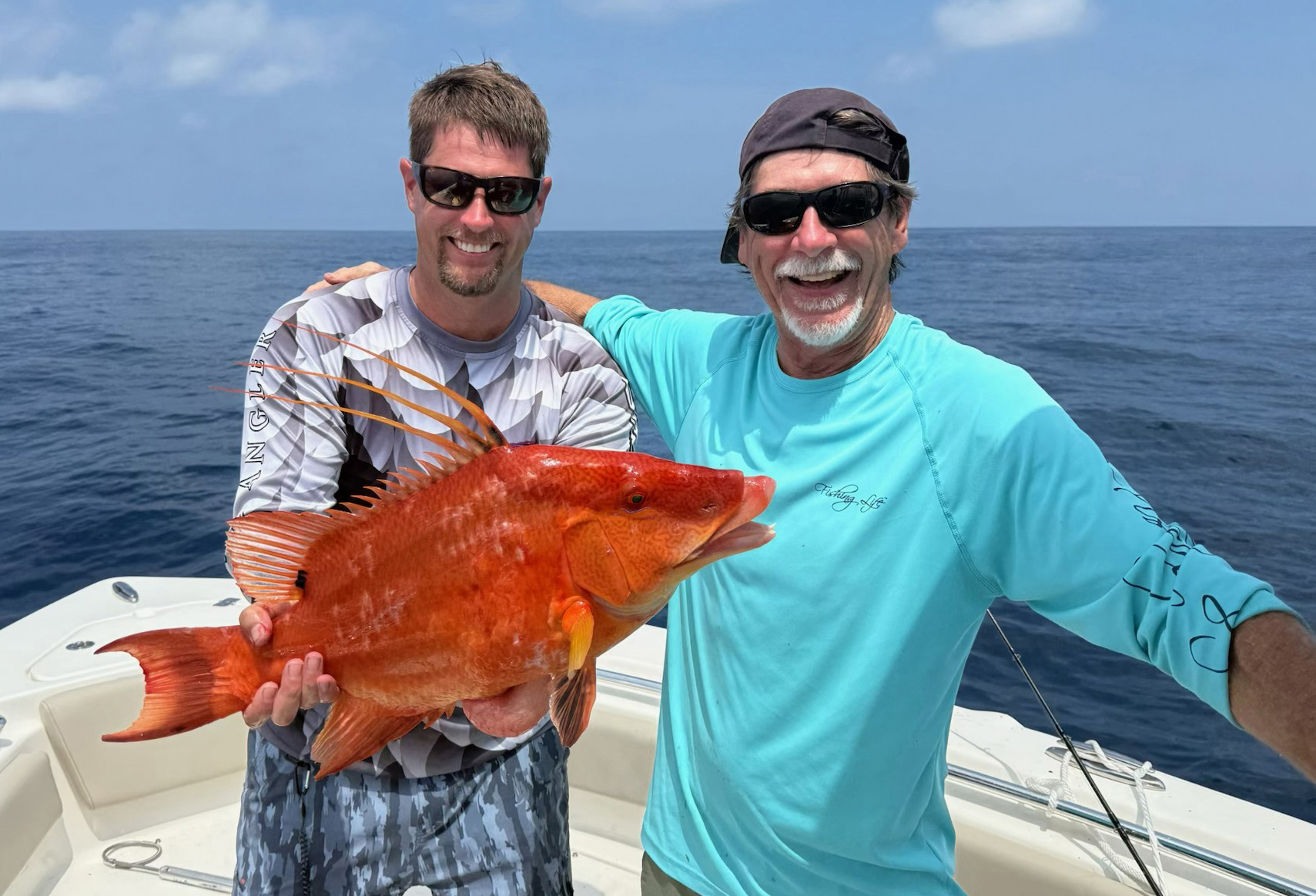
Gary and Josh Benton with a 10 lb. hogfish caught 30 miles offshore of Wrightsville Beach soaking cut bait on the bottom.
Pierre, of Rising Sun Fishing, reports that bait has been showing up anywhere from the beach out to one mile, and spanish mackerel (both numbers and quality) are already getting better. More schools are now around for anglers wanting to sight cast jigs.
Plenty of flounder are ready to be caught around nearshore structure. Bouncing bucktails and heavier soft plastics, as well as dropping live mullet or menhaden, will all entice strikes.
Lots of flounder can be found inshore, too, with the best areas being creek mouths and structure such as oyster beds.
The red drum are still in their scattered summer patterns, with small groups around grass banks and structure. On the hotter days, cut bait has been the trick to getting bites.
More speckled trout are now cooperating in the morning. Any choice of topwater plugs, D.O.A. shrimp imitations, or live shrimp will create the best chances.
Luke, of Coastline Charters, reports that the red drum bite has been great now that finger mullet are abundant. The reds are responding well to topwater baits fished first thing in the morning along grass banks and oyster bars. Once the sun gets up, anglers can stay on a bite by switching to live or cut finger mullet in the same areas or around boat docks and other hard structures.
Speckled trout have been mixed in with the reds, especially in the early mornings.
Flounder have been a significant bycatch when fishing for the red drum.
Sheepshead have been plentiful, and they are spread out on a variety of hard structures along the ICW. A Carolina-rigged live fiddler crab is the tried-and-true method for targeting them. A decent number of black drum are mixed in while sheepshead fishing.
Nearshore, the spanish mackerel bite has been good and improving, with sight-casting metal jigs to fish busting on the surface working best. If casting isn’t happening, anglers can find action by trolling Clarkspoons anywhere from the beachfront out to the nearshore structures.
Some big red drum (to 40”) have been caught while fishing around the nearshore wrecks and inlet jetties.
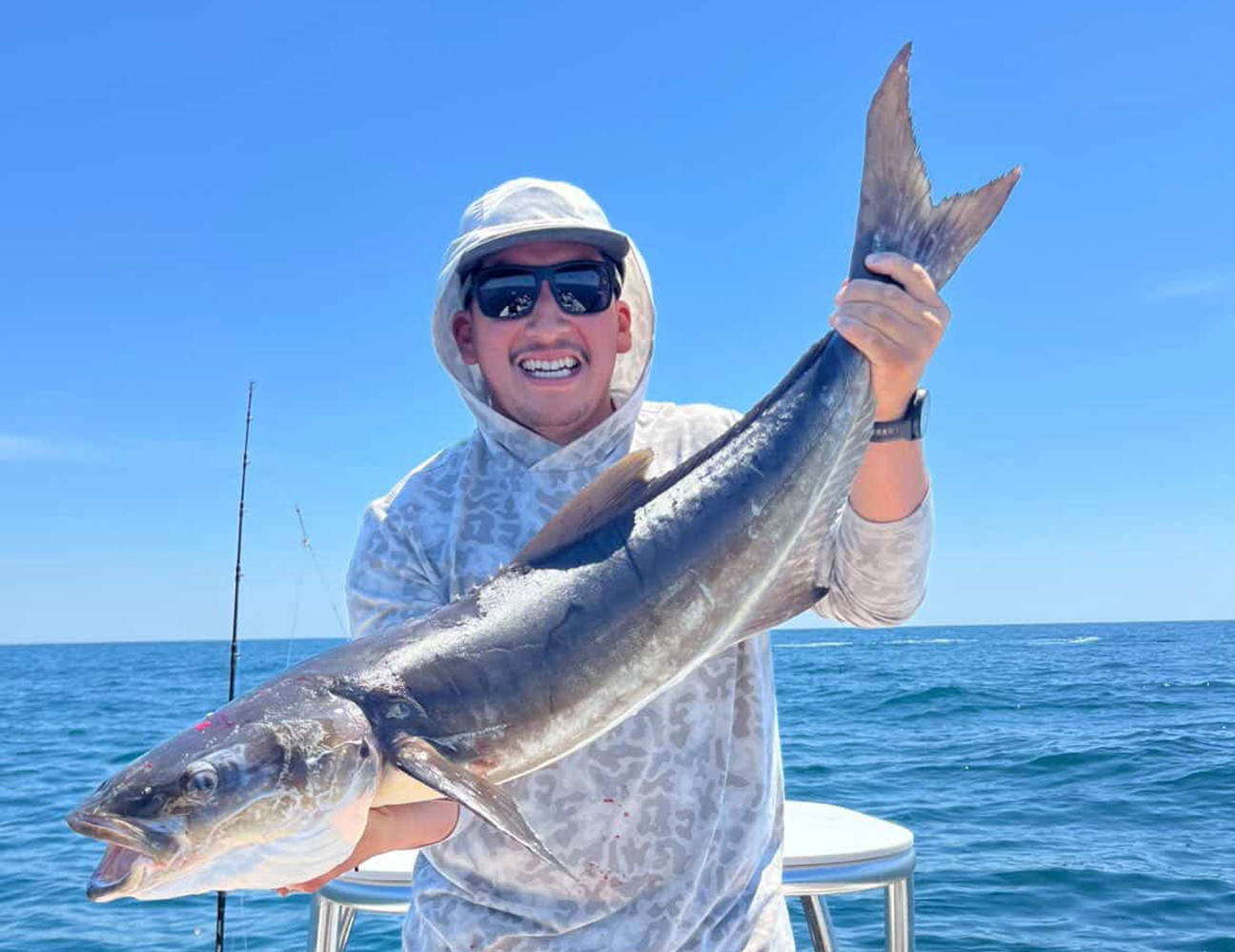
Pedro Gomez, of Wilmington, landed this cobia 20 miles offshore of Wrightsville Beach using cut squid.
Victor, of Carolina Charters, reports that live fiddler crabs are the top option for targeting deeper oyster bars and dock or bridge pilings for sheepshead.
Black drum can be caught while fishing these same hard structures (mostly docks) and using the same crabs.
Red drum are scattered throughout the area, from the jetty rocks to the ICW to docks in the creeks. Grabbing some live or cut mullet is the best option for targeting the redfish.
The same areas fished with live mullet are also producing flounder.
Cole, of Island Guides, reports that off the beach, the spanish mackerel bite has remained largely hit-or-miss. A bunch of bait is around, but it just seems that on some days the fish are there, and then on other days, they’re gone.
Out around the nearshore ARs (1-5 miles), flounder are hitting larger live mullet (4-6”) around structure. Anglers can also find some action by dropping 1.5-2 oz. jigs with shrimp soft plastics and bouncing them tight to structure.
A bunch of 4-5” finger mullet are around and make a great bait option for catching a flatfish.
The red drum bite has been improving. A good mix of slot-sized fish can be found throughout the inshore waters, and some upper-slots and over-slots enter the mix when closer to the inlet or on the jetties.
On the higher tides especially, red drum anglers are having success fishing lighter Carolina rig setups with live mullet tight to grass lines or oyster beds. On the calmer days, anglers are having success throwing Z-Man DieZel MinnowZ or popping cork setups with Vudu shrimp.
A handful of speckled trout are being caught early in the morning.
Matt, of Johnnie Mercer’s Pier, reports that anglers live bait fishing have caught some barracuda as they wait for the king mackerel to move in.
Spanish mackerel and bluefish have been around in good numbers, with the early and late hours being best for both species.
Bait is showing up better with each week.
For those bottom fishing, the action is a little scattered but picking up, including catches of Virginia mullet, spadefish, drum, and the mix of smaller summertime bottom species (croakers, pinfish, etc.).
Anglers expect to find keeper flatfish holding close to the pier pilings.
