
Wrightsville Beach – August 2026
Jack, of Intracoastal Angler, reports that the majority of inshore action is happening around docks, creek mouths, and structure (such as oyster bars) up against grass banks. These areas are holding a mix of the inshore summer targets, which are mostly red drum, flounder, and the occasional speckled trout.
Sheepshead and black drum make two more great target options during these hot weather months, and live fiddler crabs or mud crabs fished around bridges and rock piles is the main tactic for both species.
Off the beach, some bigger spanish mackerel are showing up. Fishing live menhaden is the way to go when targeting this larger class of fish, though spoons are a solid way to put numbers in the boat.
The other bonus to fishing live bait is the opportunity to hook into a king mackerel or shark.
Areas a little further out (10-20 miles) are holding some good action on nearshore mahi and the occasional sailfish. Smaller ballyhoo trolled naked on under skirts has been the top tactic for both species.
Back in the surf, anglers will do best for just about any species by fishing either early or late.

Pierre, of Rising Sun Fishing, reports that the bait population in the area seems healthy, especially with finger mullet finally showing up in the desirable sizes and numbers.
The red drum bite has been consistent. Structure such as docks and oyster bars are the top areas overall, with higher tides being a good time to fish along the grass lines. Some red drum are also being caught when fishing out at the jetties.
Some speckled trout are mixed in when casting topwater plugs in the morning. The numbers aren’t great, but the quality is good when one shows up. However, this topwater bite is really only good for that first hour or so.
Anglers are catching plenty of flounder, as they’re willing to hit any natural or artificial bait fished on the bottom, whether that’s a live finger mullet or a paddle tail soft plastic.
Off the beach, the spanish mackerel bite has been picking up.
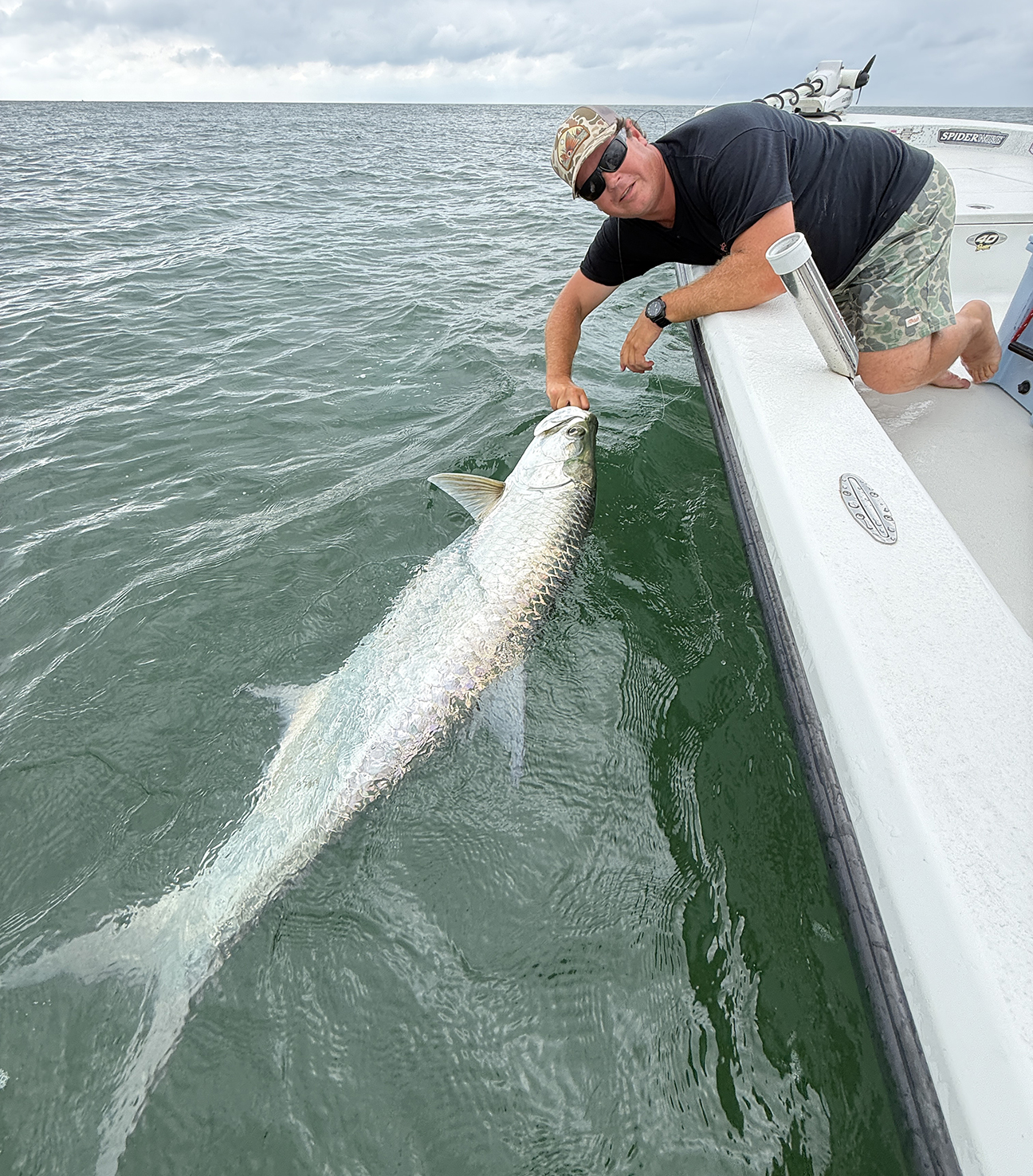
Tac Cozart, of Wilmington, caught (and released) this tarpon in the Wrightsville Beach area. He was fishing live bait with Capt. Jot Owens of Jot It Down Charters.
Victor, of Carolina Charters, reports that the sheepshead are starting to group up on the deeper docks and around oyster bars during the very high tides. When targeting docks, the bite has been the best during a dropping tide and with live fiddler crabs
More black drum are now staged up on the heavier inshore structures and docks. Using the same crab options or cut mullet can get bites from them. The key to locating any black drum is to really bounce around from dock to dock focusing on those docks that have structure nearby (such as shell banks or oysters).
The red drum bite has been consistent in the early mornings and late afternoons while casting out a live or cut mullet underneath a popping cork or on a fish finder rig. For the reds, target grass lines, docks, and even the jetty.
Flounder are being caught along grass lines on the higher tides while using live finger mullet or paddle tail swim baits. On a low tide, target the deep holes that are around the mouths of shallow creeks—these flatfish will usually stack up there waiting for the bait to push through.
Cole, of Island Guides, reports that the biggest improvement to inshore fishing has been the arrival of finger mullet. They have finally reached that ideal 4-5” size, providing plenty of natural forage for both red drum and flounder.
Red drum fishing has been strong, especially during the early morning hours before the sun gets high. Topwater lures have produced some action in the mornings, and some speckled trout are mixed in on this bite. As the day warms up, anglers will do best transitioning to finger mullet (cut or live) or fresh-cut menhaden on Carolina rigs or jig heads.
The flounder bite has continued to improve. Hookups are seeing everything from smaller juveniles up through big doormats. Most of the success has come on live finger mullet fished on Carolina rigs or jig heads around spots where current and structure meet. Artificial lures have also produced plenty of fish when conditions allow.
Nearshore, the spanish mackerel bite has remained fairly consistent. Some days have certainly been better than others, but when locating schools of bait, the spanish haven’t been far behind.
Bottom fishing in the 20-30 mile range will remain strong for catches of red grouper, black sea bass, vermilion snapper, grunts, and pinkies. Any choice of baits such as cut squid, cut cigar minnows, or live pinfish will produce strikes.
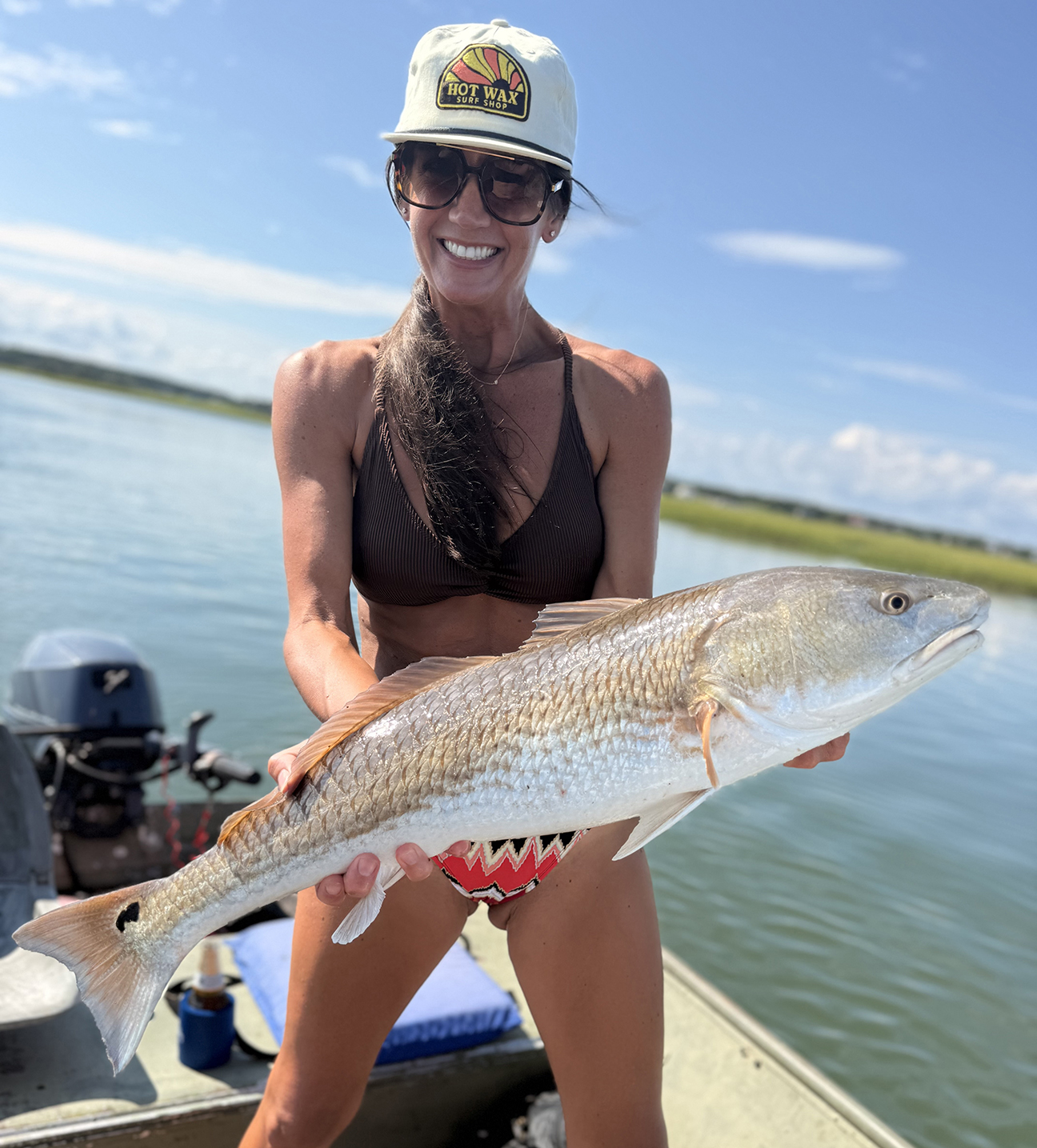
Candance Lea, of Hampstead, with a 29″ red drum caught behind Lea Island using a live finger mullet on a Carolina rig. She was fishing with Capt. Jake Lea of Lea Island Excursions.
Ben, of Southern Run Fishing Charters, reports that bottom fishing trips have been doing well with keeper gag grouper in the 20-25 mile range.
Those that push out deeper (120-150’) will start seeing the addition of scamp and red grouper. Natural baits (live or dead) have been producing best. If you find the fish are finicky one day, downsize that leader line and lean on using only live bait.
Anglers have also been finding a decent king mackerel bite in the 25-30 mile range.
Matt, of Johnnie Mercers Pier, reports that anglers casting Gotcha plugs are finding spanish mackerel and bluefish, with the morning hours being best.
Bottom fishing efforts can produce a variety of species in the summer that includes sea mullet, speckled trout, pinfish, bluefish, flounder, pompano, and the occasional red drum (to 30”).
