
North Myrtle/Little River – December 2025
Greg, of Dave’s Outpost, reports that surf and pier anglers are mostly focused on whiting, with the occasional spot mixed in.
Inshore anglers are finding solid speckled trout action in many of the typical fall areas. Live shrimp has been the top producer, but cooling conditions are making that bait harder to come by.
Switching to artificials will soon be the norm, with MirrOlure MR‑52s (silver has been hot) and Z‑Man Trout Tricks both proving effective.

Chris, of Fine Catch Fishing Charters, reports that fish continue to push up the waterway to the lighthouse and swing bridge, with those areas producing speckled trout, red drum, striped bass, sheepshead, and black drum.
Red drum fishing is all about working tight to structure—docks, bridge pilings, or rocks—with live shrimp or live mud minnows on jig heads. The bonus of shrimp is the added chance of hooking black drum or sheepshead.
Speckled trout are best hitting live shrimp under floats, but D.O.A. soft plastics and Vudu shrimp have been strong secondary options. Bright paddle tails are also effective for both trout and reds, especially around ICW ledges and structure that will hold fish.
Creeks closer to the inlet are producing red drum, with incoming tides raising water temperatures just enough to spark feeding in 3-10’ holes. Gulp shrimp, shrimp on jig heads, cut bait, and live mud minnows are all working well.
The jetty rocks remain a reliable winter spot, producing speckled trout on shrimp under floats or artificials like Z‑Man Trout Tricks and paddle tails.
At the Three Mile Reef, sheepshead and black drum are pushing offshore. While smaller black sea bass are thick, persistence with Carolina‑rigged fiddler crabs or cut shrimp will draw targeted bites.
In the 50-70’ range, live bottom and ledges are producing keeper black sea bass.
Buddy, of Captain Smiley Fishing Charters, reports that speckled trout action has been solid, with both plenty of smaller fish and some 20”+ trout mixed in. Most of the trout have shifted back into the creeks and are staging around creek mouths, oyster bars, and ledges in 3-7’ depths.
As water temperatures drop further, winter fishing will shift away from trout and focus on schools of red drum in the creeks. These fish look for backwater shallows to warm on clear days, with Gulps, Vudu shrimp, cut shrimp, or menhaden all producing strikes.
Creek fishing has been strong enough that there hasn’t been much need to head to the jetties, though anglers making the run to the rocks have found slot‑sized red drum and scattered trout.
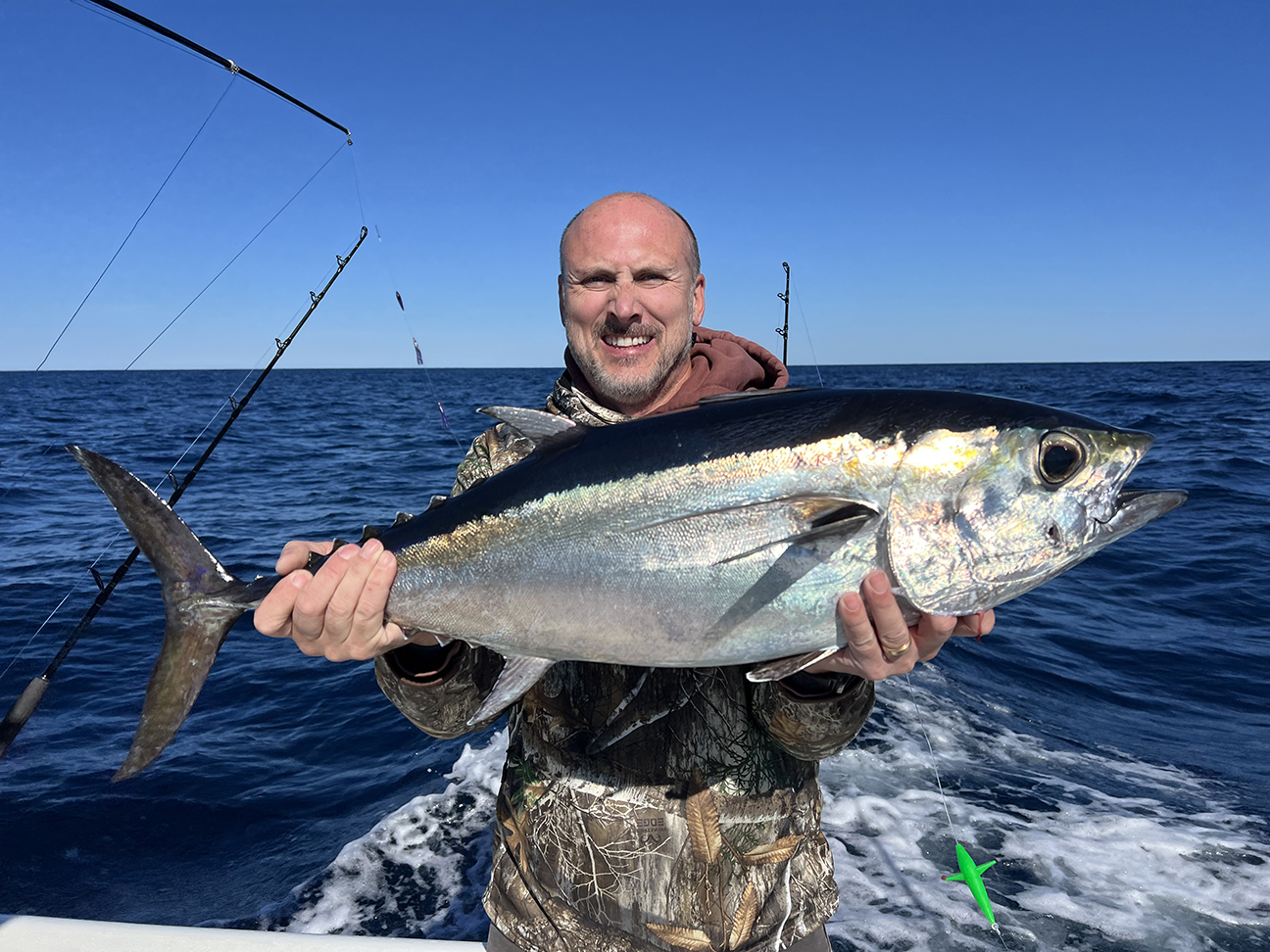
Bob Davis, of Wilmington, with a blackfin tuna caught on the troll offshore of Little River. He was fishing with Capt. Jessey Vereen of Shallow Minded Fishing Charters.
Bob, of Strange Magic Fishing Charters, reports that speckled trout have been feeding along the ICW. These fish move constantly, often biting well for 20 minutes before shutting down, so anglers should stay mobile to track their shifts up or down the bank. The trout are hitting everything from live shrimp to soft plastics, with light colors working best on bright days and darker patterns producing more under cloudy skies or low‑light conditions.
Red drum remain in smaller groups of 2-3 fish but will soon transition into their winter pattern of schooling in large numbers in shallow creeks. Live mud minnows, fresh shrimp, and soft baits are all effective.
Black drum are mixed into the action throughout winter, and they’re commonly found around oyster bars and docks, with fresh shrimp or fiddler crabs being the top baits.
Jessey, of Shallow Minded Fishing Charters, reports that speckled trout action has been on fire. Live shrimp under a slip cork remains unbeatable, while MirrOlure MR‑17s and soft plastic paddle tails are top choices for anglers fishing artificials. The trout are being found stacked up around the inlet as well as back in the brackish creeks.
Red drum are beginning to move into their winter schooling patterns. Most catches have been smaller fish (14-18”), with the occasional upper‑20” red mixed in. Once these larger schools form, bigger fish should become more consistent.
At the Little River jetties, anglers are finding strong sheepshead action, along with some large speckled trout and over‑slot reds. They are all taking live shrimp drifted along the rocks.
Offshore fishing for wahoo has been variable, with the good days excellent thanks to abundant bait. Cooling water is helping to define temperature breaks, which should further improve the bite.
Blackfin tuna action has been outstanding, and king mackerel are still around offshore, with dead cigar minnows, ballyhoo, and spoons all producing.
Anglers will be chasing bluefin tuna from Frying Pan Shoals up to Cape Lookout. Pulling “horse” ballyhoo on light‑colored skirts while marking fish is the go‑to tactic. Once northern menhaden schools are located—often around whales or beneath gannet birds—switching to live bluefish can trigger strikes.
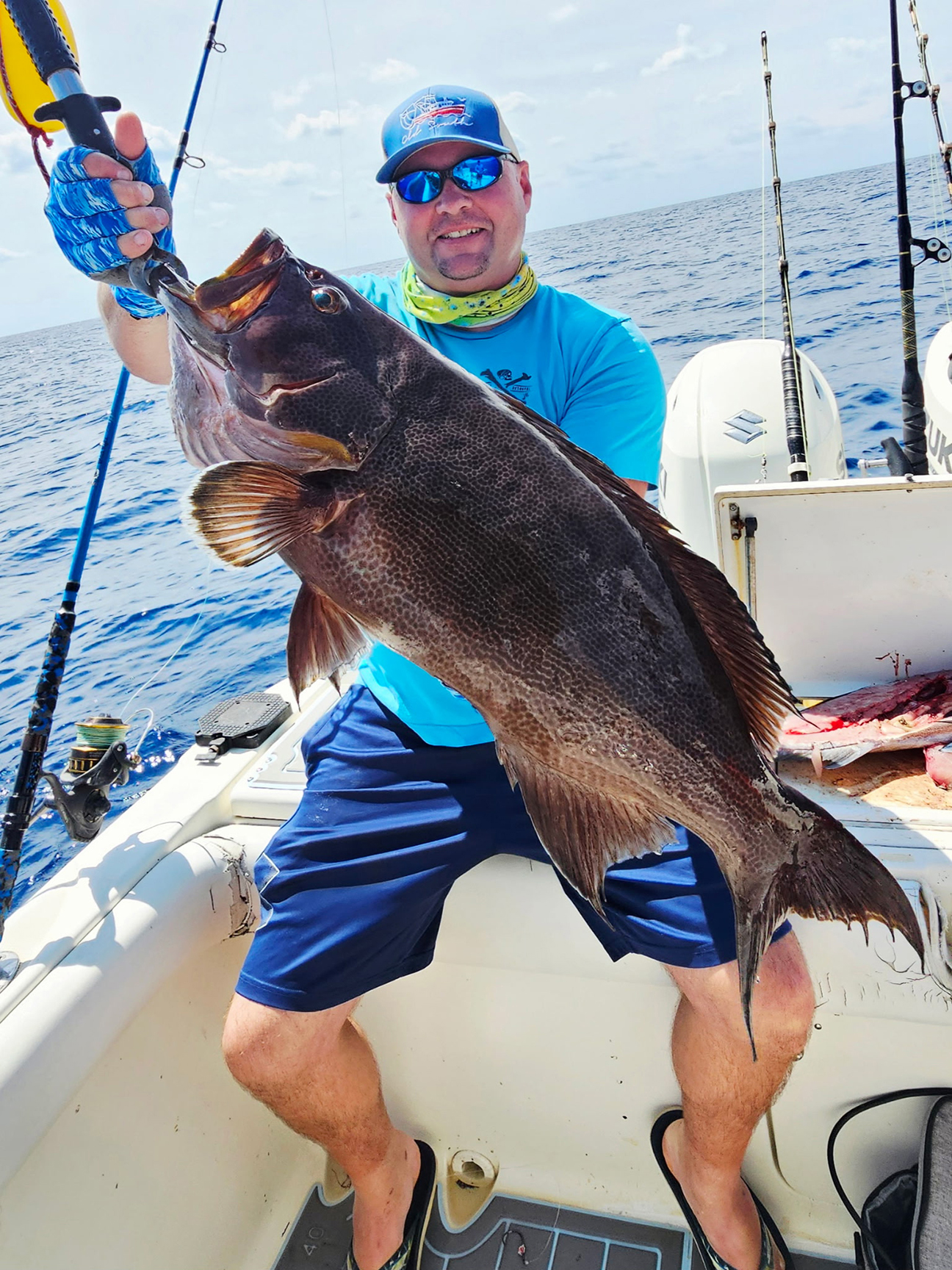
Donald Pate, of Charleston, landed this scamp grouper in 130′ of water offshore of Little River using a live pinfish. He was fishing with Capt. Bevan Hunter of Chilly Water Fishing.
Bevan, of Chilly Water Fishing, reports that most of the bottom fishing success is coming in the 100’ range, with triggerfish, grunts, porgies, and vermilion snapper all hitting cut bait or squid.
A benefit of the cooler temperatures has been an improved quality of black sea bass moving closer in. January and February are typically the best months, with large bass found in the 60-70’ range.
Offshore trolling remains another strong option, with blackfin tuna and wahoo as the primary targets.
Larry, of Voyager Fishing Charters, reports that runs to the deeper bottoms open up chances at keeper grouper, cobia, porgies, big triggerfish, and plenty of quality vermilion snapper.
There hasn’t been much action on drift lines, but those targeting the pelagic bite are finding scattered blackfin tuna and king mackerel.
Josh, of Little River Fishing Fleet, reports that bottom fishing anglers are catching heavy numbers of vermilion snapper in the 30-50 mile range, along with smaller almaco jacks and banded rudderfish.
Jumbo triggerfish, large black sea bass, and the occasional hogfish are in the mix. With cooler water temperatures, limits of keeper black sea bass are now being caught in the 4-20 mile range.
Bob, of Apache Pier, reports that anglers have been seeing strong whiting action, both in terms of numbers and quality. Mixed into the bottom bite are the occasional spot, pompano, and a few speckled trout. Smaller bluefish have also been showing up.
Ed, of Cherry Grove Pier, reports that bottom‑fishing anglers have seen strong whiting and croaker action. Occasionally mixed into the catches have been some late‑season pompano and flounder.
