
Southport/Oak Island – December 2025
Harrison, of Dutchman Creek Bait and Tackle, reports that anglers in the backwater and ICW have been finding steady speckled trout action. Live shrimp (when available) has been the top producer, while pink shrimp artificials have served as a reliable backup.
In the surf, anglers are finding good whiting action, with the occasional black drum mixed in. Sand fleas or fresh cut shrimp are the best bait options.
Nearshore trips are beginning to see the black sea bass bite pick up, while Gulf Stream runs continue to deliver wahoo.
Looking ahead into winter, anglers should expect similar species to remain the primary targets. Inshore trout will push further back into creeks and canals, requiring very slow presentations in the colder water. Surf anglers will do best with cut shrimp for black drum and whiting. Off the beach, black sea bass fishing will strengthen as keeper‑sized fish move into shallower structure.

Rob, of Oak Island Sporting Goods, reports that surf anglers have been finding steady whiting action, with black drum (especially toward the point) and the occasional pompano mixed in.
Inshore anglers are mostly focused on speckled trout, with artificials producing the best results. Red drum are schooling up and pushing into the backs of creeks, whereas the black drum are being caught more around structure.
Looking ahead into winter, speckled trout will remain the primary inshore target, requiring slower presentations in the colder water. Surf anglers can continue to rely on whiting and croaker, which provide the most consistent catches during the coldest months.
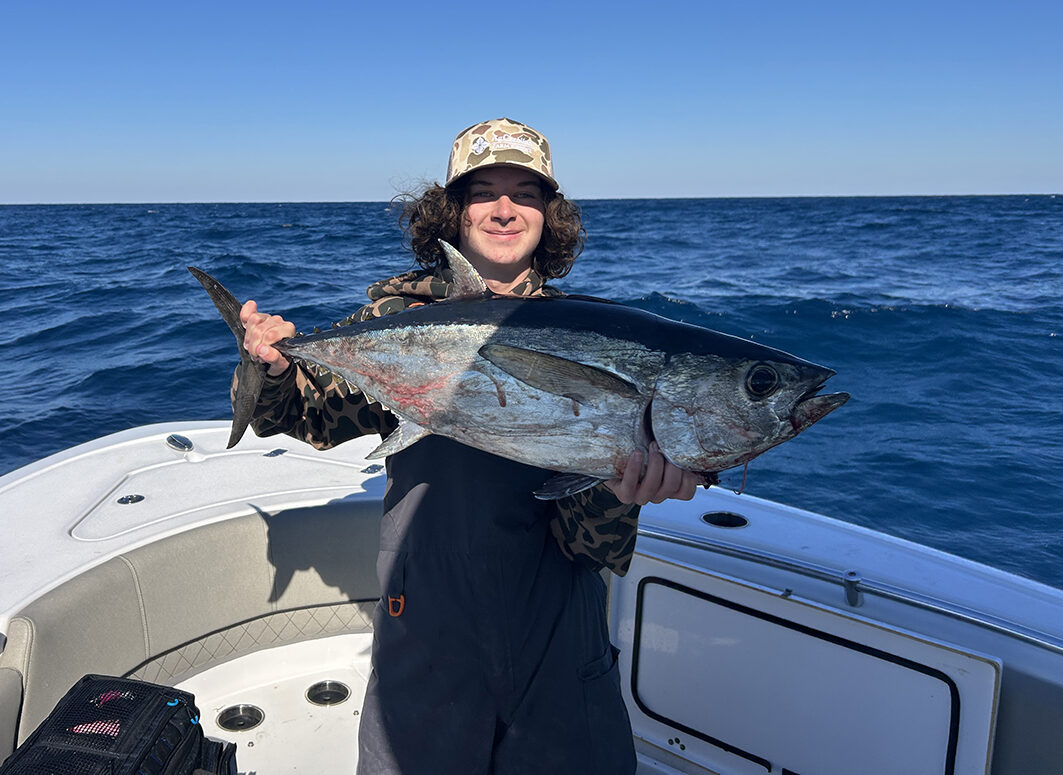
Paul Smith, of Lumberton, landed this 20 lb. blackfin tuna near the Navy Wreck on a live pogie.
Hunter, of Dockside Fishing Charters, reports that speckled trout have been the primary focus, with slip corks and live shrimp easily the top producers. The trout have been spread throughout the ICW, inlet, and creeks, with plenty of smaller fish mixed in alongside larger keepers. Targeting structure (such as shell banks) has been especially productive, and tide windows around a low rise or the beginning of the fall have provided the best action.
Smaller red drum (13-19”) are also showing up in these same areas, but docks remain the best bet for anglers specifically targeting reds, with Carolina‑rigged cut shrimp working well now that the pinfish have thinned out.
Looking ahead into winter, speckled trout fishing should only improve. Live shrimp will remain the top bait until supplies run out, at which point Vudu shrimp or MirrOlures become the best options. Red drum will begin schooling more in shallow waters, with live mullet or mud minnows on Carolina rigs producing well. Black drum will be found around docks and deeper creek holes, with cut shrimp on Carolina rigs being the most effective setup.
Zane, of Falling Tide Fishing Adventures, reports that red drum have schooled up and are pushed into the marshes and creeks. Anglers will do best targeting shallow, low‑current areas, with nearby structure a bonus. Once located, keeping distance is key to avoid spooking fish, and both natural baits (such as cut shrimp) and artificials (soft plastics or topwater plugs) are drawing strikes.
Speckled trout have shifted into their late‑fall and winter areas and are favoring low‑current zones with structure. With live bait becoming scarce, artificials are producing best, including topwater plugs and soft plastic swimbaits.
Another option this time of year is running up the Cape Fear to target striped bass around the Port. Through December, warmer water keeps these fish aggressive on topwater baits and swimbaits. As temperatures drop further, the striper bite slows and becomes more focused in the deeper, low‑current areas.
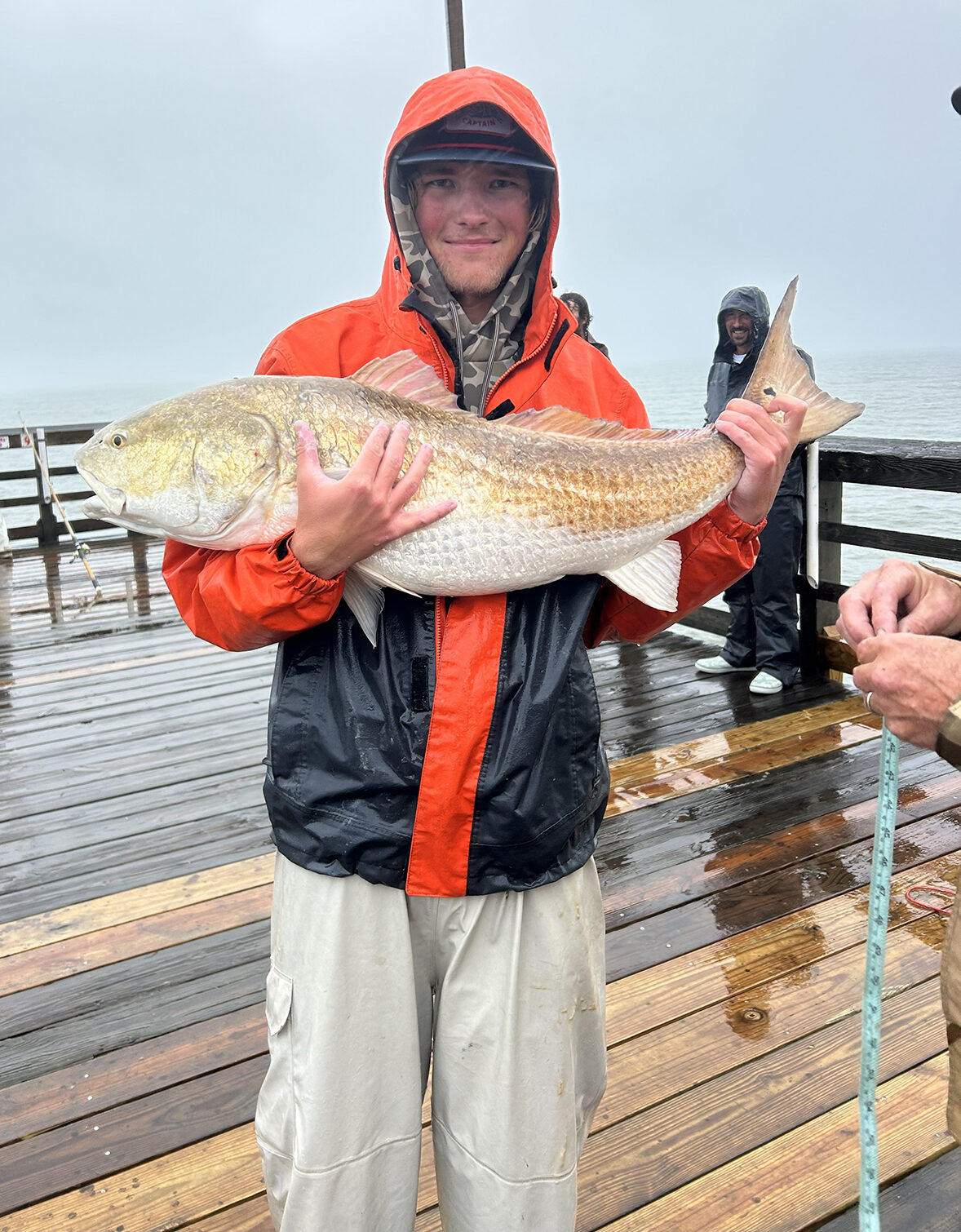
Harrison High, of Oak Island, reeled in this 43″ red drum off the Ocean Crest Pier. The fish was caught on a pogie head.
Steve, of Reel Em Up Charters, reports that the speckled trout bite has improved with consistently cooler water temperatures. The trout have been plentiful and willing to strike a wide variety of artificials, as well as live shrimp, of course. The best action is currently in the backs of creeks where bait is holding, and these fish will continue to push further into the creeks and settle into holes and nearby flats to ride out the cold.
The red drum bite has been strong, with fish gathering into larger schools and pushing shallow where they remain active throughout the winter.
Off the beach, king mackerel are still around. While cooling water is pushing them out, the abundance of bait means there are still some late‑season opportunities for anglers willing to make the run.
Ryan, of Fugitive Charters, reports that bottom fishing will remain a strong option for anglers heading offshore in the colder months. Bigger black sea bass are beginning to move in as shallow as 60-80’, while gag grouper (released) are still in these same areas before pushing farther offshore as waters continue to cool. Vermilion snapper and triggerfish are best targeted in the 100-120’ range, where anglers can expect consistent catches.
Offshore trolling trips are staying focused on wahoo, with the action often picking up within three days of the new and full moon cycles.
King mackerel are still around in good numbers. They’re holding in upper‑60 degree water temperatures and typically remain a reliable target offshore through December.
Closer to the beach, nearshore trips are producing whiting, pufferfish, and bluefish.
Another major winter fishery begins with the arrival of bluefin tuna. Anglers will need to gear up with heavy tackle—80 wides spooled with 130 lb. main line and 200 lb. fluorocarbon leaders pulling horse ballyhoo behind Blue Water Candy Jags. The bluefins can also be caught with live bluefish.
Troy, of Ocean Crest Pier, reports that anglers bottom fishing with shrimp or artificial bait strips are catching a mixed bag of whiting, spots, pompano, and plenty of croakers. Late‑season flounder have also been caught.
Sharon, of Oak Island Pier, reports that whiting have been the most consistent catch, with cut shrimp proving to be one of the best bait options. Mixed into the bottom fishing action are bluefish and the occasional sheepshead.
