
Swansboro/Emerald Isle – July 2026
Rich, of The Reel Outdoors, reports that surf anglers are finding bluefish, spots, sea mullet, and some pompano.
Back in the sounds, red drum fishing has been steady while using a mix of live bait, cut bait, or artificials.
A bunch of flounder are around, and they’re ready to hit any bait near the bottom.
Speckled trout have been sparce, but only a few anglers are targeting them. The most reliable bite will be up in the rivers.
Spanish mackerel are schooled up off the beach and hitting both trolled spoons or casting jigs.
The occasional king mackerel is mixed in closer to the beach, but most of the king action is out over deeper structure.

Rob, of Sandbar Safari Charters, reports that red drum are now scattered everywhere in the shallows, especially up against grass flats and around oyster bars. A bunch of menhaden are around and make a great cut bait for the drum. For anglers looking to fish artificials, topwater plugs and soft plastic paddle tails are also getting fish to strike.
Shrimp have been showing up in the creeks, and they have been a great bait to catch black drum. The black drum are pushing in from the ocean, and the most success has come from fishing Carolina rigs around deeper structure in the inlets.
Sheepshead have been piling up around inshore structures. They’re hitting fiddler crabs, mud crabs, or sea urchins.
Some big bluefish are around the mouth of the rivers, and big chunk baits with heavy leaders are best for them.
Matt, of Friendly City Fishing Charters, reports that bait is everywhere and plentiful. As such, the red drum are wildly scattered and hard to pattern. These redfish are not picky, as they will hit just about anything that gets in front of them, but the small groups make it tough to commit and spend a lot of time in any one area.
Searching the marshes is the best way to find congregations of reds, but be aware that these are the more pressured schools and you typically don’t get too many shots at them before they take off.
Reds can also be found around docks in the waterway and well up into the White Oak River.
Some black drum are hitting Carolina-rigged shrimp around deeper docks (4-5’) and other structure or holes up in the creeks.
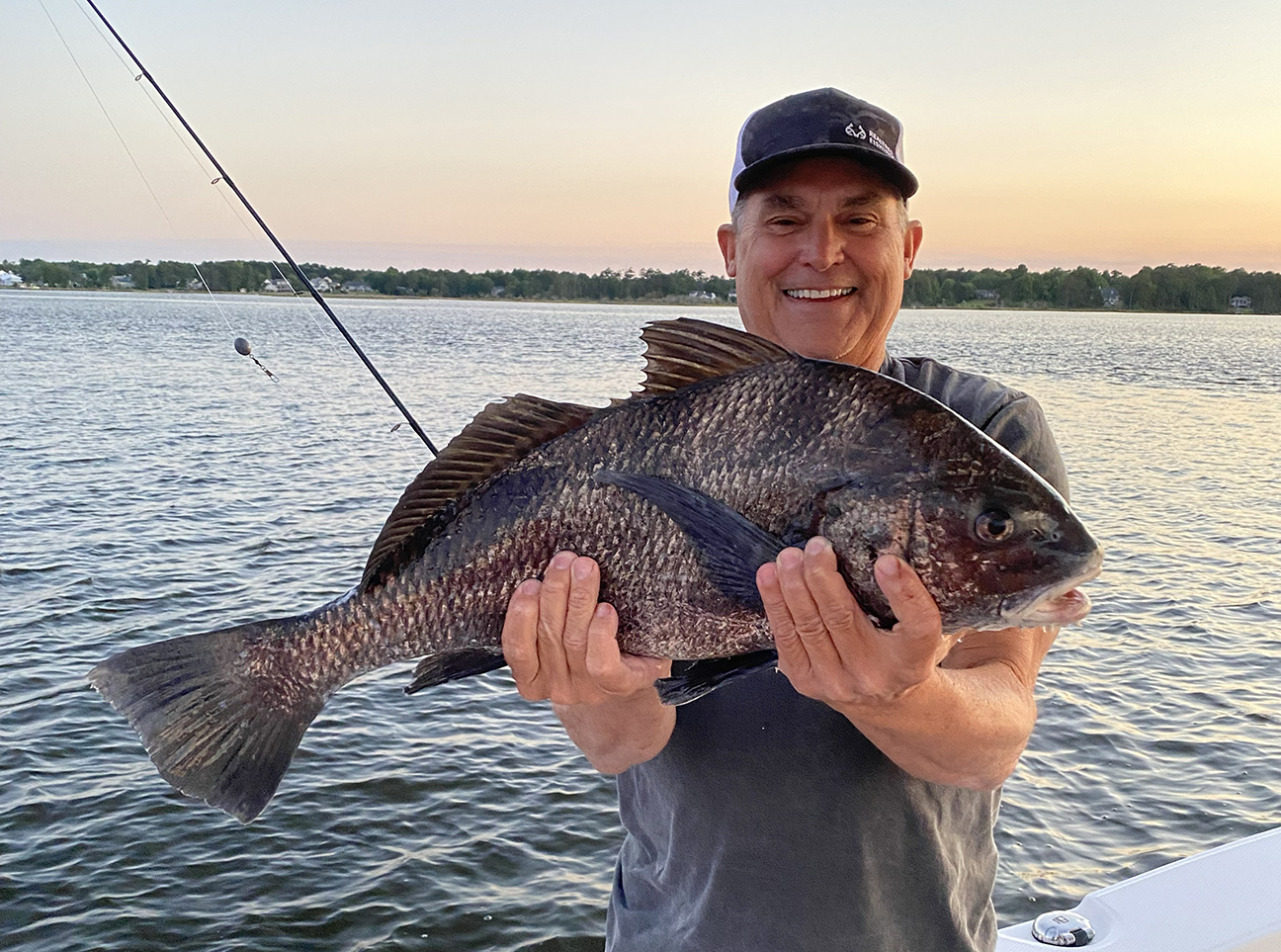
Bill Mason, of Swansboro, with a 24″ black drum caught on a live pogie in the White Oak River.
Jacob, of Southern Tides Fishing Charters, reports that red drum bites have come from fishing live or cut finger mullet on Carolina rigs back up in marsh bays at higher tides. Once the tide turns to falling out, switch to cut bait on Carolina rigs or float live shrimp up around docks and oyster rocks in the river.
For anglers looking to target black drum, a Carolina rig or a float rigged with live shrimp is the best bet. The best target areas will be docks, oyster rocks, or deep holes in the marshes.
Spanish mackerel and bluefish are all over the main waterway, and both are being caught with casting jigs or live bait.
Speckled trout can be found feeding on the outgoing tide while drifting live shrimp under floats near creek mouths with deep water or a deeper channel near an inlet.
Scott, of King Mackerel College, reports that a mix of gaffer-sized dolphin, summertime blackfin tuna, and some wahoo are out around the NE corner of the Big Rock. Summertime fishing is all about pulling a spread of ballyhoo under your favorite skirts or lures. Try a variation of greens and yellows when targeting mahi, and go with darker colors such as blues and blacks when looking for tuna or wahoo.
Billfish action in the area has been good.
For king mackerel, the summertime pattern of slow-trolling live baits in the 10-15+ mile range is the best way to get strikes.
Some mahi are moving inshore as the hotter water temperatures spread them out.
Close in, the spanish mackerel bite has been fairly scattered along the beachfronts, with a larger class of fish being found by anglers running to the east side of Cape Lookout.
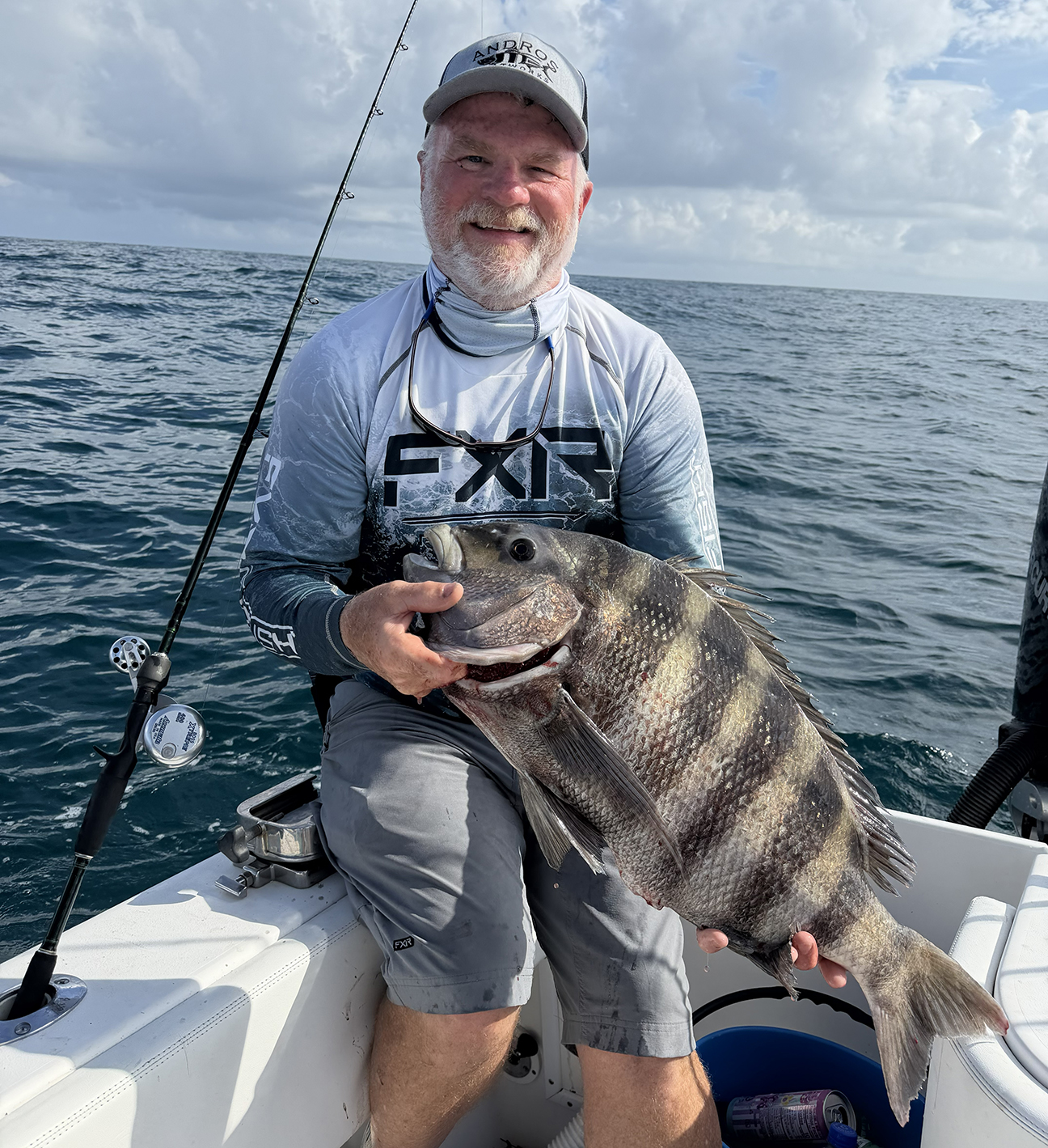
Mark Henderson, of Liquid Fire Fishing, with a 10 lb. sheepshead that was caught offshore of Beaufort Inlet on a fiddler crab.
John, of Early Riser Fishing Charters, reports that the mahi fishing has been on fire, with a bunch of gaffer-sized fish out on the break. Blue Water Candy skirts in blue and silver or green and then rigged with small ballyhoo have been working best.
For the mahi, run a 200 lb. mono leader about 10’ long (in case you get a hookup with one of the wahoo scattered in the same area).
Nearshore, amberjacks are around in large numbers over the wrecks and major ledges in the 70-80’ range.
Some king mackerel and smaller mahi are also mixed in this range. The nearshore mahi should only get better, as water temperatures in the low 80s will bring scattered fish in as shallow as 60’.
Keep an eye out when fishing these areas, as there is still a cobia around here and there, especially when fishing rocks and wrecks.
Mike, of Bogue Inlet Pier, reports that king mackerel have been landed, as well as blacktip sharks, and even a large tarpon (70 lbs.) was released.
Anglers casting plugs are catching spanish mackerel and bluefish.
Bottom fishing is producing mixed bags of croakers, sea mullet, the occasional pompano, and black drum.
